C is for Counseling, or How I Got into this New Gig


CTurns out that April is Counseling Awareness Month. Isn’t this just a serendipitous turn of events? I’m writing a blog a day, A to Z about my adventures as a graduate student in Mental Health Counseling and the American Counseling Association is making it a special month. Pretty sure I can’t take credit, but still . . . (maybe tomorrow I’ll tackle Delusional and Diagnosis).

I have a long history with counseling. I started seeing a psychologist in 1992 and have been in therapy of some sort consistently since then. For a long time, I thought of myself as having a serious character defect. I was young. I didn’t really understand how counseling worked, or could work. I had only a vague notion of Freud and his couch and Woody Allen’s neuroses.

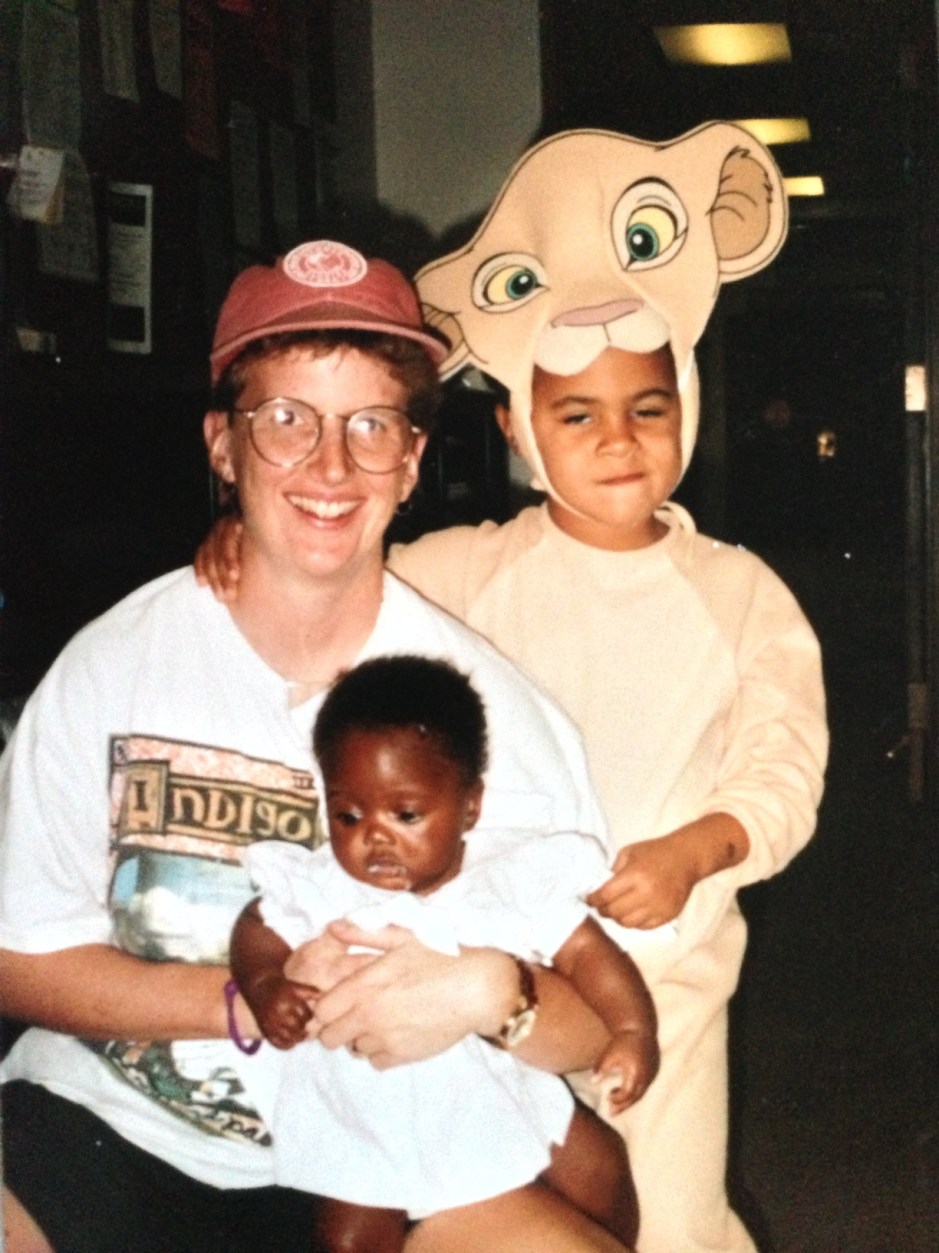
Prozac and SSRIs hit the market about the time I began therapy* and not long after my psychologist diagnosed me with depression, she and my general practitioner agreed I would do well to try the new wonder-drug, Prozac. And, honestly, I looked forward to some relief. At 29, in 1992, I was a fairly new mom of an adopted bi-racial daughter, in a relationship with a woman 13 years my senior. I had just sold the bookstore I started, owned, and operated for three years, and I had moved back home full-time after living 90 miles away for most of each week. To complicate things, my fundamentalist Christian parents were only just beginning to adjust to my, er, lifestyle (as we called it then) and its unconventionality.

There’s more, but that’s enough. You get the idea. I was a stress monster. The crinkling of a tissue set my teeth on edge. The noise of someone actually blowing their nose sent me over the edge. The first time I swallowed one of those little green and white pills, I felt like I was taking communion. I crossed myself and sent up a prayer.rumi

After four weeks of taking that precious little capsule every morning, I no longer cared who sneezed or how loud. Irritation rolled off my back. The grey veil that separated me from the rest of the world lifted, and I started seeing in color again. Cliché, I know, but accurate. Everything sparkled. I got a good job as the bookstore manager at the local technical college with a great boss as well as health and retirement benefits. Did the little pill have anything to do with my new job? I believe happier, less-stressed, less-depressed people tend to have more self-confidence and do better in job interviews, so yes. But I digress.

I felt good, and I loved talking to my therapist. I loved paying someone to listen to me. I loved the 50 minutes of uninterrupted attention. I could do this for a living, I thought. I’d love to listen to people’s stories, to help them make sense of their feelings, to help them gain the confidence to reach for their high dreams. I had no idea that someone who went to counseling could actually ever become a counselor. I thought my diagnosis and being on meds precluded me ever being in the field.

I had never heard of Jung’s Wounded Healer. I was an English major who, stupidly and stubbornly, avoided all social science classes. The books cost too much. The classes met on Fridays. What can I say?

I wanted to get off the meds, though, yet every time I quit taking them, things in my life would head south, and the psychologist would exhort me to stay on the meds. I got stuck in a loop and never really got to the issues that were causing me to become depressed. I’d just start popping the pills again, and things would improve. Etc.
franklquoteI spent about twenty years with the psychologist before I found a new therapist, and the woman I chose to see was an LMHC (Licensed Mental Health Counselor). I didn’t know what the difference was when I made the switch, I was just seeking someone a little more flexible and spiritual, a little less dogmatic and not so pharmacologically oriented. Turns out the switch worked very well for me then. I made several changes in my life at the same time: I got a new job, I relocated, I started taking writing classes and running, and found new community with both activities.

The psychologist got me up and out of the depression and quite literally saved my life on many occasions. And the LMHC has helped me move forward from there, developing self-confidence, practicing mindfulness, introducing me to non-Western philosophies. I have learned so much about myself, about why I am the way I am, and how I can move forward.

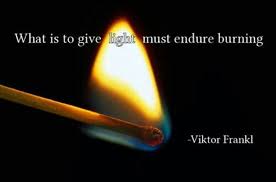
I’ll never be done working on myself, but it turns out, I can become a counselor anyway, not in spite of my past, but because of it. Jung believed that disease of the soul could be the best possible form of training for a healer. And as Victor Frankl wrote, “What is to give light must endure burning.” By these measures, I am perfect for this job.

*for a more in-depth—but still inadequate—explanation of the differences among therapy, counseling, psychotherapy, and psychology see this previous blog


B is for Bathrooms or What is the Problem, People?

BWhy does everyone have their panties in a wad about where trans* people pee? A couple of weeks ago, in the otherwise ill-fated Counseling Sexual Minorities class I took last quarter, I learned that a high number, a disproportionate number, of trans* children get UTIs because they are too afraid to use the bathroom. So, they hold it until their bodies rebel. This is not okay.

For reasons I completely fail to grasp, idiots across the country are clamoring to ban gender nonconforming people from using the restrooms of their choice. Adults. Children. Trans* folks who have transitioned, surgically, hormonally. In particular the fearmongers seem very concerned about transwomen using the women’s restroom. Which begs the question WHY?

As far as I can ascertain there’s an assumption that the only reason a transwoman would want to go into a women’s restroom is to harass or assault the other women there. This line of thinking makes no sense on many levels, but the obvious nonsense is the myth that women’s restrooms are otherwise inviolate places, some sacred sanctuaries where no man dares to tread.gender restroom

What have I missed all these years? Do all women’s restrooms have a magnetic force field that only the XX chromosome can pass through, an invisible shield that keeps out would be evildoers? There is no magical ring of protection, people. Women can be attacked anywhere, including–shocking as it may seem–the ladies’ room.

There doesn’t seem to be much concern (read fear) about transmen using the men’s restroom. At least, not on the part of cisgendered men. They don’t seem to be at all worried that a transman will attack them at the urinal. But woe to the transman who is discovered in the men’s room. Boys Don’t Cry may be a movie, but it ain’t fiction. It’s misogyny—the hatred of women, of the gender nonconforming, of those who reject the binary notions of gender, and of cisgender men and women who dare to reject traditional roles (homophobia is rooted in misogyny).

It’s also about power and privilege. It’s weirdly American to deny citizens a right as basic as the right to urinate or defecate. I’ve been to a lot of countries and only here have I encountered such a dearth of publicly accessible bathrooms. Only here is the right to pee tied to privilege. As if we can somehow force the powerless and oppressed among us to pull themselves up by withholding bathroom privileges.

binary lib

As one of the guest speakers in Counseling Sexual Minorities last quarter pointed out, why do we even have outdated pictures of men and women on restrooms? Why not put pictures on restroom doors of what is inside the restroom? Why not pictures of toilets and/or urinals? Let everyone decide which restroom they want to use based on the equipment available. Seems simple enough.

A is for Ack! It’s April Already and I am Anxious

AI can’t believe I haven’t finished my first blog for the A to Z challenge yet. I’ve been thinking about it for weeks, planning, scheming, writing it in my head, but clearly I’ve not put any words down yet. Until now. These few, uninspired, last minute words that seem so unequal to the task, so small and worthless and hurried.

A is for Apology, apparently. Abject. Abysmal. But I’m at AWP this week, a conference all about writing, and so, apology or not, abysmal or not, tired or not, write I must.

I am going to write about Anxiety. My plan for this year’s A-to-Z Challenge is thus: I want to spend this month writing about my experiences as a student in the Clinical Mental Health Counselor Program at Antioch University. I want to weave together a narrative, exploring the concepts (from A to Z) that I study as a student of mental health counseling and how my studies intersect with my life. How my coursework shows up in my day-to-day world.

I haven’t studied Anxiety, per se. I have taken many relevant classes, delved into the DSM 5 and learned how I might diagnose a client who presented with symptoms that fit the criteria for, say,  Generalized Anxiety Disorder (GAD). I learned to write a treatment plan and theorized about which therapeutic modality I might employ to best help my client regain his or her equilibrium.

Most of what I’ve learned about Anxiety comes from first hand experience. I am not one who has been plagued with Anxiety for much of my life. No, my familiarity with this particular demon has only been recent and is one of the reasons I started running regularly a little over two years ago.

I started waking up in the mornings with a pit of dread churning in my stomach and found that if I went for a run, somewhere around mile two or three, the pit of dread loosened and eventually abated. I guess the endorphins kicked in, the oxytocin released, and the runner’s euphoria lifted the anxiety. Cured, if only temporarily, I could get on with my day. The next morning, the anxiety would return, and I’d start over. Run. Rinse. Repeat.

A nice side benefit to running off all my anxiety was that I started to lose weight. I felt healthier. My blood pressure dropped, as did my cholesterol, and my pants size. But, I digress. I still woke up most mornings feeling like something horrible was about to happen. I kept waiting for the other shoe to drop, for the axe to fall, for the bottom to drop out, for . . . well, you get the picture.

Anxiety chased me into my running clothes and out of the house each morning. But the thing about being a graduate student in a counseling program is that these sort of disruptions don’t slip by unanalyzed. While one part of me succumbed to the anxiety, another part of my tapped my forefinger thoughtfully against my chin  and asked, “How do you feel about this, Pam Sue?”

Some people have angels and demons sitting on their shoulders. I now have Sigmund Freud and Carl Jung, or their modern day equivalents, Jack Cornfield and Tara Brach. I can have a panic attack and simultaneously know for certain that while what I am experiencing might feel real, it isn’t true.

It’s weird, living with this meta awareness. I had all sorts of anxiety about traveling to AWP this week–logistical stuff that I know I’m capable of handling but for whatever reason just kept spinning on: how am I going to get to Sea-Tac from Bellingham? To the airbnb from LAX? I can’t check in until 4 p.m., but I arrive at 9 in the morning. What would I do? These questions dogged me for weeks. I envisioned myself in dire circumstances, dragging my carryon around LA for hours, sad and alone and dazed.  Yet, I simultaneously knew my fears were unfounded and not based in reality. I could make a shuttle reservation, find a friend to stay with in Seattle, even one who might take me to the airport. I just couldn’t see the logical steps in the midst of my anxiety.

Something similar happened when I realized how expensive it was going to be to eat and drink here in Los Angeles. The first day I spent way too much money on so-so food and paid $8 for a mediocre beer. So, I took myself to the grocery store, but instead of going shopping at the end of the day, when the conference was over, I went in the morning on my way to the conference and so had to schlep my groceries around the conference hall, from one panel discussion to another.

I was so anxious about not having drinking water back at the airbnb that night, I bought a six pack of bottled water and stuck it in my already heavy backpack. All the while I’m hearing Jack and Tara on my shoulders, telling me not to believe the anxiety, reassuring me that all will be well, that I will be fine, that there will be water at the conference. That the universe will provide.  But, do I listen? No. I buy the water. And I vow to do better tomorrow.


Getting My Counseling Feet Under Me (or I’m Two Years into This Program, are We Done Yet?)

Writers and therapists live twice—first when they experience events and a second time when they use them in their work. Mary Pipher, Letters to a Young Therapist

A few months ago, I met up with a former therapist, a woman I hadn’t been to see in about 20 years and who had since retired. I wanted to talk to her about adoption and addiction since she had been known as something of an adoption guru while she was still practicing. As I explained my course of study and my intentions for becoming a counselor, she exhorted me to pick a theory, a modality to call my own. “You need to decide which theoretical model you’ll work from,” she said. “You need to pick one to ground yourself in and work from there.” She then ticked off a list: Bowen, Adler, Rogers, Jung. I looked across the table at her and shrugged. “I think they all have something to offer,” I said. “I guess if I had to describe my orientation, it would be diverse.”

“That won’t do,” she exclaimed. “You need to be grounded in something. Anything. Just pick one. Bowen is good.”

parents cartoonI shook my head slowly at the thought of Murray Bowen taking up permanent residence in my head. Sure, I can see the value in looking at a person’s issues through the lens of intergenerational patterns and family systems, but as my only, primary orientation? No. So many others had much more to offer, from Jung’s wounded healer to the post modernists and narrative therapy, feminist theory, attachment theory. I couldn’t imagine latching onto just one way of being a counselor when so many modalities offered so many ways to work with people with a variety of needs.

And now this quarter we added Carl Rogers’ Person Centered Therapy and his Unconditional Positive Regard, along with Fritz Perls and Gestalt, John Cabot-Zinn’s mindfulness as well as Pema Chodron to the mix. I am even more convinced that limiting myself to one theoretical lens would be a mistake. Shortsighted.

The metaphor is overdone, but apt—the more tools I have in my tool belt, the more useful I can be to more people. Every client is going to be different. I need to be able to adapt. There aren’t many similarities between working in technology and working as a counselor, except this one: sometimes there are a variety of ways to approach a problem and finding a good solution is often a matter of “testing and tweaking” to see what works best.

As a writer, reader, and storyteller, I’ve always found narrative therapy to be the modality that draws me in. I am attracted to counseling for the same reasons I am a writer—I want my misery, and indeed everyone’s—to be meaningful. As Mary Pipher writes in her Letters to a Young Therapist, as counselors and writers, we get to use our experiences twice and encourage others to do the same. Additionally, I am attracted to narrative therapy’s post-modernist bent, the idea that it is not the individual who is sick, but the culture in which the individual lives. That depression, anxiety, PTSD for example, are legitimate responses to living in a culture that too often demands we abandon our authentic selves. Not to mention that we live in a world that insists on dividing us by race, socioeconomic status, ability, sexual orientation, gender, ethnicity, religion, and more.chickencouch

I began this graduate program with the vague notion that I would emerge in two years, somehow qualified to sit and listen to people for a living. As I progress through each quarter, I become evermore convinced that two years is not nearly enough time in which to prepare me to not just listen to people’s stories, but to help them make sense of their stories, make meaning in their lives, forge on into the future with hope and a sense of purpose, with a deeper understanding of what serves them, what doesn’t, how to make good choices, how to hold onto their dreams, how to have a voice, leave an abuser, nurture their children, their relationships, find meaningful work.

How do I become that mirror, sounding board, holder of stories, cheerleader, confidant, advocate?

From the client side of the couch, I have found Gestalt and mindfulness to be the most effective therapeutic methods. Most breakthroughs in my personal therapy have come when I’ve been talking to the chair, role playing, or acting something out with my therapist. Mindfulness and meditation have worked for me outside of the therapist’s office as a way to self-regulate and deepen personal awareness. So, it’s not really surprising that over the course of this quarter I have gravitated to both, though I see Gestalt methods as being more relevant to therapy and mindfulness as a useful (and indeed maybe even necessary) adjunct for clients to use between sessions.

Gestalt therapy with its focus on the body/mind connection, lends itself well to supporting other interventions and modalities. Rogerian Person-Centered Therapy (PCT) with its mandate for unconditional positive regard seems like it should underlie every therapeutic encounter, particularly the initial few sessions.

chairGestalt works well, too, with mindfulness, attachment, and sensorimotor therapies, which focus not only on how the body holds trauma and past experiences, but also on awareness and connection between the client and therapist. By encouraging clients to stay in the here and now, Gestalt leaves room for the therapist to introduce the client to mindfulness techniques which support being present and staying in the moment when things get emotional or difficult in session.

In my initial session with my practice client, employing PCT worked well to establish rapport and an initial baseline of trust. Once we got to the primary issue, however, Gestalt would have been a great way in to exploring how she was feeling in the “here and now.” I might have employed the empty chair technique had the session gone longer—I could have had my client talk to any number of representatives from her past: her parents, her younger self.

I also might have had her explore her stress about her issue and how it was sitting in her body—what does the stress feel like? Look like? How big is the stress? What color is it? Where does she feel it the most? My therapist often tells me to invite my distressing emotion in rather than trying to banish it. “Invite the stress in,” she says. “Ask it what it wants. Have tea with it.” This technique, of anthropomorphizing the disturbing emotion or feeling and dwelling on it, illustrates one way of working with an issue. When we avoid something, it gets bigger and more intense. By inviting our distressing emotion in and asking it to stay, by getting to know it, we rob it of its power.

In our second practice session, I employed both Gestalt and mindfulness (as well as Roger’s unconditional positive regard), encouraging the client to make her physical agitation bigger (I had her stand up and shake out her anxious feelings) and to incorporate some breathing techniques. This session took the client deeper emotionally than the first session, even though both sessions lasted about 20 minutes and demonstrated my improved ability to sit with a client in their discomfort. I was able to witness her experiencing emotion and hold the experience rather than try to rush her through it in order to alleviate my own discomfort.

As always, I need to be mindful of my clients’ particular culture. Every client, regardless of how they present at first glance, brings with them an individual set of circumstances that sets them apart from every other client. To be an effective therapist, I must refrain from making assumptions, and instead listen, learn, ask clarifying questions, and give the client the space and safety they need in order to fully reveal themselves, their wants, their needs, their problems.lucy

Probably one of the most challenging aspects of counseling this quarter has been keeping tabs on my biases, assumptions, and privileges. While I am nearly always aware of my sexual orientation, my age, and do think a lot about race and how these parts of my identity might influence my interactions with a client, I’m not always thinking about ethnicity, socioeconomic status, or disability. We are, often and on the surface, a homogenous population at Antioch. I have not counseled a person of color or a person with a visible disability. I’m sure I’ve worked with clients who come from a different socioeconomic background, and though I am currently as broke as the next graduate student, I do have to remind myself that I come from a relatively privileged background and have robust support systems should I need them.

As this quarter wraps up, I feel as if I am finally getting my counselor feet under me, that I can work effectively and comfortably within a specific therapeutic framework. This quarter is the first time I have experienced authentic connection with a client, where I seem to have actually helped another person via a counseling session. I am excited to hear my clients’ stories, to listen to them as together we find meaning in and a way out of their suffering.

Lesbian Shame, Attachment Theory, and Identity Integration. (Or, I am so f*ing tired of this sh*t)

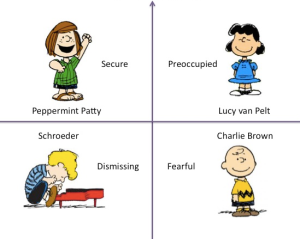
peanuts attachment
I love that Peppermint Patty is the securely attached one in this graphic

I’m currently working on a group project for my Counseling Sexual Minorities class. We are looking at Attachment Theory as it applies to LGBTQ people and the clinical implications for counseling this population. For my part, and to help the cause along, I decided to take a look at the relationship between attachment styles (secure, fearful/avoidant, dismissive, and preoccupied), identity integration and lesbian shame.

Attachment theory suggests that how well our primary caregivers met our needs as infants and children determines how we relate in relationships later in life. (For a more complete discussion, check out this site).

cass_2
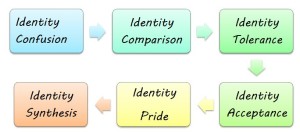
Cass Identity Integration Model

The Cass Identity Model is one of the primary ways of evaluating how well gays and lesbians have integrated their sexual orientation into their lives. It has six stages, beginning with Identity Confusion (am I a lesbian?) and ending with Identity Synthesis (I am a lesbian and I am out in all areas of my life). (For a more complete discussion on the Cass Model, click here).

The Internalized Shame Scale is an assessment tool used to rate individual’s levels of internalized shame.

Turns out there is a correlation between a lesbian’s attachment style and the amount of shame she experiences. The two studies I looked at gathered data on about 500 lesbians and discovered that those lesbians with a secure attachment style had lower levels of shame (as measured on the Internalized Shame Scale) than those lesbians with other attachment styles (fearful, dismissive, and preoccupied).

The first study (published in 2003) looked at 380 women who self-identified as lesbians and as a level 4, 5, or 6 on the Cass Identity Integration Model. The results aren’t really that surprising. What’s surprising is that overall, lesbians scored 49.8 on the shame scale where 50 is a clinically significant result (i.e. pathological). As a comparison, heterosexual women average a score of 33.

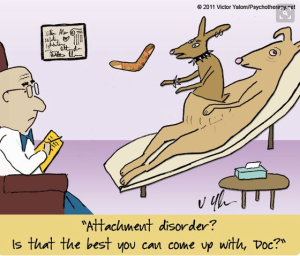
attachment cartoonIt’s important to note that most infants and children who escape childhood with a secure attachment style tend to remain securely attached in other relationships as their lives go on. Not so with LGBTQ children. Even those who begin life securely attached run a high risk of shifting attachment styles later in life due to particularly severe breaks in important relationships: rejection by their family when they come out, for example. Rejection by peers, teachers, clergy, friends.

One paper I read for my presentation reported that 43% of LGBTQ youth experience some form of physical violence. In addition, a significant number get kicked out of their homes when they come out to their families. LGBTQ people are barraged daily with messages that it’s not okay to be LGBTQ. I just have to open my laptop and scan the headlines on any given morning to read that politicians want to strip me of my rights, that “christians” want to round us up and put us in camps, that self-appointed guardians of morality want to outlaw me, and that people like me are threatened with death just for being who we are.

Sure, we’re gaining rights, but we also face a backlash from those who believe we are less than human, less than deserving of equal rights. The Kim Davis’s, Antonin Scailias, Michelle Bachmans, Ann Coulters, Ted Cruzs, Marco Rubios of this world. We have the right to marry, for now. But how long will that last? Will a change in our country’s administration threaten my rights again? Will I ever be able to relax or must I remain vigilant?

The second study, published a year later looked at 100 lesbians who scored a 6 on the Cass scale and who had also spent at least three years in therapy. What this study showed was that these lesbians scored 43 on the shame scale and 58% were securely attached, compared to 49% in the previous study.

What are the clinical implications of reduced lesbian shame, more secure attachment styles, and higher rates of identity integration? Therapy may work to repair attachment by providing a new secure base, resulting in reduced internalized shame. This is good news.

Why am I interested? Funny you should ask. One of the amazing (and awful) aspects of this graduate program I am in, is that I am constantly analyzing myself, challenging my assumptions about myself and monitoring the way I am in the world. I can’t think of a single class I’ve taken that didn’t shove me right up into the shit, from the initial Family of Origin Issues class, where we looked at intergenerational patterns and all the ways we have unfinished business with the people in our lives to Human Development: Gender in which my mind was blown regarding the social constructs of gender roles and the false dichotomy of binary genders (i.e. boy/girl, male/female).

Every class has taught me something about myself: Ethics, Psychopathology, Psychodiagnostics, Group Therapy, and so it has been with this class, Counseling Sexual Minorities. I signed up for the class with a level of excitement and anticipation I’d not had for other classes because we were finally in my wheelhouse. I thought I knew a thing or two about this topic, at least from the client side of the couch. I wasn’t prepared.

In general, the class has been less than stellar, but even still, I wasn’t prepared for how digging into all the ways in which LGBTQ folks are discriminated against would impact me. I figured that I’ve been out of the closet for the past 40 years and had dealt with my internalized homophobia and had come to terms with my sexual orientation, but what I have realized so far this quarter is just how exhausted I am, how much I shut out on a daily basis in order to protect myself, and that there’s a simmering rage just below the surface that is eating away at me.

The other day I ran across a story on some county clerk in Texas who likened her fight against same sex marriage to the fight against Nazi Germany. Really? And the rhetoric amongst the GOP candidates who want to roll back what few legal protections LGBTQ folks have terrifies me. One candidate whose name shall not grace this blog has stated he would nominate Supreme Court justices who would repeal same sex marriage.

And that’s the thing that just kills me a little inside all the time—other people think they have a right to determine what is best for me simply based on whom I love. Everyone has an opinion and sometimes even a vote about what rights I should have. Just this morning there’s a story on the front page of my local paper about a debate in Charlotte, NC on LGBT protections. A debate. About my rights as a human.

As I grew up, instinctively knowing that there was something different about me, I tried hard to keep that difference under wraps, to not let my true self out for fear of rejection. But eventually the need to be true to myself overruled cultural mandates to fit in. Being authentic, regardless of sexual orientation, can be challenging for many of us, but I would posit that most people don’t spend most of their time with this level of anxiety.

As I came out over the years (coming out happens over and over and over again, by the way, not just once), comingout_rainbow doorrelationships fell away. Some repaired, others did not. I remember writing to a friend from my high school days when I adopted my oldest daughter. My friend wrote back that I was an abomination, that my daughter deserved better, that I was going to hell.

Eventually, I learned to be more discriminating, oftentimes pushing people away and shutting others out who may not have rejected me. Better to protect my heart than to have it shattered over and over again. Even now when I know better, when I am pretty certain that the folks around me are open and accepting, I still armor myself against betrayal, though occasionally I let down my guard and show up as completely out, completely me, defenseless, and vulnerable because I feel safe, because the environment seems to exude acceptance and warrant trust. Sometimes I’m right. Sometimes I am very wrong.

I am tired. I want to lay down my shame. I want to live in a world where I am not afraid, where no one cares who I sleep with, where no one is threatened by my relationships, where no one wants to strip me of my dignity, humanity, my rights. I want to live in a world where no one gets to vote on my right to marry, work, buy a house, use a restroom, adopt children. I want to live in a world where who I am is not up for debate.

Shadows, Poems, & Projections: Just a few haiku

It’s one thing to say I’m going to start writing the truth, as I did in my previous blog. Actually doing it? That’s quite another matter, but here’s a first attempt. When I write these haiku, whom am I speaking to? Who is the “you” in my poetry? As I was reminded in one of my classes last week (rather inelegantly, but still), whenever we point our finger at someone else, we are really pointing back at our shadow selves, those parts of ourselves we are at war with. We are always projecting our fears and hopes, desires and needs onto those around us. And so it is with my poetry. Sure, these may be inspired by a particular person. There’s a muse, to be certain, but on deeper reflection, I am “you.” You are me, and to paraphrase the Beatles, we are all together. Goo goo g’joob.

I loved the way you
Swept the door open and bowed,
Welcoming me in.

We had a language–
an undercurrent, riptide.
I drowned in your words

You bequeathed to me
This gift of desperation
Exquisitely wrapped

Stop outguessing me.
Just walk your way, and I’ll run
mine. We’ll meet midway.

You do walk alone.
Were you breathless, keeping up
With my racing heart?

I’ve been your hostage
Since I read that first poem–
Enslaved by those words.

I am the blue sky
And you are the deep green sea
Breathe the air between

Writing Trouble: A Few Words on Distractions and Truth Telling

Every writer I know has trouble writing. —Joseph Heller

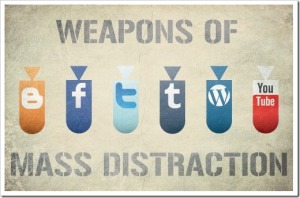
Nearly every night I sit down with my laptop and open it to a blank Word document, convinced that this is the night I will begin my masterpiece, my opus, my version of the Great American Novel. And then I get distracted: laundry, dinner, cats, a funny lump behind my earlobe, the stupid TwoDots game on my phone. Words with Friends. Something. Anything to keep me from putting my thoughts down. There are a million things I will do before I finally succumb to that little voice, that growing voice, that roaring voice, the one that pushes and pulses behind my eyeballs, that makes my heart pound faster. I have to, at some point, listen to that voice, give in to that voice or I will explode. Maya Angelou is credited with saying that there is no greater agony than bearing an untold story inside. I agree.homework

Another trouble with writing, with being a writer, particularly if one is a writer of nonfiction, memoir, creative nonfiction, is that telling the truth, or our version of the truth, is bound to offend someone. Probably we will offend someone close to us, a family member, a good friend. And we may throw lots of other folks under the bus—there’s an entire cast of characters from which we can choose: teachers, grandparents, doctors, lawyers, therapists, the barista who forgot your regular order. The waiter who seated you near the kitchen. Really. This is an endless list.

And there are so many reasons we need to keep the peace with all of these folks. We need them to like us. And, what we often forget is that the chances of anyone actually reading what we write is slim. Oh sure, our writing group might, and a teacher, if we’re in school. But Grandma? Uncle Ed? The barista? Not likely. So, really, this is not a good excuse to suppress the urge to write.

Never mind the friends and relatives, though. When I think about writing, about what I want to write, an overwhelming sense of responsibility immobilizes me. I can’t write anything frivolous, I tell myself. What I write should be Serious. And Thoughtful. Well considered. And I should have read as much as possible on the topic. I don’t want to offend anyone. What I write should have a moral, a takeaway, but subtly. I don’t want to be too didactic. My prose should be poetic and authentic. My metaphors had better be spot on. My grammar and punctuation, impeccable. Most importantly, I don’t want to be misunderstood.

mass-distraction-rrv33nNo wonder I freeze up. No wonder I’d rather play gin rummy on my iPad.

But no more. This year I resolve to write the stories. And if you happen to be a character in my life, oh well.

You’ve been warned.

Lesbian Identity: A Quiz, the Results, and What I Learned

This quarter, as I continue working towards my Master’s degree in Clinical Mental Health Counseling, I am taking a course on counseling the LGBTQ population. Here is the course description as it appears in the syllabus: This course provides an overview of clinical issues, contemporary theories, interventions, and research relevant to the treatment of sexual minorities. This population includes Lesbian, Gay, Bisexual, and Transgender clients, as well as those clients who identify as other than heterosexual (e.g. Queer, Pansexual, Omnisexual, etc.), or are questioning their sexual orientation or gender in any way. Psychological, social, cultural, and developmental issues are explored within the contexts of theory and practice. Emphasis is on affirmative mental health services for sexual minorities, including the importance of developing an awareness of the cultural, historical, and social realities of gay, lesbian, bisexual, and transgendered individuals. Readings, discussion, videos, presentations, experiential activities, and guest lectures/panels will serve to heighten awareness of problems such as homophobia and heterosexism as they affect the therapeutic setting, the counseling relationship, and the process of psychotherapy.

Students have to pair up to lead class discussion each week, so I signed up for week two (last week), which was to cover Lesbian Identity. I wanted to be done with the assignment early on in the quarter, AND who better to lead the discussion on Lesbian Identity than an actual lesbian?

Imagine my dismay when I realized the articles we’d been assigned to read were all sadly out of date. Two were at least ten years old, and the third, a study done on 15 lesbians who lived in the UK, looked at clothing and hairstyle choices and how they correlated to coming out, data that hardly seemed relevant for a counselor in training in the Pacific Northwest.

The findings certainly didn’t match up at all with my own experience. Coming out for me had nothing to do with how I dressed—I started shopping in the boys’ department when I was a child. Ask my mom. My short haircut has nothing to do with being a lesbian and everything to do with being lazy. And the fact that I look hideous in long hair. Never mind that all the women in Bellingham—lesbian, straight, queer, bisexual—look and dress alike. There’s a uniform: fleece, jeans, hiking shoes, short hair. We all look the same, a confounding and complicating fact of life for the women (and men!) who reside here.

So, armed with my indignation and determined to find more useful data, I put out a call to my Facebook friends. Would any of them give me permission to use their pictures and their sexual identities for a Lesbian Identity Quiz? The responses overwhelmed and heartened me. Assent and identities flooded my inbox. My friends—lesbians, straight women, bisexual women, queer women, were all intrigued and excited about this project. I began creating a PowerPoint slide show, the most stunning one I have ever made, full of my friends’ bright, shining, and beautiful faces.

And it wasn’t just about the pictures. Women sent me stories too, about their sexual orientations, their choices, their gender identities. Intimate stories. I had been gifted with very personal revelations. My excitement for the project grew as I realized I had tapped into something elemental here. Don’t we all want to be seen? Don’t we all want to know how others see us?

The enthusiasm for this project caught me a bit off guard. I heard from some Facebook friends I hardly know, from others I hadn’t heard from in years, from some I have never even spoken to in person. A few I had been close to once upon a time. And a handful with whom I have just a nodding acquaintance. The eagerness surprised me, heartened me.

A couple of people sent me specific pictures, but the rest told me to use whatever I wanted from their Facebook photos. I set about culling just the right pictures from dozens of Facebook feeds. Some were easy to find, others not so much. Many pictures were taken with significant others: wives, husbands, lovers, kids. I needed clear, easy to see photos that wouldn’t reveal anyone’s identity in an obvious manner, i.e. no wedding or family pics.

I didn’t want to bias the results via the pictures I chose, but I faced a dilemma: what picture actually best represents someone? Given the opportunity to choose a picture of a straight woman in a dress or a cowboy hat, which would I opt for? Or, my friend who has a biracial baby—what message would it send if I included a photo of her holding her child? For my lesbian friends, would I choose photos of them that emphasized their more masculine traits or their more feminine sides? I have to say in retrospect that my choices probably skewed the results.

I set up the slideshow with six pictures per slide, and when I clicked the mouse, the pictures disappeared one at a time, revealing each woman’s sexual identity (lesbian, bisexual, queer femme, or straight). I printed slideshow handouts to give to each class member, so they could write their best guesses next to each picture. I looked at my work and was proud. This was going to be a kickass class discussion and presentation. I could hardly wait.

Imagine my surprise then, when I introduced the quiz in class and the instructor immediately objected. “Wait a minute,” she said. “Is everyone comfortable judging other people like this? I’m not sure this is okay.”

I stood there, stunned, and wondered for a moment if I had made a serious error in judgment. I explained that I had everyone’s permission, that each participant hadn’t just agreed but had enthusiastically and wholeheartedly opted in. My classmates rallied to my defense, shutting down the instructor’s objections in short order. I passed around the handouts and fired up the slide show.

When they had finished the quiz, I went through the slide show quickly so they could compare their answers. I didn’t linger over individual identities, nor did we discuss anyone’s picture or what made someone look like a lesbian or a straight woman. Instead we talked about what it was like to judge people based on appearance. One female student said she refused to make any judgments about the individuals, saying they all looked like beautiful women to her. The instructor refused to take the quiz, as well. But she also refuses to label herself. Honestly, I have to say I have some judgments about that.

We discussed the safety of being identifiable, the politics of passing for straight. I (being the only self-identified lesbian in the room) talked about the changes in the past ten or fifteen years. How I used to feel like no one would know I was a lesbian because gays and lesbians weren’t part of the social or political discourse. Now, I feel like I’m always identified, categorized, and labeled. The discussion meandered from there, eventually covering a variety of topics, but one that we kept bumping up against and then turning away from, how to meet this population in our counseling offices.

And there’s the lesson—or should have been. How will we counsel lesbians when they come to us? What will we know about Lesbian Identity? Is it important that we know how a dozen or so UK lesbians changed the way they dressed when they came out? Or better that we know it’s nearly impossible to identify someone by the way they look? That 50% of the time we can tell a straight woman from a lesbian? That hardly anyone will know a queer femme when they see one, and more often than not bisexuals are invisible?

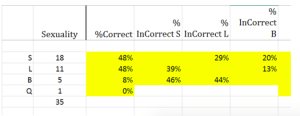
My tiny experiment revealed that, in this instance at least, we are right about our assumptions approximately 50% of the time regarding sexual orientation. I’m sure there are many more ways I can exploit the data for better/more interesting information, and I have my more mathematically inclined friends working on that for me. I’ll publish those results when I get them. In the meantime, here is what I have.

What are your thoughts, Readers?

Screen Shot 2016-01-20 at 12.26.41 PM
Quiz Results: Number of guesses in each identity. The * indicates the correct identity
Screen Shot 2016-01-20 at 12.28.04 PM
Percentage of correct guesses, broken down by orientation.
Screen Shot 2016-01-20 at 12.27.13 PM
Bar Graph representing guesses. Correct orientation is across the bottom, number of guesses in each category
Screen Shot 2016-01-20 at 12.27.21 PM
Percent of correct guesses of each photograph

Makeup Beauty Doll and Other Problems with White Privilege

Reposting, again. It’s been two years since I last posted this and many years since I wrote it. It’s still relevant.

Pam's avatarPamela Helberg

Many years ago, flummoxed by the joys and perils of raising two non-white children in our predominantly white culture, I wrote an essay expressing my doubts and fears, and (surprising to me now) my certainties (you will recognize them when you see them). Some of what I wrote makes sense and some of it clearly needs rethinking. Yesterday on the day we celebrate Martin Luther King, Jr., my eldest daughter, now 23, texted me (this is how we communicate these days). She was wondering if I thought it odd that the company for which she now works didn’t celebrate the national holiday. I do find it odd, odd that only governments and banks shut down on this Monday when the world grinds to a halt, more or less, for other national holidays: Christmas, Thanksgiving, Memorial Day, the 4th of July.

My initial response to her was yes, MLK day…

View original post 1,182 more words

New Year Haiku

Sitting, staring, contemplating
Sitting, staring, contemplating, notebook in hand.

During the holidays I had the luxury of time, during which I was able to write some new haiku. I’m always amazed at how a few moments of contemplation can result in words, images, and phrases arriving and coalescing into something more, how an hour or two staring into space or at the sea creates the space in me to realize metaphors and make connections.

I want 2016 to include more of these moments, stolen away from the pressures of daily life. I want 2016 to be a year of more poetry.

This ache, unyielding,
Spreads through my bones. Malignant
Love, metastasized.

Pulled by your tides and
Seduced by your moon, I float
Free in your salt sea

Dreams of you send me
Beyond the curve of the earth
Spinning through night skies

Wash me, erode me–
Rough surf, relentless pounding.
Can’t swim in these waves

I hope you don’t mind,
Ersatz inspiration, you
Are my makeshift muse

I want to be as
relentless as the ocean
pursuing the shore

Anxious attacks me–
All soft syllables, she bites
With ferocity

We could be breathing
Side by side. Instead you chose
Only to exhale

There’s new light on the
horizon. Nighttime will slip
Away into dawn

Some days I forget–
Even deep scars fade with time.
Blood and tears both dry.

I googled your name.
A thousand not-yous filled my
Screen. Damned imposters.

We are all blind in
Our refusal to really
See one another

Choosing blindness won’t
Render you invisible.
My vision is clear

Uninsulated
This fear electrifies–my
Body, conduit