As usual, I’m a few entries behind in this A to Z Blogging Challenge. It is easy to fall into feeling badly about not getting it done on time and in lock-step with the schedule, but the reality is that it doesn’t really matter. By at least keeping up with the writing on a semi-regular basis, I’m doing Good Enough, which is far better than I was doing in March, which was absolutely zippo when it came to writing.
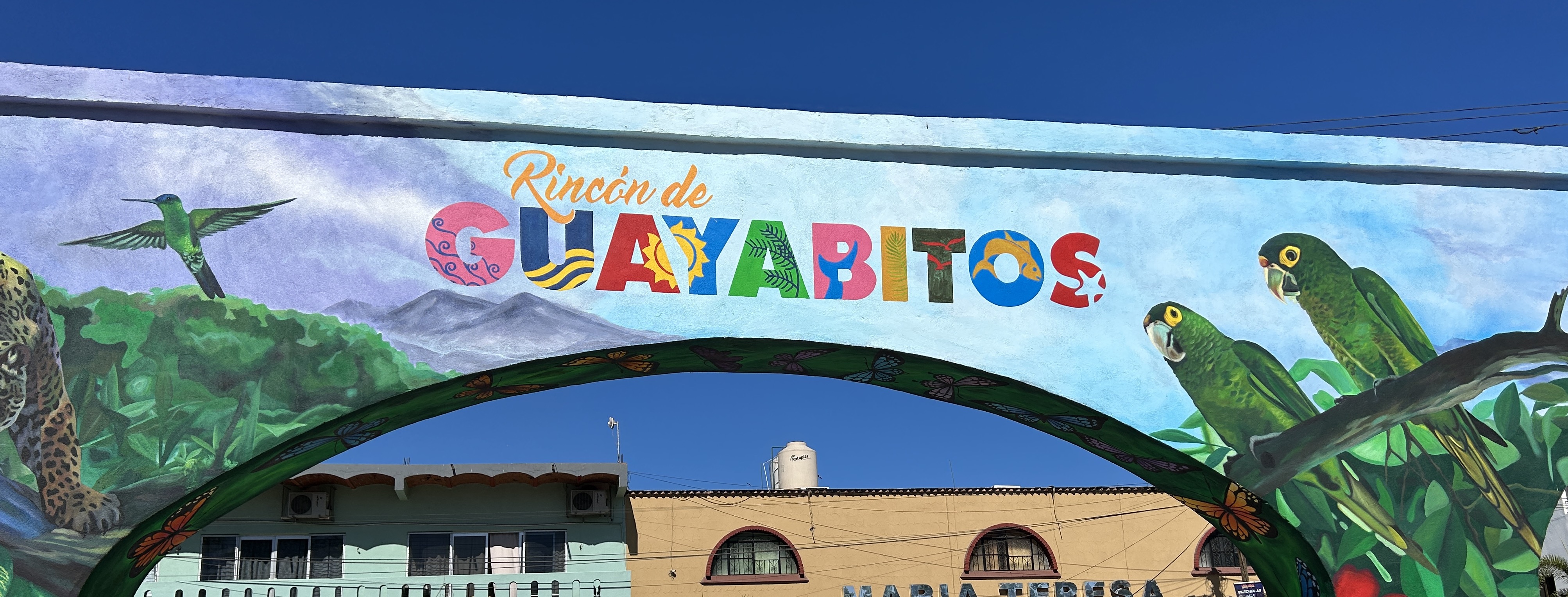
So. G. As mentioned in previous entries this month, I spent some time recently in the lovely little Mexican beach town of Rincón de Guayabitos, located about an hour north of Puerto Vallarta on the Nayarit Coast. If you’ve been reading to this point, you already know that my dad has lived here for the past 16 years, along with a host of other ex-pats, mostly Canadians and a sprinkling of retired Americans (or, Americans tired of America), i.e. gringos.
I did not know, prior to this trip, that the term Gringo is used to describe Americans, but not Canadians or other northern white European types. There are several theories as to the origin of the term, but the one I prefer is that it refers to the green-uniformed American soldiers who were there during the Mexican American war (1846-48) and were told to leave (i.e. “green go”) and was shortened to gringo.
But, the gringos bring in money and the locals seem friendly and welcoming of the white tourists. The primary economic driver in Guaybitos is tourism—restaurants line the beachfront and the main street through town, and the other store fronts are filled with tchotchkes and trinkets: potions, t-shirts, bags of salt, cheap bracelets, shot glasses, flip flops, and straw hats.
Vendors ply the beach, hawking everything from beadwork they claim to make themselves (a dubious claim as many vendors sell the same damn beaded birds on a variety of local beaches), to donuts, to shrimp on a stick, to tajin covered mangos, to wooden cutting boards, even tattoos and hair braiding.
Early on my dad warned me against eating anything from a beach vendor, especially any meat on a stick. They once had guests who ate some shrimp and spent the next ten days, their entire vacation, in their rooms puking and, well, the other thing. But we did spend a lot of time musing, My Travel Companion (MTC) and I, about who is eating those things, because if they weren’t selling they wouldn’t be out every day selling them.
I did finally give into the urge to purchase a delicious tajin-covered mango on a stick. The only ill effect was the stringy mango stuck in my teeth. But otherwise we stuck to the restaurants where I managed to eat so much guacamole that I didn’t think I would ever want any more ever again. But, turns out, I still love the guac. I could eat guacamole and totopos forever. With Pacifico or, better yet, a margarita. Or three.
The beach in Guayabitos divides neatly into two parts, the Mexican-tourist end, south of the spot where the fishermen sell their catch early each morning, where the pelicans flock for fish guts, and the gringo end to the north, closer to the Zona Residencial. Meals and drinks at the restaurants on the northern end of the beach are quite a bit pricier than meals on the southern end. And we found our favorite places to eat and drink. For breakfast, MTC and I independently discovered Huicholitos, for huevos al gusto, hugo naranga, papas rayada, and frijoles. Weeks went by before we discovered we were eating breakfast at the same place on the beach just at different times!
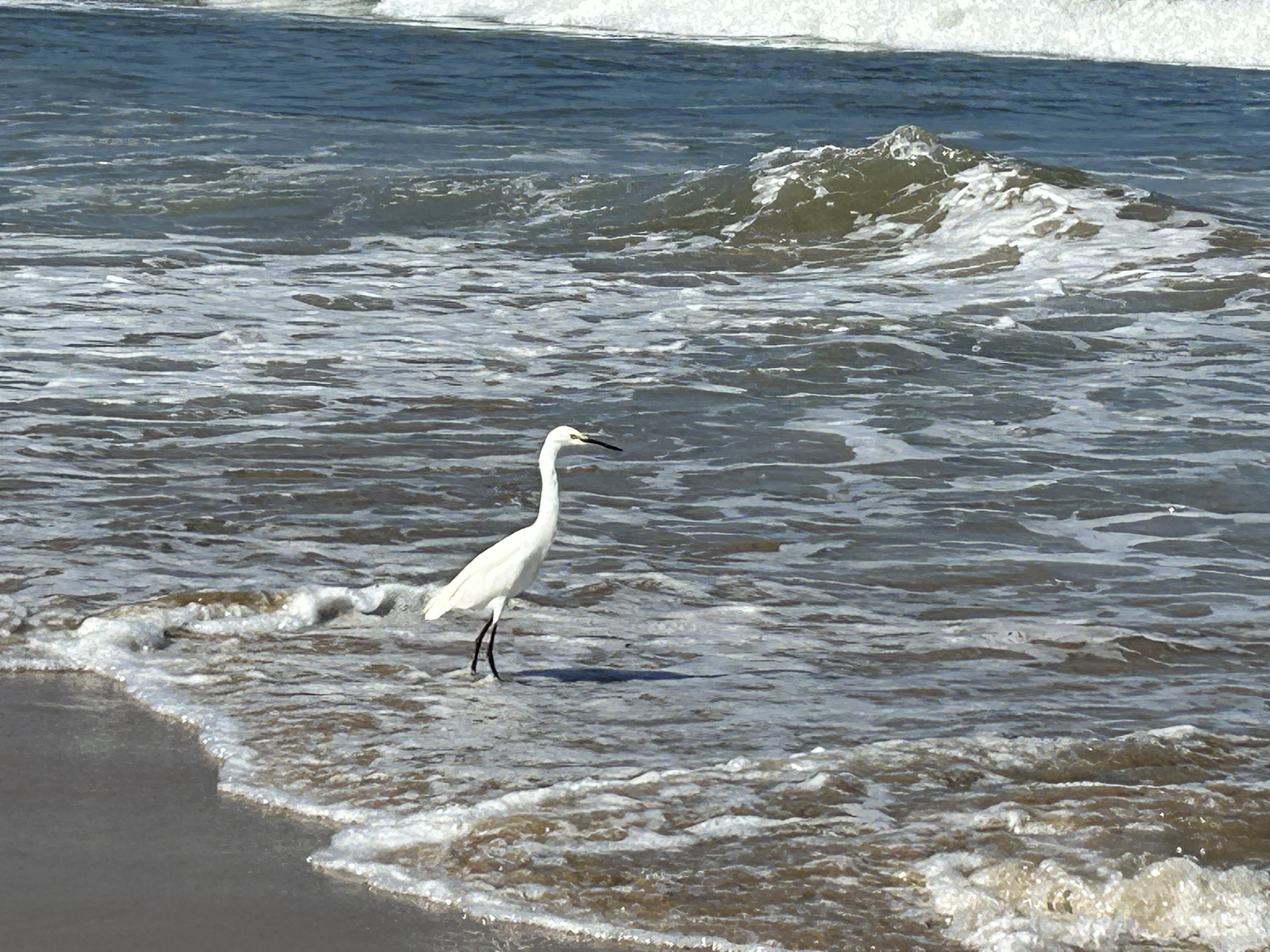
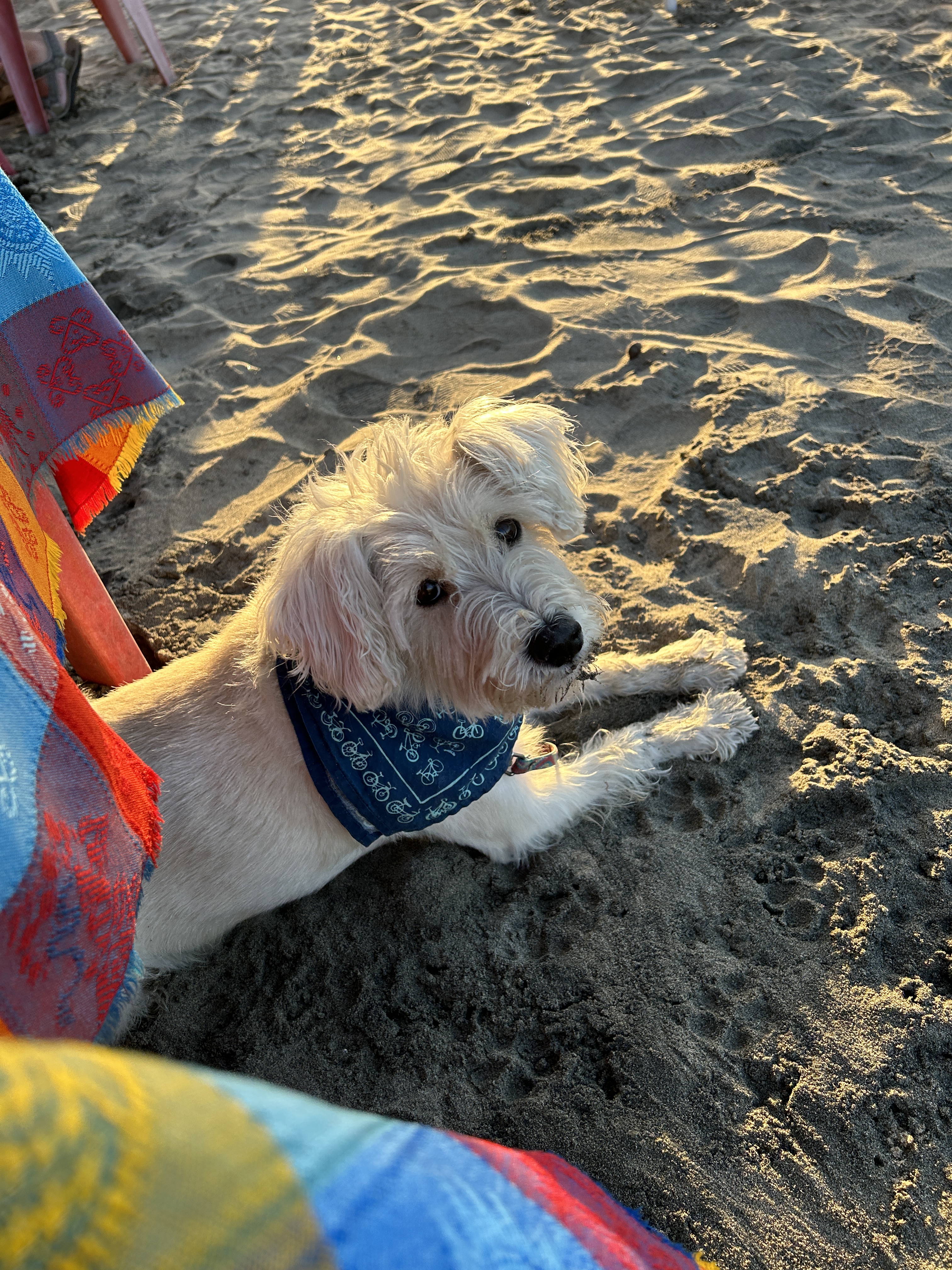
I spent many days at the north end of the beach just sitting and listening to the waves and taking in the views of the Isla de Coral. I boogie boarded and played in the water as well, and took Bodhi for beach walks most mornings. On the afternoons when I didn’t have to work, Dad, and occasionally Marilyn, would meet us there with a bag of fresh popped popcorn and his Coca Light while I gorged on the Queso Ruffles and Corona Light. A habit I’m still trying to break.
Families fall apart in myriad ways. I see it all the time in my work with counseling clients, and my own family is not immune to this fracturing.
After two years of estrangement, I found my father at the La Penita Thursday Market, manning his real estate booth (see D is for Dad). Or should I say, my travel companion (MTC) found him and breathlessly reported back to me.
“He looks like he’s having issues moving, and his eye is kind of funky,” she said. “You really should go over and see him.”
I wasn’t sure. After the initial wash of relief that he was still alive, I chafed at the fact that he had not responded to my emails and texts telling him I would be in the area. I didn’t know what sort of reception I would get. I wasn’t sure I could handle him refusing to see me. But that was my frightened child self.
My adult self, my Mother Self, knew differently. I couldn’t imagine refusing to see one of my own children, no matter how hurt I might be, no matter what they might have done, no matter what their feelings for me. And like I say hundreds of times a week (it seems) to my therapy clients, “we are all more alike than we are different. If you feel this way, chances are others do as well. Operate from that assumption rather than from fear.”
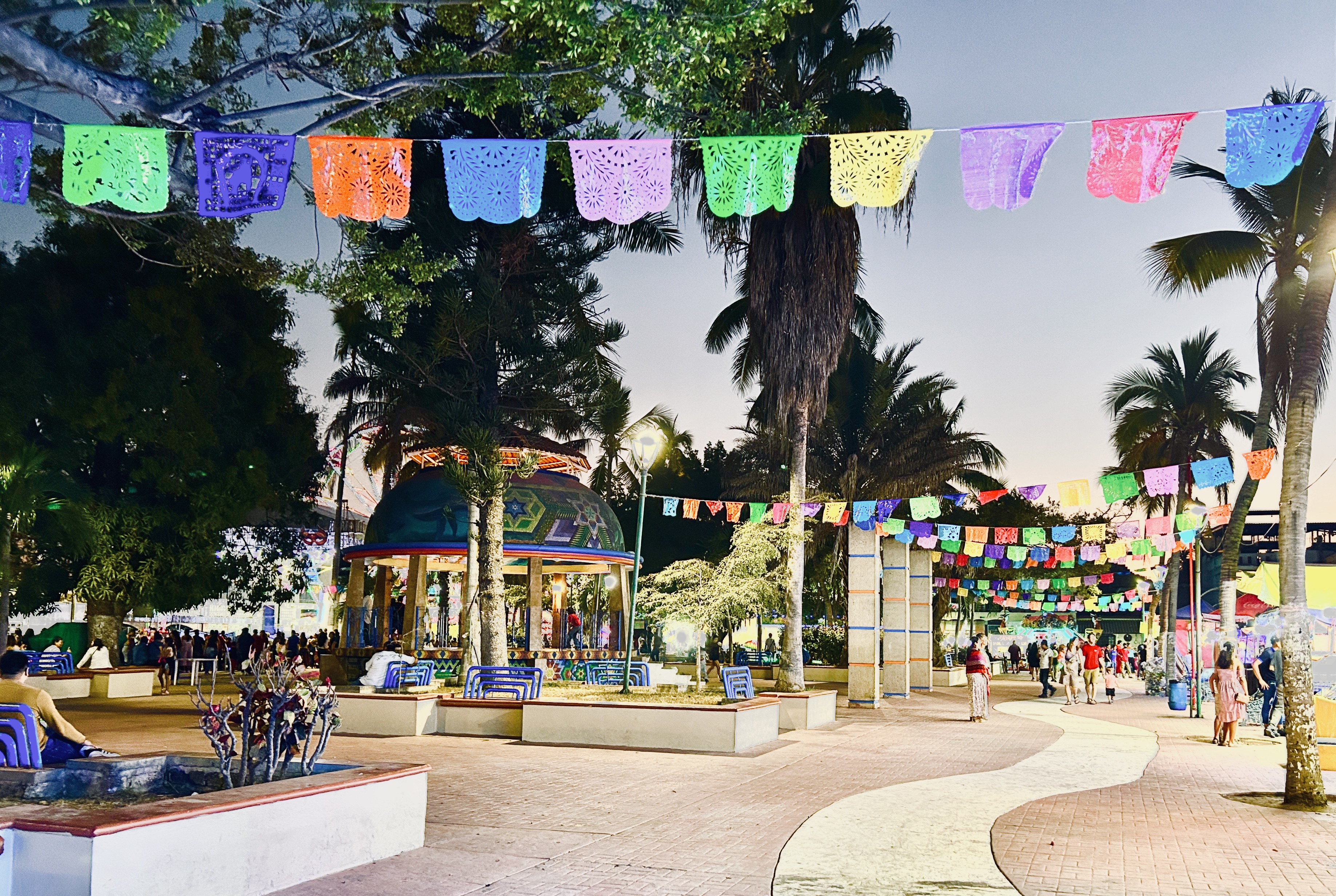
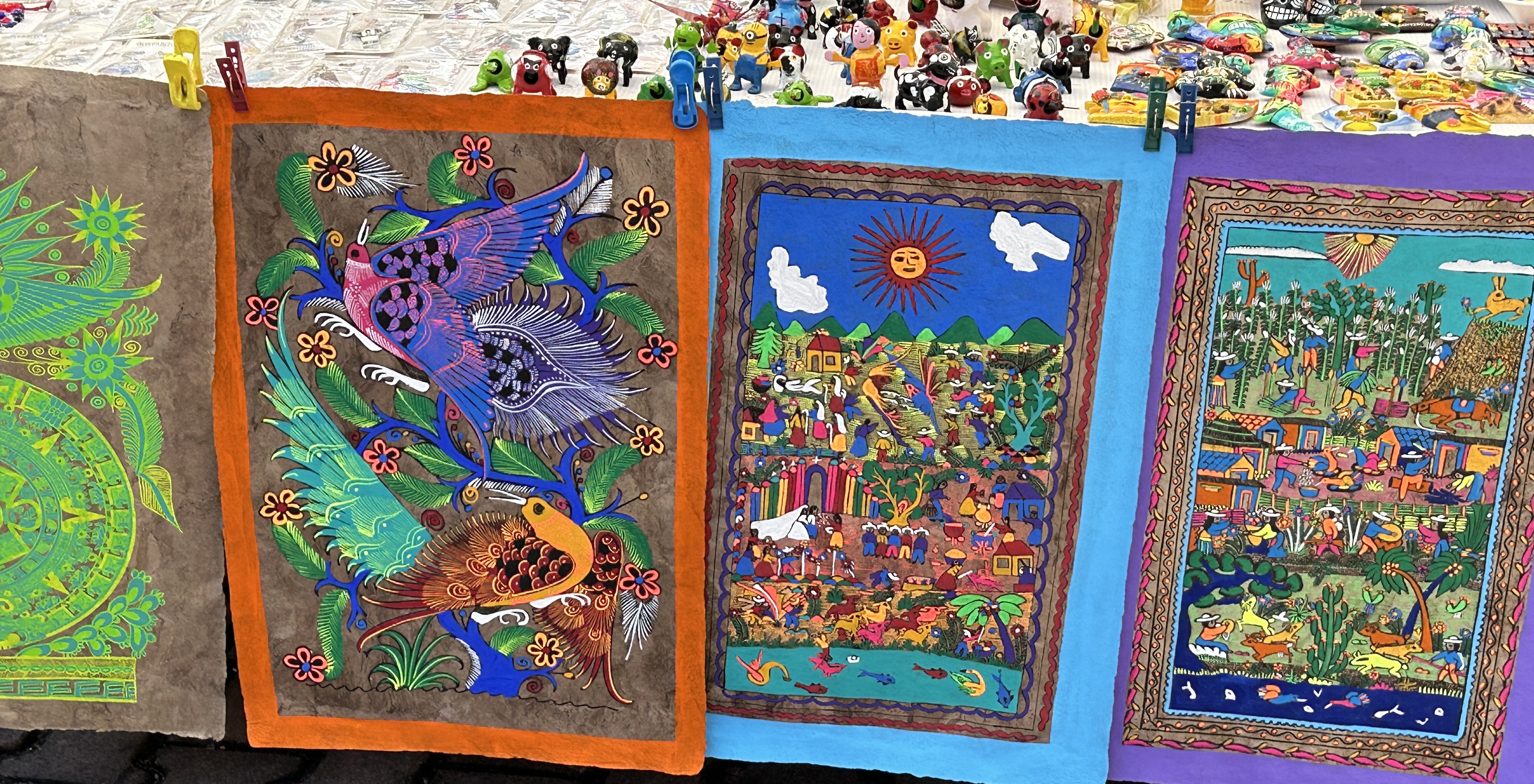
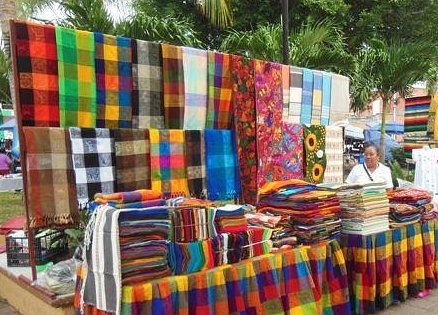
Still, I stood, immobilized by my fear, feet frozen to the cobblestones among the push and shove of gringos haggling over pesos with the artisans and tchotchke vendors. The vibrant colors of Mexico blazed in the early morning sunlight.
“Go see him, Pam,” MTC urged. “He might not have much time left.” Maybe she was being hyperbolic regarding his health (after all she didn’t have a baseline), but she did have recent experience with her own mother’s death, her own problematic parent. “What do you have to lose?”
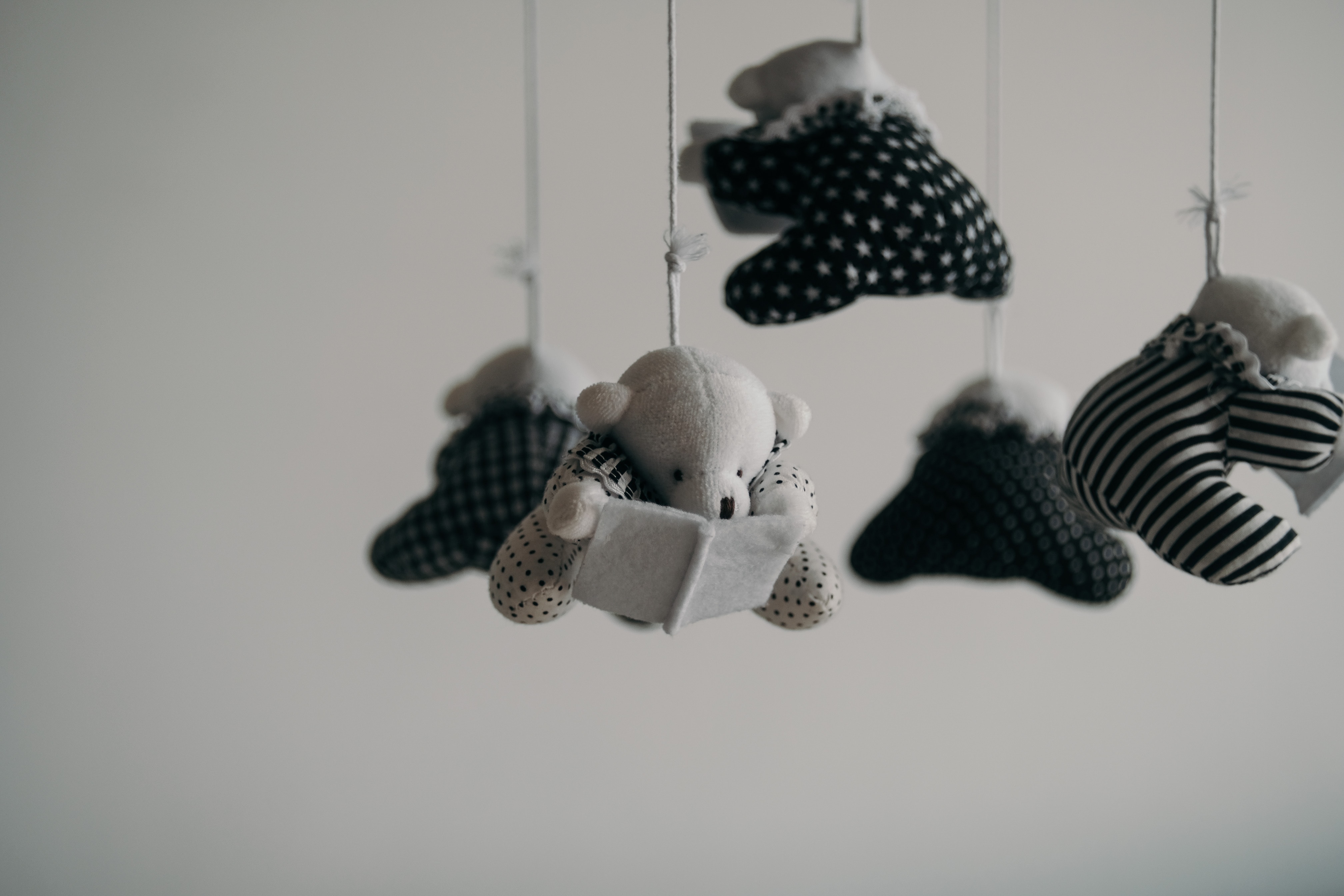
I often find myself describing family systems to my therapy clients as a mobile, a delicately balanced objet d’art, and when one piece is moved (or removed), the entire piece is thrown out of alignment. In order to restore balance, the other pieces must shift positions or forever be askew.
But, systems resist change. Especially the family system. It seems easier for the missing or moved piece of the mobile to simply resume its assigned place rather than for the other pieces to change. Often, family members will continue to resist the change, opting instead to dangle there in their dysfunction, rather than shifting and adapting to a new arrangement in order to restore optimal functionality.
So it was when my parents divorced at the turn of the last millennium. For the better part of twenty years, I resisted my father’s new reality, his new marriage, his move to Mexico, his pursuit of his happiness, irritated at the changes, the inconveniences, the occasional bad behavior.
Our own Family Fun Mobile grew even more askew when Dad’s wife emailed mid-pandemic (or texted or possibly even called) my brother and then me to ask if we could take care of Dad for a couple of weeks while she had hip surgery. Reader, it seems petty in retrospect, but that request sent us over the metaphorical cliff.
For starters, I had just put my house on the market and literally had no place to house Dad, had I been willing, but I had also spent the past few years caring for Mom, his ex-wife, who had dementia and was now in a care facility. I continued to harbor resentment for what I saw as his abandonment of her (to be fair, she was perfectly healthy when they divorced). Still. Somehow, I saw him as responsible for her all these years later. Even though I can’t imagine being held responsible for my ex-wife even five years after our split.
And I continued to be irritated about how he had treated me when I came out as a 17-year-old lesbian (it wasn’t great, Reader, but it was over 40 years ago). My brother’s refusal to look after Dad sprung from deeper, more recent wounds, but without getting into details that are not mine to share, suffice it to say, I stuck up for my little brother. As I am wont to do.
Long story short, we didn’t just tilt our mobile. We ripped it down and threw it in the trash.
And that’s where it was as I stood in the hot Mexican morning trying to decide if I could begin the process of repair. Our family had fallen apart in some very specific ways. Could it be salvaged?
I took a deep breath and decided to put what I knew into practice, to be the grown up adult I knew myself to be. I told MTC I would find her later, and I walked down that cobblestone path toward forgiveness.
Before my travel companion (hereon referred to as MTC) and I relocated from the suburbs to our new casa in Guayabitos, we made a couple of trips up the coast to explore some of the smaller beach towns: San Pancho, Lo De Marcos, Los Ayala, Chacala. I’d been to them all before on trips when I came down to visit with my dad and his wife, Marilyn. I wanted MTC to see how amazing the coast could be—palapas on the beaches, $1 beers and $3 margaritas in the sand, boogie boarding in the warm waves.
And, I wanted to check out my dad’s house. I hadn’t spoken to him since early in the pandemic when he and Marilyn came to stay with me in Bellingham for a few days. We’d had a falling out in the meantime and I didn’t know if he was even still down here. My last trip to Mexico had been during Christmas/New Year’s 2015/16, and I’d come down with friends on a vacation, not to see my father. At that time, he and Marilyn had rented their home out and were in a smaller, cheaper place on the same street, so we visited once or twice, but I hadn’t been to stay with them since.
Sixteen years ago, about five years after they married, Dad and Marilyn sold their belongings and moved to Mexico where they built a house near the beach in Guayabitos, and I’d been to visit a handful of times. At first, I didn’t want to enjoy myself. I was mad that my parents had divorced, mad he’d remarried, mad that when they moved he had returned all the framed photos of my family I’d given him over the years, mad he’d moved so far away. But, it turned out that I really enjoyed Mexico, loved their home, and had a wonderful time whenever I came to visit. So, it became more difficult to continue my adult child temper tantrum.
I navigated our little rent-a-dent rental car down the cobblestones on Flamingos Avenue.
“This is it!” I exclaimed as we bumped to a stop. “This one with all of the For Sale signs on it.”
I parked the car and jumped out for a better look. I jumped to try and see over the adobe wall. I couldn’t jump high enough, so I wedged the toe of my flip flop between the door and a protruding brick and levered myself up to peer through the high window in the iron gate.
“Looks pretty unoccupied,” I declared. “No car in here. They either don’t live here or they’re out.”
I climbed back into the driver’s seat. “I wonder where they are. If they’re even down here.”
It was an odd feeling, not knowing where my dad was. I’d been angry and annoyed with him the past two years, and now I just really wanted to know that he was okay. Up until now, I hadn’t given much, if any, thought to his whereabouts. Suddenly it felt imperative to find him. And, I wasn’t certain he’d be happy to see me, even if I could find him.
Last time we communicated, I hadn’t been very nice. For a variety of reasons, some of which I continued to feel justified about, others that I could let go of. I did not want to continue our estrangement. I didn’t want him to die thinking I didn’t love him, that I hadn’t appreciated him, believing I’d rather he wasn’t in my life. After all, that’s how things ended between him and his father. I’m a big believer in ending the cycles of family dysfunction (though, I’m sure I’ve initiated a few of my own). When my grandmother died, my dad severed ties with his four sisters. We didn’t need more family cut-offs.
To add to my confusion about whether or not he’d want to see me, I hadn’t received a reply to my Merry Christmas email or my Happy Birthday text. Nor had he responded to any of the emails I’d sent alerting him to the fact I would be in his town for a few months.
I knew that if he was still in the area, and still selling real estate (the for sale sign has his name and phone number on it), he would likely be at the Thursday market in La Penita, the little town about a mile north of Guayabitos. MTC and I made plans to attend the market—it just happened to be the next morning. I knew she’d want to visit the market—it was a cultural experience, a full-on explosion of color and smells, a combination artisan, tchotchke, flea market, textile, Mexican food market. Dad used to have a real estate booth there.
I’m going to try this again. I’m a day late, but I’ve got my A blog ready to go. I know I haven’t finished this series in a number of years, but maybe this year will be different. I need to start writing again. I need to commit to something besides work. So. Here we go. I plan to make this blog about my recent adventures in Mexico: how we ended up there, what we discovered, how it turned out. I may also sprinkle in a few tidbits about vanlife and how that is all unfolding: the challenges, the benefits, the weird and unexpected things that pop up.
What keeps us in something longer than we know is good for us? Friends, I know so many smart, educated, brilliant women who have stayed in relationships far longer than warranted, far longer than was safe, physically, emotionally.
The reasons we stay are as varied as our individual lives, but I would posit that we stay because we are afraid to fail, terrified to admit we haven’t lived up to the cultural fantasy of what marriage and family should be.
I know that fear ruled many of my relationships, one set of fears put me there and another set kept me in them beyond the “best by” date.
I’ve found myself explaining my past a lot lately—funny how potential partners want to know what happened, really, that a gem such as myself should suddenly be single and available now (LOL, I really crack myself up).
What drove me to settle down at 23 and become a parent before I turned 30? Fear. Fantasy.
How did it come to be that I put my need to be loved above my children’s needs in my next relationship? Fear. Fantasy.
How, pray tell, does a 58-year-old still grocery shop and eat like a five-year-old with a credit card? Fear. Fantasy. Seriously.
Dates, even phone dates, have so many questions. And rightly so. We all have arrived in this same space, these boxes on the internet where we are all putting our very best hiking-boot-clad feet forward, vying for the last Fine woman out there. Trying to remember what landed us here and worrying that the others all have the exact same traumas and baggage, fearful we will miss the obvious warning signs.
We are afraid, or at least I know I am. Of one another. Of scammers. Of being alone into our dotages. Of more disappointment. Of being hurt yet again.
We believe the fantasy is possible (and we should, we have to). I desperately want to believe. We want someone to wrap ourselves around on a lazy Sunday morning. Someone to smooth our hair from our foreheads when we struggle, someone to tell us it is okay, that we are okay. That it’s going to be okay.
Humans are wired for connection. We do better in relationships than we do alone. Studies show, that just like children can best self-regulate when a parent functions as a secure base, so do adults in solid relationships. But it takes more than fantasy to create relationships that allow us to flourish. It takes a belief in ourselves as deserving.
Just another suburban soccer mom
I settled down at 23 because I was afraid my parents would never accept me if I wasn’t as “normal” (i.e. as close to heteronormative, though in 1986 that was not a thing) as possible. How better to convince them with than a wife, a nice house, a good job (well, speaking of fantasies), and a couple of kids? It worked, too, btw.
I believed the fantasy that I could live as less than authentically myself in order to fit in. And boy, I gave it a good run.
Fear drove me into my next relationship as well. Fear of so many things, but mostly fear of never finding happiness again after losing custody of my children. I was so afraid I’d miss out on their lives that I failed to notice entire bouquets of red flags. And fantasy kept me there—the fantasy that I could sublimate my needs indefinitely in order to create an illusion of success and happiness. I did that well, too.
And it wasn’t all bad. I have my girls—the reasons I kept on keeping on through it all. I had some fun. We threw some epic parties. I made terrific friends along the way—I found my people, and my people helped me find my way.
I learned I am okay exactly how I am. I was okay before the pandemic. I am emerging from it intact. If I come out of it with a partner, so be it. If I don’t, that’s okay too, because I am Fine. Better than fine. Fabulous.
I am reposting this today though I wrote it four years ago. Much has changed since then. I was thinking this week how we still aren’t completely free to be ourselves in public. I was on the Oregon Coast and walking down the beach behind what I assumed was a lesbian couple. We were at least a mile from the main beach and far from the public eye on a remote part of the beach before they held hands. They seemed oblivious to my presence a dozen yards behind them, but I couldn’t help wonder what if I had not been me, but someone who didn’t support LGBTQ rights? What if I were a homophobe and emboldened to act out as so many are these days?
It’s fitting that National Coming Out Day should fall during Mental Health Awareness Week. The two are inextricably linked.
We wore our cowgirl outfits to the wedding, after all the invitation had said country chic and it was being held outdoors in Jackson Hole, Wyoming with the reception to follow in a barn. Me: black cowgirl hat, pointy-toed boots, Western shirt with pearl snaps, bedazzled cowgirl jeans. The Little Woman: ruffled skirt, black cowgirl boots, black Western shirt with longhorns on the shoulders, pearl snaps. We had road-tripped down in our Jeep, all 1600 miles or so, through eastern Washington, eastern Oregon, Idaho, Wyoming. We were excited to see the family, to celebrate with my cousin Brad and his soon-to-be wife Megan.
TLW grabbed my hand when we got out of the Jeep and waited for my brother and his family and my father and his wife to debark from their vehicles and join us as we walked to the front of the (very upscale) barn. I let Nancy hold my hand then, but I could feel that familiar uneasiness creeping in the closer we got to the venue, and when I didn’t immediately see anyone we knew (i.e. members of the family) or anyone else so duded up, I pulled away and dropped her hand.
“So that’s how it’s going to be,” she said. “Really?”
At that moment, self-preservation trumped self awareness. I pretended not to hear and walked a little bit ahead, suddenly flooded with shame and hoping that either the ground would swallow me whole or that a whole posse of cowgirl lesbians might be waiting for us just around the corner. Of course neither happened. Around the corner waited only straight (as far as I could tell) normally attired wedding attendees—maybe a bit more casual than normal wedding attendees, but still, straight, suit jackets, dresses, the occasional cowboy boot. I wanted nothing more than to turn heel and run, to safety, to the familiar, to someone I’ve never been nor will ever be: a taller, thinner, more feminine, more socially acceptable me.It did not matter one whit in that moment that I was surrounded by people who loved and accepted me. It did not matter in that moment of panic that my brother was also wearing a cowboy shirt and cowboy boots and jeans and a cowboy hat. It didn’t matter that I had come out to my family years ago and that TLW and I were as accepted and loved and as much a family unit within the extended family as my straight cousins and aunts and uncles. All that mattered to me was my obvious otherness.
I did not flee. Even when I realized we were 45 minutes early and would have to mingle and make small talk or stand awkwardly with each other and sip the lavender water. I silently cursed the lack of pre-ceremony alcohol and our obsessive punctuality. I talked myself down from that internal ledge and tried to see us as others might. I tried to look at the individuals in the crowd and not at the crowd itself. I feigned interest in the barn and the surrounding grounds, and I eagerly greeted familiar faces as they trickled in. I reminded myself that I was 50 years old, goddammit and beyond (hahahaha) caring what other people thought of me and my life choices. I berated myself into behaving as if I actually believed that.
Eventually, I talked to enough people, had enough wine, ate enough dinner, spent enough time to re-inhabit my body. No one laughed at me. No one made fun of me for being a lesbian. In fact, just the opposite happened. I relaxed and opened up, and TLW and I danced. We danced together, alone, with strangers on the dance floor, and as we danced a funny thing happened: acceptance.
The wedding invitations had included RSVP cards to mail back. Each card asked for a song request, what song would we like them to play at the reception? TLW told me to put down “Same Love” by Macklemore. I seriously doubted that our song would get played—partly because it’s really not a dance song, partly because it’s gay. But wouldn’t you know it—about three quarters of the way through the evening, I heard those notes, grabbed TLW’s hand and pulled her onto the dance floor as I whooped and waved my hands in the air. We were the first ones out there, but not for long. My cousin wrapped us in a huge embrace and thanked us for coming. Strangers and relatives alike joined us on the dance floor in what felt like an enormous celebration of love. Period.
I wish I could bottle the feeling I had at the end of that night, wear it around my neck and sprinkle it over me before I walk into new situations, because coming out isn’t just a one time event. Coming out happens over and over and over again, every day, every week, every month.
So, I’m on the downhill side of this mental health counseling degree I started three years ago. I can see the light at the end of the tunnel—but before I can emerge victorious from the darkness, I must complete a handful of tasks:
First, I must accumulate three hundred hours of direct counseling experience. I am about a quarter of the way there.
Then, I must amass a dozen or so hours of direct observation of my counseling skills. I’ve got that covered—no sweat.
I must also acquire many hours of supervision, which I am working on and should have little trouble accomplishing.
Simultaneously, I need to add about 20 credits to my credit total, six of which will come from the two remaining required classes I must take, Intro to Research and Tests & Measures, eight of which will come from my remaining Case Consult classes, and the rest of which will have to come from a couple of electives.
I am taking Intro to Research now, right this very quarter, and it has me flummoxed. I should not have put it off this long. I should not have waited until I was in internship to take it. I should not have dropped it all those previous quarters when I registered for it. Nope. Bad decisions have come back to bite me in the ass, here Dear Reader. I have no room in my little pea brain for academic articles. I am up to my armpits in counseling clients who have many serious mental health needs, and I am having difficulty wrapping my head around how researching and writing a paper is going to help me be a more effective counselor. It seems an exercise for its own sake, a tuition-generating requirement, if nothing else.
So, while I could not give less of a fuck about this paper in general, I am quite interested in the specific topic I have chosen, which makes me reluctant to simply blow it off. I have decided to research Trauma and Transracial Adoption (TRA). It’s a topic that is near and dear to me, a topic that I neglected to address 27 years ago when I first adopted my oldest daughter, a topic that I am now ashamed to admit that I gave no serious consideration to until just recently.
It makes sense to me that if adoption is a traumatic experience, that transracial adoption would be even more so. I mean, think about it. How in the world can white people adequately prepare children of color to navigate our racist culture? I know now that our optimism when we adopted our girls was misplaced and the result of white privilege. We didn’t have a clue how steeped in white privilege we were. Of course, when the social workers asked if I would be willing to make sure my kids received information about their cultural heritage, I promised to provide it. Of course, I said. Of course. I will read them books. I will tell them about Martin Luther King, Jr. I will hang pictures of Rosa Parks and celebrate Black History Month. But I had no idea how, 27 years later, my ignorance would affect my girls.
I had no idea. I was so naïve, my friends. So very naïve. I did not imagine all those years ago that race relations would be WORSE in 2017 than they were in 1990. Who among us would have predicted? I had no idea raising two black children in our lovely little liberal bubble Bellingham would not prepare my daughters to live in the greater world as women of color, would not adequately prepare them for future encounters with racists, with white supremacists, with law enforcement officers who would just as soon shoot them dead as ask questions.
I should have known. I should have tried harder. I should have. I should have. I should have. And so now, here I am, trying to figure out what I wish I had known then, what I wish someone had slapped me upside the head with all those years ago: how will being raised in a white family impact an African American child? What will they learn? Who will teach them how to navigate this racist world? How did I contribute, willingly or not, to their marginalization? This is perhaps the toughest question: what was my culpability? Did I collude? Can I admit it?
Admittedly, getting to the place where I can acknowledge my culpability has been tough. When my ex-partner and I adopted our kids, we just wanted children. We did not think beyond our desire to have a baby. She wanted kids, and I was along for the ride. Don’t get me wrong, I love my daughters. I would not trade them for anything. But that love doesn’t mean I don’t have regrets about the way in which we went about the adoption process. I should have steeped myself in Black culture. I should have moved to a city more inhabited by Black people. I should have made an effort to connect my kids to their heritage. I didn’t. I admit it. I took the easy path. I surrendered my responsibilities.
And now, as a sort of atonement, I am writing this research paper. It is not enough, but it is a start.
Last week I had to write my Spiritual Autobiography for the Spirituality and Counseling class I’m taking this quarter. This particular assignment scared me a bit. More than a bit. In fact, just thinking about this assignment made me itch. By its very nature, the assignment implied that not only am I in possession of some sort of spirituality, but that I have been for most of my life. I’ve discovered over the past 15 years or so that the word “spiritual” conjures up positive happy feelings for a lot of people, yet there was nothing positive about my early spiritual development. In fact, I did not have a positive spiritual experience until just two years ago at the tender age of 51. Everything spiritual in my life up to that point came from either my parents pushing their religion on me or me trying to accommodate their wishes, or me fleeing from any and everything that even hinted of religion, spirit, or the supernatural. That’s what I have to work with: my own fear and dread regarding spirituality.
My Spiritual Autobiography Art Project
Sometimes, we get stuck in our stories, so I decided it was time to change the story. Below is what I ended up turning in as well as an art project I created to go with my paper.
It is time to change the narrative that has been my spiritual autobiography. It is time to rewrite my history from a power stance, from a strength perspective, from the view of a survivor rather than a victim. While my parents filled my formative years (ages 5-22) with radical fundamentalist christianity, and while those tenets and precepts haunted and dogged me for most of my life, I somehow found the courage to follow my own inner voice and at the age of 22 began shedding what held me back. I started to develop an ethos to call my own. I used to say that I spent the years between 22 and 51 avoiding all things that had even the faintest whiff of religious/spiritual energy, but in my reframe, I must say that I spent those years searching for a spirituality that worked for me. And, truth be told, I am still searching. Only in the past two years have I discovered the merest thread of a spirituality that may work, but when I look back, I can now identify the many sacred elements of my life that have been there all along. I just didn’t know that I could shift my definition of sacred to fit my needs. What I once thought to be profane is actually sacred, and much of what I learned early on to be sacred is, in fact, profane.
The bible served as my early foundation, and I learned god was angry, vengeful, wrathful, and to be feared. Scripture seemed to mock my most deeply held personal beliefs—equality, justice, fairness, and the right to love who I wanted. I grew up with a sense that no matter what I did, I would probably end up in hell anyway: if I took communion without all of my sins being forgiven, if I had premarital sex, if I even thought about someone with lust in my heart. If I took the lord’s name in vain. If I read “secular humanism.” If I listened to non-christian music. The world became a place not to be embraced but to be feared, a land fraught with temptation and danger. I couldn’t even love to be in nature because if I loved anything more than I loved god, I was committing an act of idolatry.
Somehow, I managed to hang onto myself just enough so that the summer before I started graduate school (the first time, when I was 22), I began to seek out other perspectives. I started reading those dangerous books and making friends with non-believers, and listening to the still small voice inside that urged me to stand up for what I actually believed, not what I’d been told to believe. I stood at my kitchen sink one morning, washing the dishes and decided in that moment that I could no longer be both true to myself and remain a christian. Christianity had to go. Thus began the journey in which I started collecting my own sacred experiences.
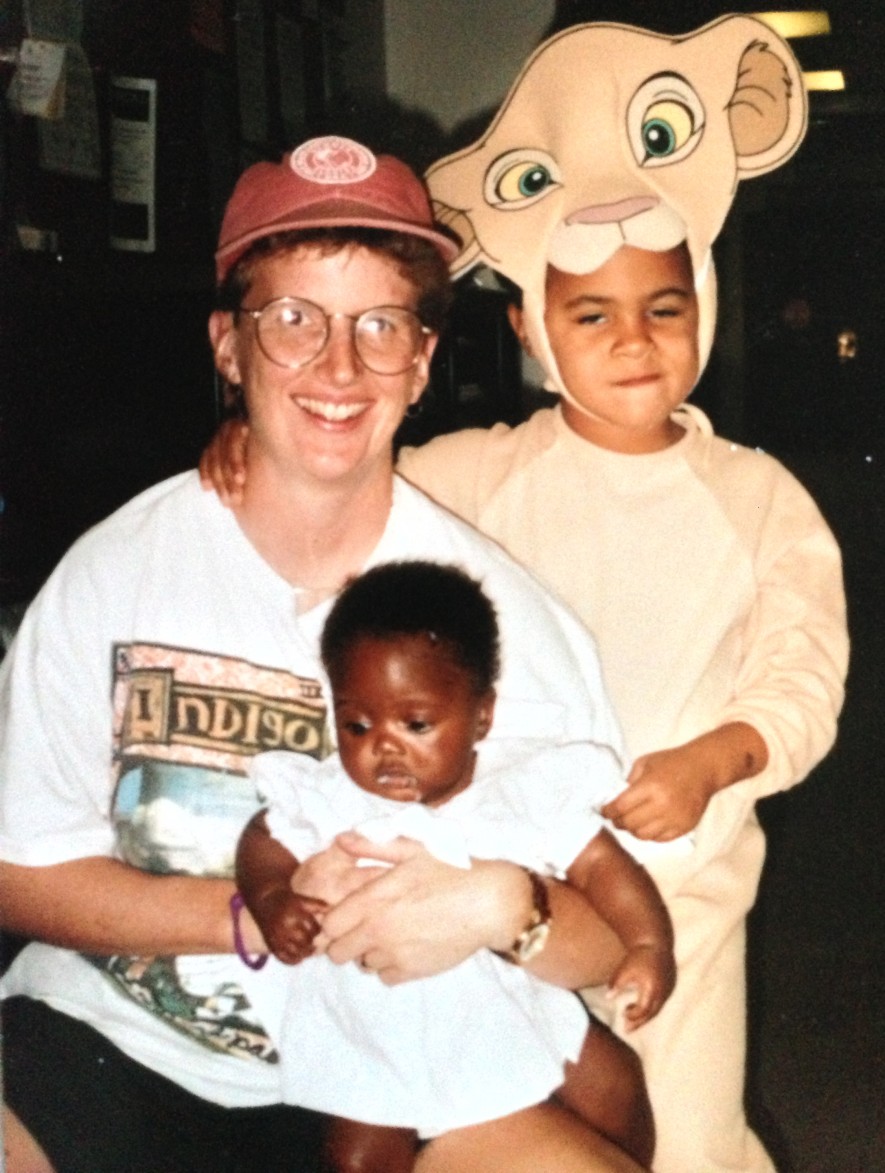
Baby Anna and Mommy Pammie
I started dating women. Sacred. I met and had a commitment ceremony with my first long-term partner. Sacred (and a little profane, but that’s another story). We adopted Anna. So sacred. I started therapy and exploring my feelings, wants, needs, and desires. Sacred. I learned I was depressed and began taking a new wonder drug that lifted my fog and allowed me to enjoy the world. We adopted Taylor. Sacred. I learned to stand up for myself and my needs. Sacred. And painful. When my ex had our daughters baptized without my permission after our divorce, I returned to church (I opted for the Unitarians) for the first time in ten years in order to provide my children with an alternative to mainstream religion. Sacred, though I didn’t end up staying long.
I bought a house and set about making it a home for my girls and me, an act that I now see as a step on my path to a personal spirituality. I met and married another woman and we lived and laughed and loved for fifteen years. When same sex marriage became legal, we got married with my children as our witnesses. Our love had finally been recognized and validated as sacred. Much of what we shared was sacred—some of it was struggle, and when it ended, we left each other intact, emotionally, having developed a stronger sense of what was sacred in the other.
Announcing Taylor’s adoption
During those fifteen years, I did not spend much time thinking about my spirituality or my soul or the sacred. From my vantage point now, I can see that I did continue to cultivate and sharpen my own sense of sacredness, however. I spent eight of those years working with for a Catholic elementary school, and I came to understand, perhaps for the first time, that not all who are religious are judgmental and/or narrow-minded. At Sacred Heart, I learned that the individuals in a religion could hold different values than the institution itself, and that community more than religion or dogma is what compelled most people to attend that church.
Also while working for the Catholics, I realized that I needed to start taking my body more seriously, that it was in fact sacred, and necessary to a healthy long life. I started working out, and found a connection with others, sacred bonds of friendship, which, for me, represented the spiritual connections with others I craved. Eventually, after I left the Catholics, I started running and found whole new worlds of spirituality open up. More connections and new friends, time in nature, the dawning awareness that my body really is a miracle in its own right. I started my runs (especially the more challenging runs) with a meditation: “I am thankful for my feet. I am thankful for my legs. I am thankful for my lungs and my heart. I am grateful for the time to run and for the money I have to buy shoes and running clothes. I am thankful I live here where I can run on trails instead of sidewalks.” By the time I got through my meditation, I forgot that running hurts.
Before I started running, I generally felt as if I were living two lives, and I often said in therapy that I needed to pull my circles into alignment. One circle represented the me I wanted others to see, and the other circle represented what I did that I wouldn’t want others to see, probably the real me. As running became paramount in my life, I began treating my running time as sacred, inviolate. Pargament (our text book author) writes that when we discover the sacred, our sense of fragmentation dissipates and the sacred becomes a passion and a priority.
As running began taking over my life, I began to wonder if it might not be time to stop taking the Wonder Drug, if it wasn’t maybe masking my (normal) responses to a difficult world. I found the new clarity to be sacred, and I redoubled my efforts in therapy to seek enlightenment, a search which led me to body work: massage, acupuncture, breath work. And on the massage table I had what can truly be described as my first encounter with The Divine. My massage therapist always finished our sessions with a blessing, her hands on my head, channeling love and oneness (that’s what she said, I just figured it was a nice way to signal the end of my session). This time, however, she stood at the head of the table, her hands hovering over my hair, and I could feel a new and different energy fill me up, a surge and a tingling from my scalp to my toes. She stood there for a good ten to fifteen minutes while something or some being left her and entered me.
Once I dressed and asked her what had happened, she just laughed and said, “You’ll have to ask Spirit.”
I wrote a haiku (that’s another sacred thing in my life: writing) to commemorate the event:
She laid hands on me Channeled a Divine spirit– Broke through to my Soul
That encounter with Spirit (or whatever/whomever) on the massage table served as a breakthrough of sorts, or at least it opened me up to the possibility of a spirituality absent of religion and a sense of The Divine unattached to the particular form of god on which I was raised. I felt pure love. And though my skepticism wasn’t completely eradicated, that experience gave me permission to explore my spirituality in ways I didn’t ever think I would want to. I now attend what I call Not Church, the local Bellingham Center for Spiritual Living, on a somewhat regular basis. They offer a 9:30 a.m. service in which there is no music and no singing, no “meet and greet your neighbor,” all things from traditional church services that tend to make me anxious. We end with a 10-15 minute meditation.
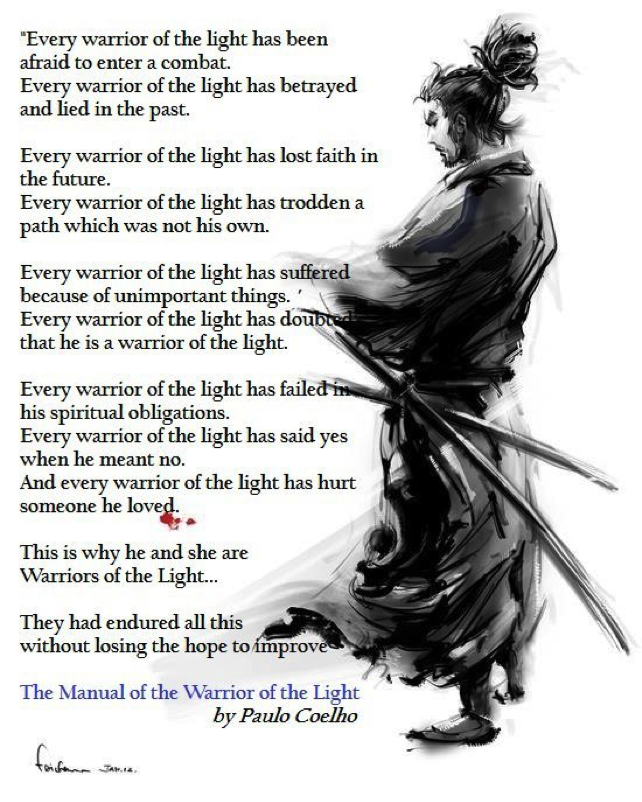
I’ve dabbled in meditation and mindfulness. Both sacred experience, and in the process, I’ve sort of fallen in love with Buddhism—the sacredness in not grasping, in letting go, in silence, in pausing. I feel as if these past two years have made up for a lifetime of ignoring my spiritual life, and if I were to describe myself spiritually, I would have to say that I am becoming a Warrior of the Light, as described by Paulo Coelho:
Hello! I’ve been lucky enough to be asked to join a group of bloggers who are writing the 50 things for which they are grateful. The trick was we had to write the list in 10 minutes (adding pictures and links came later and did not count toward the total time). I had no trouble at all coming up with so many things to be thankful for. Life is rich. I live in a beautiful place. I have a solid support network, good friends, a loving family. When times get hard, I try to remember these things. I started the list off with some of the things I repeat to myself on mornings when running is challenging–I am grateful for my body parts that all work as they should. If you’d like to join in on the gratitude blogging fun, you can find instructions at the bottom of this blog. Enjoy!
If you’d like to join in, here’s how it works: set a timer for 10 minutes; timing this is critical. Once you start the timer, start your list. The goal is to write 50 things that made you happy in 2015, or 50 thing that you feel grateful for. The idea is to not think too hard; write what comes to mind in the time allotted. When the timer’s done, stop writing. If you haven’t written 50 things, that’s ok. If you have more than 50 things and still have time, keep writing; you can’t feel too happy or too grateful! When I finished my list, I took a few extra minutes to add links and photos.
To join the bloggers who have come together for this project: 1) Write your post and publish it (please copy and paste the instructions from this post, into yours) 2) Click on the link at the bottom of this post. 3) That will take you to another window, where you can past the URL to your post. 4) Follow the prompts, and your post will be added to the Blog Party List.
Please note that only blog posts that include a list of 50 (or an attempt to write 50) things that made you feel Happy or 50 things that you are Grateful for, will be included. Please don’t add a link to a post that isn’t part of this exercise.
I originally published this piece on my blog in December 2012. I thought it was worth re-posting, given that it’s that time of year again and my holiday anxiety is ramping up.
Christmas Eve always provokes anxiety in me. For all of the 1960s and well into the 70s, I was the sole granddaughter amongst many grandsons and as such the only target for girly gifts from my well-meaning Mema: dolls, dresses, and purses. While my cousins and younger brother gleefully tore through the wrapping paper to discover footballs, cowboy hats, cap pistols, and baseball gloves, I opened my gifts cautiously, always hopeful that my true wishes would be granted, that my grandmother would see me for the tomboy I was, not as the girly girl she wanted me to be. As the Barbies, ballet slippers, tea sets, and girly frou-frou piled up over the years, I knew better than to be expressively disappointed. Growing up in a conservative Christian household, I learned early that it is better to give than to receive, to be thankful for what I had, and to put others ahead of myself, so I pasted on a smile and gave my thanks with as much authenticity as I could muster.
That’s me on the right, checking to see if my cousins, Jimmy, TJ, and Billy, got better presents than I did.
As the years wore on and the family expanded, my girl cousins finally came along, gleeful recipients of all things sugar and spice and everything nice, and I could ignore my gifts and slip away to play with my boy cousins and their superior toys. They would share their bounty with me, and for many happy hours I wore the cowboy hat and shot the cap guns, threw the footballs around the basement. Still, an uneasiness always settled over me as the holidays drew near, and as much as I looked forward to Christmas Eve at Mema’s, a genuinely fun and spirited occasion where the alcohol flowed freely and everyone sang and acted out a verse in The Twelve Days of Christmas, where we all wore colored paper hats from the Christmas crackers, I dreaded going because I didn’t feel like I belonged.
A sense of Other became my Christmas cloak: fundamentalist Christian amongst fun loving Catholics; country bumpkin cousin among my sophisticated Seattle cousins; and something deeper that I sensed about myself, something I knew set me apart in ways I wouldn’t understand for many years.
So, no surprise then that those familiar pangs rushed back as I navigated our red late-model Volvo into Mema’s driveway for Christmas Eve in 1994. Even though I was 31 and had a family, the anxiety dogged me. I let out the breath I’d been holding during our hour and a half drive south from where I lived with my partner and our two daughters. I pulled on my wide-brimmed purple felt hat that matched my paisley purple dress and smiled through the rear view mirror at the girls, Anna four and a half, and Taylor six months old. They were ready to be sprung from their car seats, their holiday dresses hidden beneath their matching Christmas coats from Nordstrom. I squeezed Sweetie’s hand, both for comfort and for strength, and admired her stylish red wool coat and her fine black leather gloves. I allowed a small satisfaction and confidence to creep upon me. We looked so normal that no one could possibly know from first glance that we were lesbians with two children. I drew comfort from our appearance as we wrested the girls out of the car and arranged ourselves into presentability—straightening rumpled tights, buckling Mary Janes, wiping the spit up from Taylor’s chin and removing her bib, making sure Anna had a firm grasp on Blankie. We each carried a child and marched to the front door to ring the bell.
Anna and Taylor, Christmas 1997
We knew better than to wait for someone to answer before letting ourselves in. The bell served only to announce our presence before we walked into the sounds and smells of Christmas tradition: cracked crab, singed spaghetti sauce, bourbon, scotch, laughter and conversation, the burble of children’s voices and laughter. Aunts and uncles yelled out greetings or raised their glasses to us as we entered. My mother came to coo over her granddaughters. We collected hugs and kisses as we waded deeper into the gathering, and because we were women, we all finally came to a stop in the kitchen.
“Merry Christmas!” My aunt Betsy said, “You guys look great. I love your dress Pam.”
“Where did you get that hat?” Mema sipped her vodka, the ice tinkling. “I love it!”
“Sweetie!” Uncle David stepped towards us, a glass of red wine in his hand. “Merry Christmas!” He gave her a sideways hug and a peck on the cheek. “How are the girls?”
“Hey David,” Sweetie matched his enthusiasm. “They are great. Thanks for asking! Your girls must be getting big, too!”
I began unbundling the girls, removing their coats, checking Taylor’s diapers for any obvious odors. They both looked amazing, their brown skin glowing against the red velvet dresses, their white tights gleaming, their Mary Janes shiny. Anna’s eyes took on the pensiveness of being in a strange situation, and Taylor’s eyes grew wide, her Surprise Baby look we called it. Since we’d only just adopted her in May, many of my relatives had yet to meet her.
“She’s so tiny! How old is she, again?”
“She’s so dark!”
“Well, yes, she’s African American,” I explained. “She’s just a bit over seven months old.”
“Anna, you’ve gotten so big!”
“Anna! How do you like being a big sister?”
Anna buries her face in the pleats of Sweetie’s red skirt.
“She’s still adjusting,” I say.
“Hey, Pamalamala!” My uncle Mike approaches, the funny guy in the family. “What can I get you to drink? You’re still drinking, right?” He nods at Taylor in my arms. “You’re not nursing are you?”
“Scotch on the rocks sounds fabulous,” I say, happy at that moment to be an adoptive parent, no breastfeeding required.
Anna peaks inquisitively from Sweetie’s skirt. “Pamalamala?” She laughs. “That’s funny Mommy!”
“That’s what I called myself when I was your age,” I explain. “I couldn’t say Pamela, so I said Pamalamala whenever someone wanted to know my name.”
Anna’s brown eyes light up, and some of the anxiety disappears. I want nothing more than for her to be free of the anxiety. Mike hands me my scotch and I relax, happy to be among family on this holiday, grateful for the acceptance from nearly everyone, and even thankful for the forbearance of those who might still disapprove. I am aware they might be masking their disdain with holiday cheer and copious amounts of alcohol. I don’t mind.
Before long, the girls and their cousins hear the prancing of reindeer feet on the roof and the ringing of sleigh bells. The little ones who are old enough to walk, rush to the window hoping to catch a glimpse of Santa. I hold Taylor as she wiggles and babbles excitedly and points to her big sister, eyes wide with anticipation.
“HO! HO! HO!” Santa opens the front door, a pillowcase bursting with presents slung over his shoulder. “I hear there are children here who have been very good this year!
“Sit over here, Santa,” one of my younger cousins points to a wing-backed chair between the fireplace and the lavishly decorated tree. Over the course of the next hour, each child under 18 sits on Santa’s lap and assures him they’ve been nice and not at all naughty during the year. Santa digs in his bag and presents each child with a present, and as they unwrap their gifts, they hold them up as cameras snap and flash. The adults grin conspiratorially at one another, remembering Christmases not that long ago when they did the same. I’ve chosen Anna and Taylor’s gifts carefully, the sting of disappointment still fresh on me.
Once the spaghetti and crab have been devoured, once the platters of cookies have been depleted, once the children have succumbed to the rush of sugar and the excitement of Santa and fallen asleep about the living room, once the adults have exchanged gifts, and had a final glass of holiday cheer, we begin to gather our newly acquired belongings, our coats, the diaper bag, Anna’s Blankie. We whisper our good-byes and carry our sleeping babies to the car and tuck them in to their car seats. After several more forays between house and car, more hugs and kisses, I put the Volvo in reverse and head north, letting out the breath I’d been holding the past several hours.
We had navigated through a family Christmas Eve, our little family of four breaking new ground, the four of us presenting as just another family in spite of our differences. No one else in my extended family had ventured quite this far outside of the norm: being a “married” lesbian mother of adopted multi-ethnic children broke some new family ground and gained not just tolerance, but acceptance. Still, my anxiety and self doubt colored my experience and I believed that the love and welcomes came because we worked so hard to be a normal family, we wore dresses and feminine shoes; we bought thoughtful and not inexpensive gifts; we were fortunate to have beautiful children and dressed them in dresses and lace. We drove a Volvo. I believed that acceptance required stringent adherence to heterosexual norms. I thought that if we were going to be a successful lesbian family, we were going to have to be as non-threatening and as normal as possible.
I was so busy hiding who I was, I didn’t even try to be myself. It didn’t occur to me that my family would love me anyway.
























 Pamela Helberg