R is for Racism

Last Tuesday in my Multicultural Perspectives class, we watched Ethnic Notions, (please watch this clip before continuing to read) a disturbing 1986 documentary by Marlon Riggs that chronicles the history of the depiction of African-Americans in popular culture in the 100 or so years just leading up to and following Emancipation.

A large part of what made watching this film so unsettling was that I remember many of these caricatures and have spent a lifetime trying to forget them: Little Black Sambo, Aunt Jemima, The Cream of Wheat guy, the cartoons. The mammy, the pickaninny, the coon, the Sambo, as Riggs points out. I used to sit on my grandpa’s knee while he read Little Black Sambo to me. I remember lawn jockeys, cookie jars, and other knickknacks that exaggerated and distorted African-American features in the name of entertainment.

These memories stirred deep within me as we viewed the film, as Riggs systematically demonstrated the intention behind each caricature, the impact each has had on the ways whites currently view Black Americans. With such pervasive and insidious images in our consciousness, it’s not surprising (completely unacceptable, but not surprising, really) when someone like Paul Ryan blames inner city poverty on lazy “inner city” men. And we know what he means by “inner city.”

Images like those in Ethnic Notions serve as shorthand to remind us that African-Americans can only be either simple, shuffling Uncle Toms or scary, monstrous savages. These are the images that have lodged in our minds. These are the images George Zimmerman had to have conjured up before he shot Trayvon Martin, the notions that Michael Dunn had before he opened fire on a truckload of Black teens who were playing their music too loud.

For only by dehumanizing African-Americans can we justify our treatment of them over the course of our country’s history. Only by dehumanizing an entire race can we continue to insist that they are all the things we say they are, only by dehumanizing them, can we maintain our ideas about white superiority and cling to white privilege.

Last night I watched 12 Years a Slave, and I think I must have felt the way my grandparents did when they watched Roots all those years ago—appalled by my ignorance, angered by Solomon Northup’s story, certainly. Aghast at the pervasiveness of evil, not just at how Northup came to be captured, but that there was even a system into which he could be sold. And ashamed that in spite of the intervening 100+ years, so much remains unchanged.

P is for Pacing

Yup, I am behind a couple of days. Sorry. I’ve been tired and otherwise occupied. I hesitate to say “I’ve been too busy to post,” because that is not entirely accurate. I haven’t felt much like writing lately, and I’ve been focused on other things: school, family, running, recovering from running. Resting. Taking care of myself. But I definitely have not been too busy. I’ve been Pacing myself.

I’ve been going at a speed that works for me, that enables me to get done what I need to get done without burning out along the way. I’ve not taken on more than I can handle, or, if I have, I’ve been able to let some of it go for sanity’s sake. I don’t want to be “too busy” because I firmly believe that when I fill all of my time, I don’t leave room for the unexpected.

The unexpected can be either positive or negative. If I’m so busy, for example, that I don’t leave early enough to get to class on time (it’s an hour and a half drive in optimal conditions), the unexpected can sideline me—heavy traffic, for example. Not being able to find parking.

Or, the unexpected can be positive. If I’m so busy that my days are jam packed with pre-arranged activities and appointments, I don’t have time for those bits of goodness that crop up unexpectedly, like a call from a friend who wants to have coffee or an invitation from a writing buddy who wants to get together for a couple of hours of (what else?) writing.

Oftentimes, though, since I quit my job (to become a fulltime writer) back in August, I find myself with long stretches of empty time. In the midst of these empty stretches, I can become quite insecure. My self-esteem gets wrapped up in how (not) busy I am. I begin to equate busy-ness with importance—I’m not very busy with externally imposed deadlines or important things That Must Be Done, therefore, my thinking goes, I am not very important or worthy.

The challenge lies in remembering that I am Pacing myself. Being a successful writer (and a student, which I am now, too) and a runner depend on Pacing. I can’t expect to sit down and write anything decent if I’m going to try to jam it all into one or two late night sessions between other busyness.

Same thing goes for school. If I am going to succeed in my classwork, I’m going to have to do some everyday between classes. Cramming my reading into the crevices between meetings here and appointments there, or around other major commitments will not serve my ultimate goals. When I’m feeling alone with empty hours, I have to remember that I’ve planned it this way. The empty hours are there to be filled with school and writing, pursuits that require solitude.

The empty hours are also there to be filled with running, which, like studying and writing cannot be done willy-nilly whenever time allows.  But unlike writing and studying, running does not always need to be a lonely pursuit, which is a new discovery for me. Yesterday I went for a long run with a friend who is training for a half marathon. It’s the longest run I’ve done since I started running in December 2011. Even two months ago, I wouldn’t have imagined that I could do an eleven mile-run, but a few things have shifted for me in the past two months.

First of all, I’ve made running a priority. I run nearly every day now, and I run twice as far as I ran on most of my outings in the previous two years. Last year, eleven miles might have been my weekly total. Not working has certainly enabled me to spend more time running, but so too has changing how I think about my time. I no longer think I’m too busy to run for an hour every day.

The second change I’ve made is that I’ve slowed down. I no longer run like someone is chasing me. I’m starting to truly appreciate the rewards that Pacing myself can bring. And a funny thing has happened as I’ve slowed down. I’ve developed stamina. I can now go farther, faster—even though that wasn’t really what I was trying for.  It’s a nice effect though, and I’m happy to keep it.

Running with people is fairly new for me and it’s a pretty big shift. This change sort of snuck up on me. Even though The Little Woman and I started running together and occasionally still do, I’ve otherwise been a solitary runner, partially because I am terrible at talking and running, and partially because I lack confidence and don’t want to be judged. But, when I accepted a marathoner friend’s challenge to run a 10K with her in early January, I realized that I enjoyed the companionship and the support. Now, I try to run with a running buddy or three (other than TLW), once or twice a week.

I’m learning that, sometimes, running at someone else’s Pace can be a good thing, too.


I is for Imagination

spongebob_imagination

I often say that I write non-fiction essays and memoir because I lack imagination. I’ve never been good at making stuff up, and whenever I sit down thinking I’m going to write a short story or embark on writing a novel, I get a few pages in and stop, overwhelmed by the apparently limitless options.

Taylor, my youngest daughter (she’s nearly 20 now), loved to watch SpongeBob SquarePants when she was little. She loved SpongeBob so much that we had a SpongeBob bathroom (The Little Woman painted it SpongeBob blue and yellow with hand drawn and painted replicas of Patrick and SpongeBob on the walls) complete with a SpongeBob shower curtain and SpongeBob toilet seat cover. Taylor’s bedroom was also SpongeBob yellow, and she had SpongeBob posters, blankets, pillows, sheets, Legos . . .

Of all the characters populating childhood during those years, I found SpongeBob endearing and definitely the least objectionable. He was happy, undaunted by failure, cheerful, a good friend, a hard worker, compassionate. But most of all I loved SpongeBob because he had Imagination.

That Taylor loved SpongeBob made sense, because she too had a great Imagination. I could give that kid two sticks and a small rock and she could entertain herself for hours, making up stories, creating characters, playing alone in her own world.

When Taylor was eight, the two of us went on a three-week camping adventure across Washington and Oregon. We set off without much of an agenda, except that we were going to see Grandpa in Bend, OR. Other than that, we were footloose. We started our trip by meeting some friends and floating the Yakima River. I worried a bit that T would be bored, hanging out with three adults and our friends’ high school-aged son, but she proved to be an excellent traveling companion.

TaylorORvacay2 copy

As I set up camp, pitching the tent and getting the camp stove ready for dinner, she played in the hammock, creating entire worlds from just leaves and twigs. What amazed me the most, I think, is that on her own T wasn’t much of a reader. She loved for me to read to her, but she wasn’t one to sit in camp (as I would have done as a child) with her nose in a book. Instead she was engaged, making up her own stories. I so admired that quality.

We spent a lot of time at the beach on that trip, and while I went to the beach to read, T went to the beach to play, to create. Every foray was an adventure for her, a chance to create new worlds, to see everything in a new light, with new possibilities. I stopped taking my books with me because I ended up pulled into her world each time, building sand castles, searching for agates, creating new worlds.TaylorORvacay1

When we had fires on the beach at night, they weren’t just for roasting marshmallows or for keeping warm.TaylorORvacay2 2  Each fire presented an opportunity to create, even fleetingly, something new—Taylor delighted in burning sticks and then running to the water to put them out, creating steam. Or, drawing in the sky with the red ember end, writing words for me to guess.

TaylorORvacay2 1

One of our stops, a little town in Northeast Oregon called Shaniko, had been a ghost town and was now just a town stuck in time for tourists to wander through. I didn’t find it particularly interesting, but I made a point of walking around with her, reading some of the historic descriptions. I think we got ice cream cones that melted rapidly in the eastern Oregon summer sunshine. I didn’t think it would hold much interest for T, but she still talks about “that town that was just full of old people.” Something there captured her imagination.

Our last stop on our adventure was Manzanita. We pitched the tent at the campground on the beach and walked the shoreline into town to have some dinner. We’d heard about the great pizza place, and found it jammed. We finally got a table, one that could easily seat more, and so when I saw two women come in who wanted to sit down, I invited them to join us.

Taylor started telling these women about our trip. She didn’t leave out a single detail. And when I thought she might run out of material, she started embellishing, sprinkling in details about my personal life, adding a few false statements, entertaining the women who joined us. No one else could get a word in. On our walk back to the campground, I thought I’d take the opportunity to discuss the difference between talking about our adventures and sharing personal and/or made up details.

She looked at me and said, “It’s just imagination, Mom.”

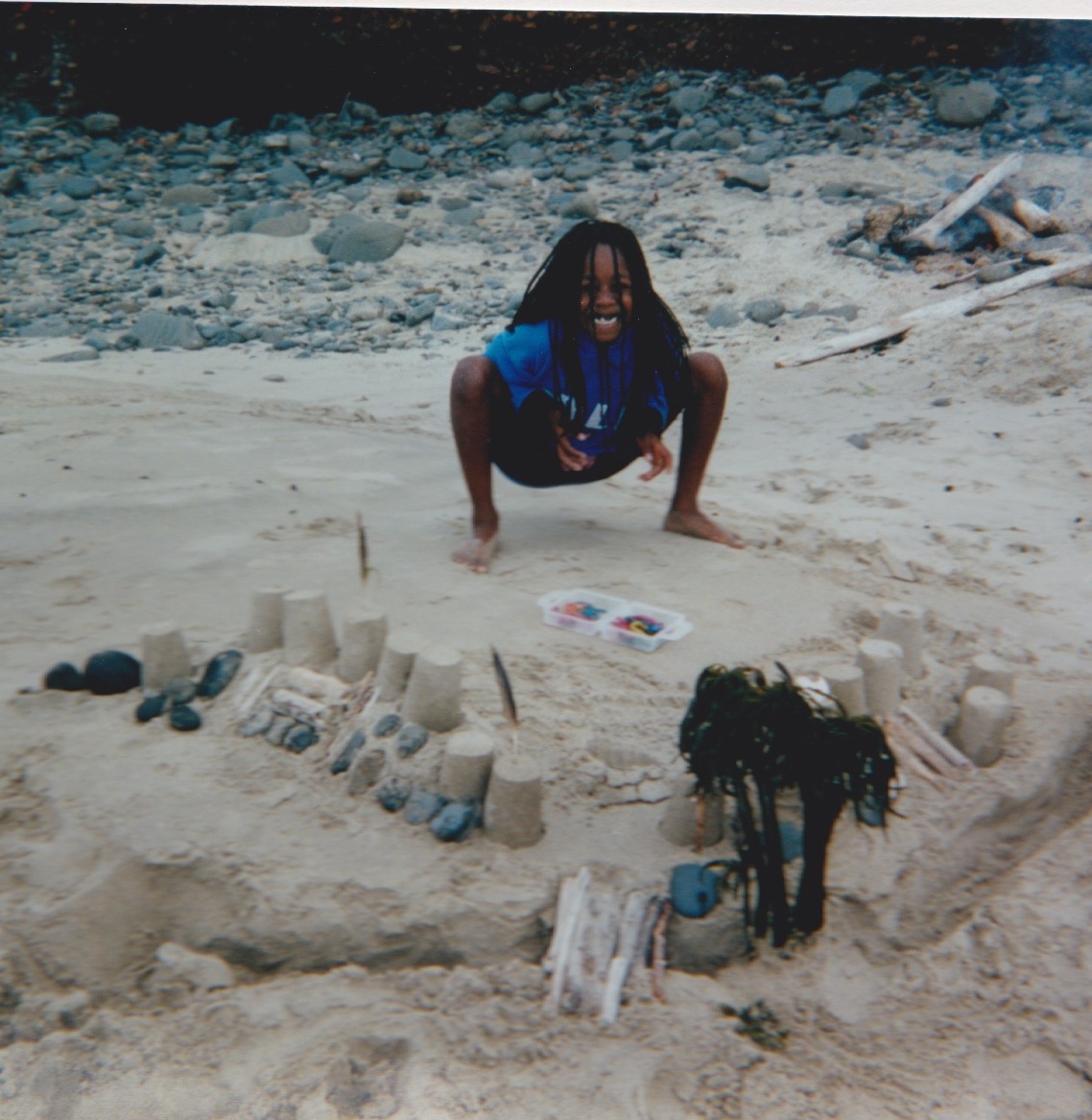
That’s it–just imagination. No need to be overwhelmed or caught up in the details. Find some kelp to turn into palm trees. Make the sticks talk to the leaves. Just put my stick in the fire and write in the sky.


H is for Honesty (in Writing and in Life)

Write as if your parents are dead. –Anne Lamott

When I attended AWP last month, in nearly every session someone asked some version of this question: “How can I write my story without hurting the other people in my life?” Other versions of this question include something like the following:

“How do you deal with your parents getting mad?”

“What if your friends stop talking to you?”

“What’s fair game in story telling? When does my story stop being mine?”

“What can I write about my kids? My spouse?”

That’s usually when I got up to leave. I didn’t think I needed to hear this question rehashed and re-answered. I thought I knew the answers. I thought I had figured out this puzzle, solved this riddle. I  had spent many years asking some version of this same question. And though I feel like I’ve wrestled it to the ground over the past several years, somehow it keeps popping up.

All of the writing books and books on creativity that I’ve read in the past few months have addressed The Question: Still Writing by Dani Shapiro, Writing is My Drink, by Theo Nestor, Art and Fear by David Bayles and Ted Orland. Clearly this is a universal problem for writers, and obviously given the plethora of revealing, heartfelt, truth-telling memoirs, many authors have pushed beyond their fears. As Nestor points out in her lovely book, “the writers we really admire and adore are the ones who are willing to take a risk and say what most wouldn’t dare.”

But how do they do manage?

Here’s the basic, most essential bottom line for me: if I don’t write it, I will never have to worry about who reads it. In other words, there is a huge long process to be navigated before anyone will ever read my writing. If I just stay in the place of worry and keep all of my words inside for fear of being judged or misunderstood, I will never be a writer.

The fear of never being a writer trumped my fear of what people might think about me and what I wrote. I managed to set aside my worries about offending people and settled in to write. After all, I started in a memoir writing class where no one knew me—fuck it if they didn’t like what I wrote. I had nothing to lose but my nagging fears of never being a writer.

But they did like what I wrote, and their liking my words, their positive feedback, and their support bolstered my courage. A few of us in the writing group still worried about our parents in particular, but we banded together, encouraged one another, and urged each other to write our truths and worry later when we actually had a publisher about who was going to be offended.

****

I have so many fears about speaking and writing my truths—paramount among them was the notion that somehow I would tell my story wrong, that I would put my story down and someone would say to me “nuh uh, that did not happen.” I hardly felt strong enough to write my story, let alone defend it. I had no idea when I started writing my memoir that I would find myself in that position so soon. When I wrote the essay “Body Language” that eventually appeared in Beyond Belief: The Secret Lives of Women in Extreme Religions, I thought I was just writing another chapter in the long slog that was my unpublished memoir. So, I was able to tell my truths without worrying too much about who might read them. But then, the piece was accepted into the anthology and publication became a reality.

Two of my fears came to pass, sort of. The piece was picked up by The Friendly Atheist, a blog on patheos.com and reprinted in full. I had steeled myself for my family’s reaction to what I wrote, but I wasn’t expecting to have to deal with the online comments. My mom could accept my truths about my experiences growing up, but she recoiled from the commenters who labeled her as cruel, who said she should be punished.  The saddest result for me was that she felt like she couldn’t come to any of the readings for fear she’d be judged.

The other thing that happened was that my brother, having read my essay, looked at me and said “did we grow up in the same family? I do not remember any of this.” For a moment I assumed he was challenging my version of events, but what I realized after I pondered it (and talked to my therapist about it, of course) was that yes, in fact, we had grown up in different versions of the same family. As the eldest sibling, by four years, as a girl child, I did have a different upbringing than he did. He was 14 when my story took place—there was no reason in the world he would have known about the events. It was, truly, my story to tell.

****

The other part of this truth-telling, honesty, being vulnerable on the page thing is something I am still coming to grips with, and that is the creation of a persona. I am not the narrator of my story. The narrator is the narrator. In Still Writing, Dani Shapiro addresses the notion of exposure toward the end, in a section entitled, fittingly, Exposure. She tells the story about a woman who approaches the author Frank McCourt and says to him “I feel like I know everything about you!” to which he responds “Oh darlin’, it’s just a book.”

Shapiro goes on to explain that yes, while we may feel like we are flinging open the doors of our lives to the world, we are actually choosing what to reveal. We are not, she reminds us, writing a diary or stripping naked.  As much as I feel like I leave a good portion of myself on the page, there is so much more that I do not write about. I employ, in the words of my therapist, discernment. Occasionally to make a point I will use hyperbole. I become a character. The people in my life become characters: The Little Woman, The Children, My Therapist. Crazy Neighbor Lady.

Telling a greater truth by manipulating the day to day unfolding of our lives is a tricky concept, one that gets almost as much attention as how can we write our stories without offending anyone. But as Nestor points out (sort of via Vivian Gornick): “The story is the magic that the writer creates out of the events, the brew of insight, metaphor, and voice that renders the events meaningful.”

No writer I know wants to sit on Oprah’s couch and go through what James Frey went through. But there’s a difference between lying (passing off as truth what never actually happened) and rearranging the facts in order to better tell our stories, to better get at the larger truth, the Take Away.

Honesty in story telling is a dance. As writers, I think we seek connection with others through our words, and we can only authentically connect when we make ourselves vulnerable but we can’t just vomit our emotions on to the page. We have to shape, add, subtract, mold. We have to use our imaginations, as Nestor points out, to forge a coherent, universal story out of our personal experiences.

B is for Bookmaking

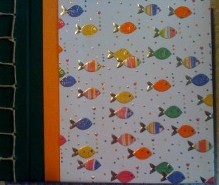
I remember buying Hand Bookbinding: A Manual of Instruction over 25 years ago (1988, the receipt is still in the book). I was fresh out of college and enamored of fine books—books that harkened back to earlier times, pre-mass market paperbacks, back to when the making of the book was as much an art as the writing of the book. While manual presented concepts beyond my comprehension, the precise line drawings and the very idea that I could make a book awakened a yearning in me.blue_yellow_box1

I dreamed of making books even if the tools and the concepts were complicated, beyond the realm of my experience: book presses and folding bones, book tape, book thread. I couldn’t even imagine where I would find these items. Still, I kept the book, cracking it open occasionally to remind myself that someday I’d figure it out.

blue_yellow_accordion.jpgLooking back, I believe I viewed making books as an alternative way in to writing, a side door. I wanted to be a writer, having recently graduated with a Master’s degree in creative writing, yet I didn’t quite trust (myself? Anyone?) enough to put my words on the page. Bookmaking became a surrogate, related to books and writing but not writing. I wanted to write, but writing scared me.

So, I made empty books. I created journals for others to write in, burying my own writing dreams deep while I busied myself earning a living and crafting a career that would pay better than (not) writing. I became, for a while, the technology director for a Catholic elementary school. One day, having befriended the school’s art teacher, I took one of my handmade books in to show her. She wasn’t impressed.  So what, she said. Where’s the art? All you’ve done is cover some cardboard with pretty paper.madbk11

I stared at the book in my hands and realized she was right—I wasn’t making art any more than I was writing. Where’s the color on your pages, the art teacher asked. Where’s the risk?baby_book1

That was the whole point, I told her. I didn’t want to make a mess. I liked the pristine white pages, the straight lines, the perfect edges. Paint it, she commanded. Put something of yourself into it.  So, when I made my nephew, a skateboarder, a foldout book full of pictures of him skating, I thought I had answered her challenge:

liam6There’s no mess there, she said. Be bold. Be brave. But I couldn’t, not yet. I gave him a book that was very cool in concept, but still boring and dry.

liam11

I did better when I made the same type of book for my niece, a dancer. This time, I got messy and creative. I had to start over and paint over my messes. And things rolled from there. I became more inventive, more willing to make a mess and take risks.

A funny thing happened in the process—I started writing. I signed up for a screen writing class, and then a nine-month novel writing class, and the following fall quarter, a nine-month memoir writing class.

My bookmaking has improvedmadeline_purple_1, as has my writing—creativity breeds creativity, I think. As I take a risk in one area, it feels safer to risk in the other. I’ve been more willing though to be experimental with the book making, more staid and conservative in the book writing. Whenever I feel stuck with my writing, I can turn to the book making—and it’s no longer just books.
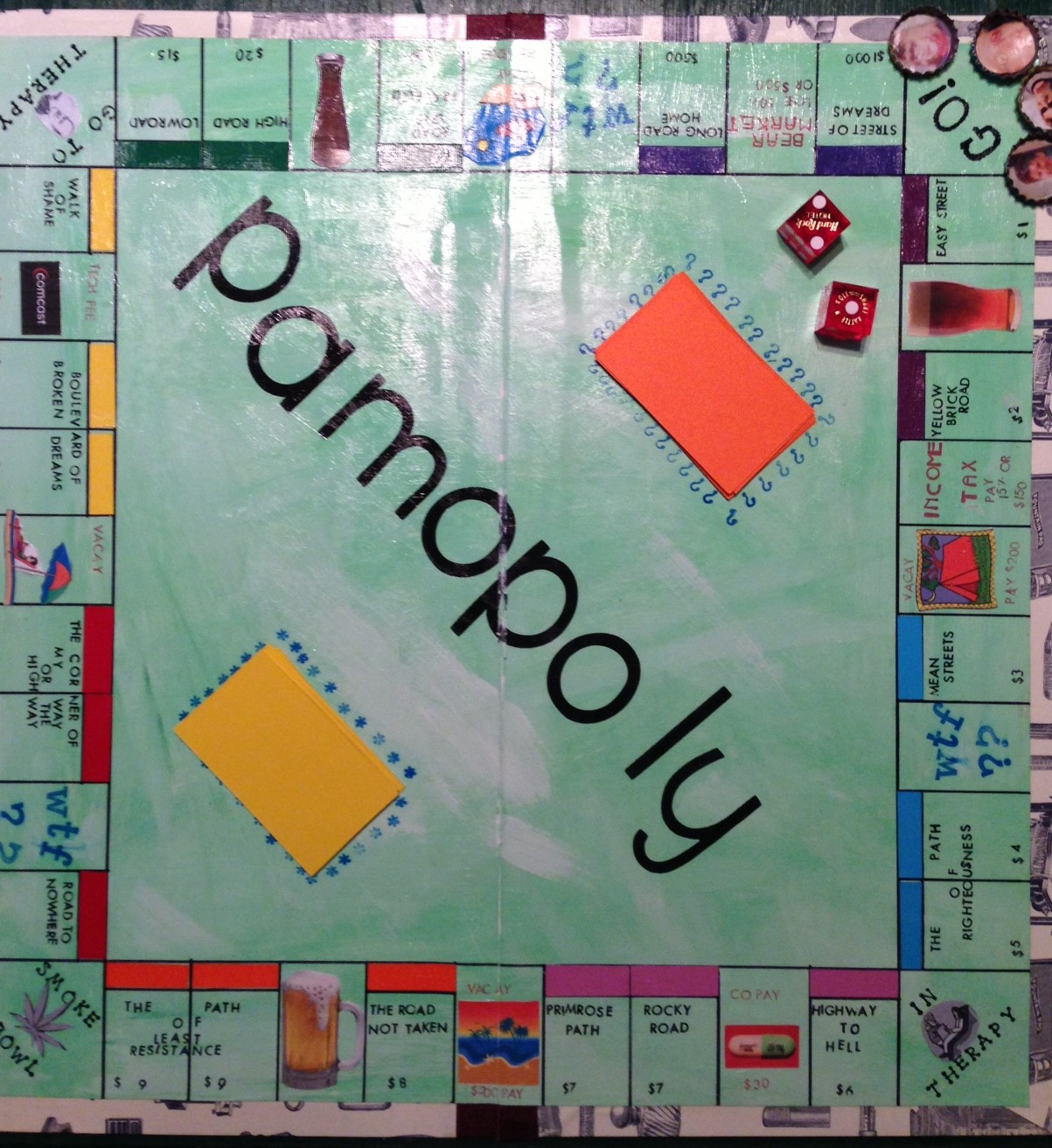
photo 1-1

Making books led me to learn how to make stamps, how to carve my own designs into a block, how to use ink and a roller to transfer the image onto whatever paper I wanted. I’ve made prayer flags for writers, books for friends and poets, for my kids, for my sweetie. I’ve made a game board for myself—Pamopoly—when I was feeling extremely stuck and creatively challenged in my writing. I’ve made art prints and pop up books whenever I am betwixt and between writing projects.pamopoly 2inrix

I’ve continued to write and to make books, though I’ve not yet combined the two. Perhaps that is next. After all, I have all of these haikus just hanging around.


DSC_0127

DSC_0125

tele


Challenge Accepted–Blogging April, A to Z

Well, Dear Readers, this adventure has been so much fun this month, I’ve signed up to do it again. This time, I’ll be blogging every day (except for Sundays) during the month of April as part of the A-to-Z Challenge. Each day the theme starts with a letter of the alphabet, beginning on day 1, or April Fool’s Day, with the letter A and working our way to Z.

Since I start classes on April 8, I best be writing and stockpiling some blogs in the next ten days, so I’ve started making a list of topics. I’ve listed some  possible themes below. If you have anything to add or topics you’d like to see me address (or attempt), leave me a comment. All ideas will receive consideration–

Adoption – I have much to say about this topic, given that my entire family was formed by adoption: mother, brother, children.

Body Image – always something women think about, their bodies. I’m no different though I wish I were. Or Books. Bookmaking. I love making books.

Children – I’ve not given enough blog space to my children. I decree they shall have more, starting now. Or Cats—I rarely write about the cats. I’m sure I can work both into the same blog.

Depression. Been there, done that. Or Drinking. Again, could possibly inhabit the exact same blog without a problem.

Eating – I live with a foodie. Eating to live or living to eat?

Food – because I’m sure I won’t say all there is to say about food in the previous post on eating. Maybe Feminism if I say all there is to say about food in my post about eating.

God – because

Haikus? At only eight days in, that seems a bit premature, so maybe I could write about Heaven, on the heels of God. Nice segue.

Imagination.

J

K

Lesbians – takes one to know one. Maybe some fun facts . . . history of? Coming out? No shortage of material here.

Mother – don’t write enough about dear old Mom, and she’s always asking if I’m writing about her and should she hide . . . so yes to both!

Nancy – The Little Woman, wife, sugar mama, main squeeze.

O? Well, there is this video (NSFW) making the rounds on social media. I might need to address it at some point. Just sayin’.

Psychology – cuz that’s what I’m doing now.

Queers –see L, I’m sure there will be more to say on the subject.

Race. See Adoption, Children. Class on Multicultural Perspectives.

Siblings. I have one brother. I love him dearly. He deserves a blog post.

Technology—I used to have a whole blog devoted to making fun of tech. I can do it again. Or Therapy. Lots to say about that.

Umbilical cords—I will be taking a Family of Origins class Spring quarter. I am sure I will have plenty to say about the ties that bind.

Vaginas? Virginity? When I was in London in 1982, the movie The Last American Virgin was playing everywhere. I got a complex and set out to rectify the situation.

Writing. Of course.

X—reserved for April’s Haiku wrap up. I will write a haiku that begins with the letter X.

Youth. Fleeting. I’m sure there is more to say . . .

Z—on having zip, zero, zilch

I’ve left J and K blank because at this late hour my mind cannot come up with even one reasonable topic or theme that begins with either of those letters. Ideas? Leave me a comment!

Thanks so much for reading along in March as I took on this challenge—join me in April for more.

And Now Silence, My Strict Tutor

Rumi wrote the line that I’ve taken for the title of this blog post: And now silence, my strict tutor.

I’ve been trying to be easy in silence these past couple of days as nothing much has struck me as worthy of a blog post, nothing that hasn’t already been said, so I’m sitting with the silence in my head and trying to learn something from it.

Silence is a strict tutor. In silence we leave ourselves open to so much. It’s easy to fill silence and in doing so shut everything else out, everything that we don’t want to hear or think about. Sitting in the silence makes me squirm–for in the silence I don’t know what you think about me, what I can do to win your approval. In the silence, I have only myself and if I listen to myself the danger is in making stuff up to fill the silence.

The trick is to not try to fill the silence, but to just be in it. When I try too hard to fill it, what comes out is just noise. Already we have too much noise–I don’t need to contribute to it. If I’m going to break the silence, I believe I should break it in a way that moves the conversation forward.

For a guy who wrote a lot, Rumi has much to say about silence:

“Silence is the language of god. All else is poor translation.”

“Be silent, for this tongue of yours is the enemy of the soul.”

“In silence, there is eloquence.”

The temptation to fill the silence seems rooted in a desire to ease discomfort. We assume because we are uncomfortable, others might be as well. We take it upon ourselves to ease their burden, the burden we’ve imagined for them, the burden we want them to have.

“Enough with such questions, let silence take you to the core of life.”

If I can shut up long enough, I might be able to hear something–if I listen to you without commenting, without offering my feedback, my take, my two cents. What can I learn if I just listen and experience what you are saying? So often instead of hearing, we simply anticipate: anticipate what we can say to “help” or to sound smart or to elevate ourselves as experts.

“Keep silent because the world of silence is a vast fullness.  Do not beat the drum of words, the word is only an empty drum.”

I love this–do not beat the drum of words. As a person who lives by language, I want to beat everything to death with words. I want to describe and analyze and report back. I want you to describe and analyze and report back. If I can talk about something or write about it, I can, I believe anyway, understand it. Sometimes though, we just have to feel something to truly understand it.

Instead of worrying about my silence, my current inability to string my thoughts together, I am going to surrender to the silence.

We have to surrender to the silence. This is me. Surrendering.

“Fill me with the wine of your silence
Let it soak my every pore
For the inner splendor it reveals
is a blessing
is a blessing.
” –Rumi

On Failing Better

It’s been a tough week, wrapping up with finals, keeping up with my wifely duties (mostly being door person to the cats), and contemplating a new direction in life in the form of grad school (starting in the Clinical Mental Health Counseling program at Antioch University in April). Yesterday I attended orientation–and I’m excited to get going. That said, I’ve been wrestling with my writing too–what it means, how I do it, what will happen to it once I start school. I’m thinking there will be an intersection for me, a sweet spot between counseling and writing. Not sure yet what it will look like, but I suspect I will find it.

Mostly though I’ve been thinking about what it means to write, to be a writer. How I relate to the world via the written word.  Starting this blog a day commitment almost three weeks ago has reinforced much of what I already know–that nothing works quite so well as putting my butt in the chair–that usually even if I don’t think I have anything to say, if I just sit down and start writing, something will manifest. Not everything will be deep or terribly meaningful, but every now and then I hit on something I can work with, mold into more meaning. I’m turning out some shitty first and final drafts because oftentimes they are one and the same.

The blog isn’t a great format for me for in-depth explorations as I haven’t been devoting enough time to it. I write a piece and then spend the next few hours or days after posting thinking I should take it down, thinking “oh man, I should have said x and done more research so I could have said y” and generally wishing I was smarter or more thoughtful with more time and a deeper commitment. So many times I find blogs and articles on exactly my point that are far more articulate, funnier, and published in actual publications. And I berate myself further.

I started reading Dani Shapiro’s lovely new book Still Writing today on the plane today. I’ve been toting it around with me for several days now, waiting for the right moment to break into it. Today I needed to read what she had written. She writes about the inner censor, the one that sits on the writer’s left shoulder and says things like “that’s stupid” and “how boring” and “you’re wasting your time.”  Anyone who creates anything knows this voice intimately. We know to get any work done we have to ignore her, silence her, wrestle her to the ground and say “look bitch, I’m going to fucking write so just fucking fuck off.” She will sometimes slink away for a bit.

I’ve noticed the Censor doesn’t come around so much when I’m writing haikus. Ironically (is that the right use of this word Kari Neumeyer?), the daily haiku practice, of which I’ve written about  twice now (here and here), has actually been good for my writer’s ego. I get more bang for my syllabic buck with the haiku. For one thing, I have a venue in which I post and in that venue, a closed Facebook group, I’ve found a thriving community full of cheerful support and thoughtful feedback.

I’ve shared some of my haikus with other folks as well, people I know in real life, offline as it were (email is so luddite, it practically counts as being offline, don’t you think?). My commitment to writing a haiku a day has inspired others to do the same. Some people have shared theirs with me–a haiku exchange. I’ve found kindred spirits–it’s not everyone who understands what it means to distill an experience or a feeling or a sensation down to 17 intentional syllables. Even fewer people get excited about the process. Here it is less about ego and more about connection. There’s something holy there, sacred. A communion:

I attend haiku church
Words and syllables offered,
Received. Communion.

Words live on my tongue
Like communion, and sweet wine
Come closer, receive

(I love that I can use all of that religious imagery from my childhood to illuminate my love of writing and poetry. Finally.)

I love too that poetry is mystery–the making of it is a strange alchemy, and even when words are so intentionally selected, the meanings from person to person vary wildly. Poetry engages the imagination in a way that prose doesn’t. I know this may not be news to most of you, but I’m late to the poetry lovefest. I didn’t ever think I could enjoy poetry, let alone write it until recently someone put it in front of me and said read, this is great, expansive, mind blowing stuff. It is.

Writing is powerful, transformative medicine–for the reader and for the writer. As Dani Shapiro says

“the page is your mirror. What happens inside you is reflected back. You come face to face with your own resistance, lack of balance, self-loathing, and insatiable ego–and also with your singular vision, guts, and attitude . . . life is usually right out there, ready to knock us over when we get too sure of ourselves. Fortunately if we have learned the lessons that years of practice have taught us, when this happens, we endure. We fail better. We sit up and dust ourselves off, and begin again.”

This place, I think, in the failing, the sitting up, the beginning again, is where my career in counseling will intersect with what I know and love about writing.

Lovefest (forewarned–gratitude alert)

Today I spent a lot of time in the car–two and a half hours to Seattle this morning. Only and hour and half (maybe less), to get home this afternoon. Lots of time to think. So, I did.

Tomorrow, The Little Woman and I are leaving for Phoenix (along, apparently, with all of the college kids in the whole universe–I did not realize it was going to be spring break when I booked these tickets back in the fall). We are going to see Cher at her first stop on the Dressed to Kill tour. I have loved Cher as long as I can remember–back to when I got my first record player in 6th grade and somehow go my hands on a “Gypsies, Tramps, and Thieves” 45. Bliss.

I have wanted to see Cher forever. And now, thanks to my mindlessly flipping channels on the night when Dancing with the Stars had her on, we are going. I was minding my own business, just flip- flip- flippin, half an ear on the tv and half an eye on my Facebook feed when I heard Cher. I stopped flipping and watched–there she was,  talking about her music, and then I watched the rest of the show and ALL the couples had to dance to a Cher tune. Further bliss. i watched until the very end. And then I looked up her tour dates and bought tickets to her concert because, jesus, she’s my mother’s age and how much longer could she possibly have?

As I drove this morning, I turned off the Cher CD that has been blasting in my Jeep since before Christmas. When I bought Cher tickets, we got two (not just one, but TWO) CDs of her latest album, Dressed to Kill. I started playing one right away but since this was a surprise for TLW, I couldn’t let her know or give her her copy. (Because she’d be asking me why in god’s name I’d buy it on CD and not iTunes and why TWO copies?).

This morning though, I muted Cher and I turned on the Sirius Radio Spa Jazz channel–lovely new age-ish, flowly, soothing, happy instrumentals mostly that really do a nice job of keeping my road rage in check. Thus soothed, I pondered love. I pondered erotic love. Familial love. Kid love–I don’t think there is a more enevloping love than the love we have for our kids. Agape love–which makes room for those we don’t want to sleep with and to whom we are not related. (Agape has been co-opted by the christians, but really, it means love for our fellow man–like I said, everyone who falls outside of the realm of family and lovers). It’s a pure love (if you can believe Wikipedia).

I love my kids.  I love TLW. I love my parents. I love Cher. I love that Pat Benatar is opening for her! Life is full of love. I love school, I love the personal work I’m doing. I love the path my life is on. I love doing Haikus every morning. I love the writing I’m doing (even though most of it is for school), and the challenge of a blog every day (mostly). I love the written word and books and reading books. I love sharing what I read. Sharing my writing process.

I love that I have a writing community and people who support my work. People whose work I adore and applaud. I love the team of  folks who care for my mind and my body (it takes a village these days, truly), and my spirit (yeah, this last one, it’s new and still a little awkward for me–it will be a blog of it’s own at some point). I love that I have this adventure in grad school ahead of me and and then some.

I feel very fortunate–for all of this because, really, it’s so much. So much. A whole lot of love. Thank you. Sincerely.

Peace.


The F Word

On the days that writing a blog every day seems daunting—which truth be told is pretty much every day—I think about my dad and my grandfather who were journalists. Not only did they have to write every day, they had to write multiple articles that made sense from beginning to end every single day. Not only  made sense but had facts and accurate quotes. And they couldn’t call anyone names (except for once my grandfather wrote an op-ed column that said only this: Jane Fonda is an idiot. She had just gone to Hanoi to sit on the tank. I was very young at the time and had no opinion about this then).

I started my college career as a journalist—I started writing for the Western Front fall quarter of my freshman year, and for a while I found the whole experience exhilarating.  Journalism classes met in an old crickety house on the edge of campus and were taught by rumpled old men in questionable tweed jackets. One professor was the son of Lincoln Steffens, famous muckraker. There were not a lot of women in the program, not a single female professor in the time I was there (a good three years).

We only got two credits for a quarter’s stint on the campus paper, though the time commitment warranted far more than that. The paper came out twice a week and we met constantly it seemed—two nights a week to write headlines. I loved writing headlines—the section editors would give us the space and we had a formula for how many characters the headline could be. I excelled at writing headlines with active verbs and punchy nouns and that skill garnered me a little respect among the scruffy editors—male upperclassmen all. Everyone seemed to smoke and back then no one cared. Ashtrays overflowed with butts and the smoke hung low in the living-room turned newsroom.

Twice a week we had to show up at the print shop on the other end of campus to work on putting the paper together, literally. The section editors were responsible for pasting up their pages, but always needed help cutting and waxing the pages for paste up. I loved the waxing machine, and having grown up the daughter of a newspaper publisher, I knew my way around the layout tables. Exacto knives, blue pencils, the mockup sheets.

And of course we had to write stories. As much as I loved the atmosphere of the department and the headline writing and the paste up process, I wasn’t a big fan of writing the stories. I didn’t really like interviewing people. I was shy for one thing. And I didn’t really have a nose for news. I did great in classes where the local newspaper writer would give us the details and we’d pound out a story in class. I aced those, but I just didn’t seem to have a knack for sussing out the story, and I seriously lacked confidence when it came to calling people and asking for information.

I found my niche in the sports and op-ed pages, finally.  While I could give a damn about student fees and faculty senate stories, I did have a thing for the women’s basketball team (shocking, I know) and I knew my way around the gym. I made a small career out of covering the track and field team and putting together features on the women’s basketball players and coaches. Some dude had beat me out on covering the actual women’s games, a fact that chapped my ass to no end. The track coach once told me that he was impressed with my stories, surprised that I understood and wrote about the events as well as I did. I wasn’t exactly John Reed or Louise Bryant (the movie Reds came out my freshman year and I so wanted to be a journalist covering the Russian revolution), but I wrote good copy. I published humorous op-ed pieces, ala Dave Barry though not anywhere as funny (my mother often told me I’d be the next Erma Bombeck). Eventually, I became sports editor and one summer I was assistant editor. Lots of work for two credits. I suspected the real world wouldn’t treat us much better.

By the time my senior year rolled around, I was pretty sure I didn’t want to make a living as a journalist. My father had been out of the business for a few years by that time and my grandfather had died, though he had been successful as a writer, then editor and owner of a large suburban weekly. At one point I thought maybe if I could drink more and take up smoking, I’d be able to cut it in the newsroom, so I went out and bought a pack of Camel Unfiltereds and a bottle of Jim Beam. I sat on my little 8×8 foot apartment deck and smoked and drank like I’d seen the guys in the newsroom do. All I felt was sick and not long after on an election night it became clear to me when we were all (all of us Western Front reporters) were supposed to go downtown and cover the local, state, and federal elections. I just couldn’t see myself in that role—asking the pressing questions, taking notes, paying that close of attention. I froze at the thought. As much as I loved my name in the byline, I panicked under the pressure. So, I dropped that last 400 level reporting class the next day, just a few credits shy of completing my major and went to the Humanities building to switch to English, with an emphasis in writing.

 ****

            As I think back on this choice, I realize that I didn’t then have a really clear reason for leaving journalism, but it’s becoming clearer to me now. I didn’t have any role models. There wasn’t a single female reporter, professor, mentor, or local professional to whom I could point and say, “She’s who I want to be like.” I remember only one or two other young women in the program, one a photographer and one, slightly older than me who I didn’t ever get to know. I just didn’t ever see myself reflected back to me anywhere in that world. I couldn’t imagine a future there because I couldn’t see anyone like me. So, I joined the relatively cushy ranks of the English department to finish out my college career. I found enough mentors there that I continued on to graduate school and into teaching English composition. I could see myself as an English professor, as a novel writer, as a reader of great fiction and poetry and creative non-fiction. I had role models, finally.

I’m thinking about this all now because I just finished a paper on Karen Horney (pronounced Horn-eye), the founder of Feminine Psychology. She started out as a Freudian in the early part of the 20th century but soon broke ranks with Freud in part because of his limited view of what comprises human nature (sex and aggression and penis envy). As part of this paper writing adventure, I had to find a relevant online video to review and I ended up with this one: The Changing Face of Feminist Psychology. This video traces the struggles female psychologists faced as recently as the 1980s in getting jobs, being taken seriously, being admitted to graduate school. Even though Karen Horney published her work on Feminine Psychology as early as the 1930s, it took another 50 years for women to advance in the field. And then, even as they began to make inroads as part of feminism’s second wave, the 1980s rolled around and everyone declared feminism dead or over with or moot.

But feminism is not dead. As long as we have daughters, we need to keep making sure they know that they can be whatever they want to be, that they can choose whatever career they want, and they will only know those careers are available to them if we make sure our faces are there to reflect back to them. We need to make sure we are the ones writing the editorials explaining perhaps why Jane Fonda went to Hanoi to sit on that tank. That perhaps, as one half of the world’s population, we can have a voice as well whether in the papers, online, in the classroom, the boardroom. Our daughters must see us out there to know that our voices and theirs matter.