P is for Pacing

Yup, I am behind a couple of days. Sorry. I’ve been tired and otherwise occupied. I hesitate to say “I’ve been too busy to post,” because that is not entirely accurate. I haven’t felt much like writing lately, and I’ve been focused on other things: school, family, running, recovering from running. Resting. Taking care of myself. But I definitely have not been too busy. I’ve been Pacing myself.

I’ve been going at a speed that works for me, that enables me to get done what I need to get done without burning out along the way. I’ve not taken on more than I can handle, or, if I have, I’ve been able to let some of it go for sanity’s sake. I don’t want to be “too busy” because I firmly believe that when I fill all of my time, I don’t leave room for the unexpected.

The unexpected can be either positive or negative. If I’m so busy, for example, that I don’t leave early enough to get to class on time (it’s an hour and a half drive in optimal conditions), the unexpected can sideline me—heavy traffic, for example. Not being able to find parking.

Or, the unexpected can be positive. If I’m so busy that my days are jam packed with pre-arranged activities and appointments, I don’t have time for those bits of goodness that crop up unexpectedly, like a call from a friend who wants to have coffee or an invitation from a writing buddy who wants to get together for a couple of hours of (what else?) writing.

Oftentimes, though, since I quit my job (to become a fulltime writer) back in August, I find myself with long stretches of empty time. In the midst of these empty stretches, I can become quite insecure. My self-esteem gets wrapped up in how (not) busy I am. I begin to equate busy-ness with importance—I’m not very busy with externally imposed deadlines or important things That Must Be Done, therefore, my thinking goes, I am not very important or worthy.

The challenge lies in remembering that I am Pacing myself. Being a successful writer (and a student, which I am now, too) and a runner depend on Pacing. I can’t expect to sit down and write anything decent if I’m going to try to jam it all into one or two late night sessions between other busyness.

Same thing goes for school. If I am going to succeed in my classwork, I’m going to have to do some everyday between classes. Cramming my reading into the crevices between meetings here and appointments there, or around other major commitments will not serve my ultimate goals. When I’m feeling alone with empty hours, I have to remember that I’ve planned it this way. The empty hours are there to be filled with school and writing, pursuits that require solitude.

The empty hours are also there to be filled with running, which, like studying and writing cannot be done willy-nilly whenever time allows.  But unlike writing and studying, running does not always need to be a lonely pursuit, which is a new discovery for me. Yesterday I went for a long run with a friend who is training for a half marathon. It’s the longest run I’ve done since I started running in December 2011. Even two months ago, I wouldn’t have imagined that I could do an eleven mile-run, but a few things have shifted for me in the past two months.

First of all, I’ve made running a priority. I run nearly every day now, and I run twice as far as I ran on most of my outings in the previous two years. Last year, eleven miles might have been my weekly total. Not working has certainly enabled me to spend more time running, but so too has changing how I think about my time. I no longer think I’m too busy to run for an hour every day.

The second change I’ve made is that I’ve slowed down. I no longer run like someone is chasing me. I’m starting to truly appreciate the rewards that Pacing myself can bring. And a funny thing has happened as I’ve slowed down. I’ve developed stamina. I can now go farther, faster—even though that wasn’t really what I was trying for.  It’s a nice effect though, and I’m happy to keep it.

Running with people is fairly new for me and it’s a pretty big shift. This change sort of snuck up on me. Even though The Little Woman and I started running together and occasionally still do, I’ve otherwise been a solitary runner, partially because I am terrible at talking and running, and partially because I lack confidence and don’t want to be judged. But, when I accepted a marathoner friend’s challenge to run a 10K with her in early January, I realized that I enjoyed the companionship and the support. Now, I try to run with a running buddy or three (other than TLW), once or twice a week.

I’m learning that, sometimes, running at someone else’s Pace can be a good thing, too.


O is for . . . Yeah That! Oh My.

I’m a pretty modest gal. Just ask The Little Woman. I’m a prude. I don’t sleep naked. I don’t wander the house in my all togethers. I close the door when I am doing anything in the bathroom. I don’t even like her to watch me .  .  . oh, never mind. I can’t even write that. Suffice it to say, I think the details of sex, however loud or kinky it may get, should stay between the people involved. No sharing. No PDA. No bragging, for god’s sake.

However, back when I signed up for this A to Z blog challenge, I wrote that I was going to devote the letter O to this phenomenon, Orgasmic Meditation, that was sweeping the Intertubes—or had at least had made an appearance on some of the Interweb news sites I subscribe to. I don’t have anything in particular to say about Orgasms (that I want to share), except that I think it’s pretty Odd to have One in such a dispassionate manner. In front of Other people, no less. This whole practice violates my modest sensibilities.

Orgasmic Meditation, or OM, according to the Salon.com article accompanying the, er, revealing video, says that the practice releases a, uhm, flood of Oxytocin, the hormone that leads to Orgasm. But, the proponents of OM, insist that the big O isn’t the point of OM. The point, they say, is the journey, not the destination. The point is the experiences along the way, the experiences the woman (and it is only women) has while her meditation partner strokes her clitoris in a non-sexual manner (italics mine).

I dunno about you, but having my parts stroked screams sexual, though I suppose the fact that the whole affair Occurs in a room full of Other people might put a damper on my libido. As I read the article and the reviews from satisfied customers I really tried to keep an Open mind. After all, the founder of OneTaste, the company Offering OM classes, appeared on a TED Talk and the practice was featured on Deepak Chopra’s YouTube channel, so how crazy could it be?

Let’s just say I don’t think I’ll be forking over $15K anytime soon for a Mastery OM class. Read the article. Watch the video, if you dare. Call me a prude. I don’t care.

N is (as promised) for Nancy (by Nancy)

Note: Nancy is my wife and I couldn’t think of any better way to write about her than to let her speak in her own words. Therefore, I’ve asked her permission, and received it, to repost her latest blog post here and to provide a link to her blog, Running and Rambling.

Clarity and Re-orientation by Nancy

In a mere eight weeks I have gone from the depths of depression to the heights of contentment. I can only describe the ride as emotional whiplash. At the bottom, despair mired me in complete darkness. At the top, blackness gave way to glaring sunshine and lighter steps.

One of the repercussions of coming out of a depression is the disorientation of being present again. Depression detached me from my mind and body. Today I am reacquainting myself with my skin, my feelings, and the multitude of thoughts that barrage my mind.

With the help of my therapist, I am sorting out the rapid ride from bottom to top and how to adjust back into the land of the living. There are days when I am so high that I border on manic. On those days my mind races, I pulse with frenetic energy, I over-focus, and I feel semi-invincible. I try to recognize the signs and slow my mind and movements to a more controlled pace. Not always a manageable task.

I have a fabulous team of caring support professionals continuing to help me through my recovery and guiding me back to a healthier place in life. They have seen me through the highs and the lows and still they let me back in their offices.EmotionalRollercoaster2JPG


L is for Lesbian vs. Lawnmower

Well, I hadn’t planned for this post to be so Late. I thought I could go study and work on my homework for a couple of hours, sneak in a quick run, come home and mow the Lawn and still have time Leftover in which to pen a blog. The Lawnmower had other plans.

The Little Woman mowed the front yard on Saturday and was getting ready to mow the back acreage yesterday afternoon when I stopped her. I felt guilty enough that I’m home all week and have yet to mow (we’re only two weeks into mowing season, but still, guilty). I’ll mow it tomorrow, I said confidently. Not to worry. She Looked at me dubiously, but mowing our backyard is a serious slog, so she chose to take me at my word.

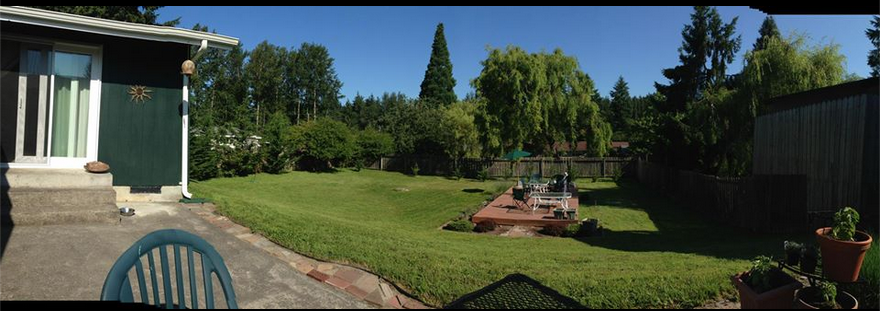
Durberg Backyard
Durberg Backyard

Today dawned nice and sunny, so I thought I’d let the dew drops dry in the morning sunshine while I headed to my favorite coffee shop to work on my journal for my class, Multicultural Perspectives in Counseling. This class is giving me angina (more on this tomorrow—guess what M stands for?)—I just have to write a two-three page journal entry about my experiences with class, race, oppression, and privilege. No biggie. So I went to Tony’s Coffee Shop to sweat through that (the neighbors were sawing and banging—I couldn’t think in the house).

Around noon when I’d reached an impasse on oppression, I decided to go for a run. I’d worn my running clothes to study, so I just set out from there. I ran my fastest five miles of the year thus far, so I was pretty pumped. I had lots of energy when I got home, so I ate and then headed out to the back yard.

Mowing our back yard is not for the faint of heart. We have a vast swath of muddy, hilly weed-choked lawn with all sorts of obstacles (trees, plants, deck). It grows like a motherfucker too—to really keep up with it, we’d need to mow every five days, especially this time of year when we get a day of sun and then a day of rain. Back when the kids were small, I used to bag it since Anna has severe allergies and that took all afternoon. Each swipe up and back was a bag full of clippings.

These days we just mulch. So, I put on my headphones and the ear protection, my gloves, glasses, hat. I just kept my running clothes on since what was the point of sweating through more clothes? The mower started up fine and we went around the yard a few times, in and out of the trees, around the plants that I stupidly put in the middle of the upper yard.

And then she died. At first I thought I’d run out of gas, so I trudged up the hill to get the gas can and filled it up, checked the oil. All appeared to be fine. So I pulled the starter. Cough, cough. Sputter. Die. Cough, cough, sputter, die. Gasp, choke, sputter. Chug, chug, bleah. Goddammit. I checked the spark plug connection. I unscrewed the air filter. Well, that could be a problem. I knocked it somewhat clean and tried again. Same thing.

Weird. I texted TLW. Goddamn mower died, I texted. Like she could fix it for me from Seattle.

Raise the wheels up, she texted back

That’s not the issue, I texted. It’s on flat, mowed ground.

Clean the grass out around the blade, she texted.

Doh, I texted back. I’m not that stoopit.

I realized being a smart ass was not going to win me any brownie points. I’m the butch. I needed to figure this out. I went to get the spark plug wrench.

Check the spark plug, TLW texted. I felt smugly ahead of her but didn’t say so.

Yup, I texted.

I took the plug out and put in one that I found in the garage that appeared marginally better. I cleaned the air filter again and reseated it. But it still didn’t start. Son of a bitch.

Go get a new filter and spark plug, TLW texted.

Yah, I texted. I went to put on some less smelly clothes and then I called Sears to make sure they had the parts I needed.

Parts procured, I replaced the air filter, I replaced the spark plug. I didn’t expect much to be different since I could tell from the noise the mower was making that something wasn’t quite right. And I was correct. New parts in place. Same problem. Now it was 4 p.m. Not how I’d planned to spend my afternoon. I still needed to do homework and write my “L is for  . . .” blog. I still needed a topic.

I looked at the mower and ascertained I’d need a flat head screw driver and a Philips head. I wanted to see what was going on under the hood. I know pretty much zip about engines, but I had a lawnmower engine go cart when I was a kid and that thing always required tweaking. I know about chokes and flooding, and this mower sounded like it wasn’t getting enough air, or maybe it was getting too much. Anyway, something about the choke wasn’t right.

I pulled the first part off. I could see the choke parts, but there wasn’t a manual choke to adjust. I tried to start it again while watching the parts. That’s definitely where the noise was coming from. Behind the air filter. The little springs looked very stretched out and there was a knocking sound. I poked around and found that when I pushed on the part the spring was attached too, it made a noise much like it did when I tried to start it.

I jammed the screwdriver in to hold the part back and tried starting it again. Voila! It started! Hot damn!

Lesbian 1. Lawnmower 0.

I didn’t think the screwdriver would stay put, so I found a stick to wedge in there, and I put the cover back on, started it again, and went around the yard for a test. We made it around once and then it died again.

I unscrewed the cover. The stick had become unwedged, so I pulled it out and jammed the screwdriver in again and didn’t bother putting the top back on. I was pretty sure I’d have to pull it off again, and besides, the screwdriver was sticking out. I pulled the starter rope, and she started back up. Around we went a few more times, and then going up the hill, it died again, but slowly, losing power as we went up the hill. I jiggled the screwdriver and noticed that now it appeared to be getting too much air (or not enough, but the opposite of what the initial problem was).

I positioned the screwdriver so that the little part was halfway open. She started right up again, and much to my surprise, the screwdriver stayed in place while I finished the rest of the lawn.

Yes, I could have taken the mower in to be serviced (and I will, later this week), but I couldn’t afford to let the grass get two more days on me. Two more days of growth would require lifting the mower up so far that mowing would be moot. Mowing would be an exercise in futility.

I knew I could solve this puzzle, if only temporarily. See? Fixed!

Fixed It!
Fixed It!

K is for . . . Knothing

K is such an odd letter. Not many words begin with K—I’ve been trying to think of something to write all freaking day. Turns out that K ends up at the ends of and in the middle of lots of words, though:

Make, take, bake, fake, freaking, frolicking, muck, buck, huck, luck, fuck, tuck, snack, track, back, lack, crack, tack, sack, smack . . . anyway, you get the picture. I think (there’s another one) we probably should keep (another one) K around as a member of the alphabet, but I’m not finding any K topics that really inspire me to write.

Really, it’s become an exercise in free association.

You say K, I say:

Kindness (TLW just tossed this one over from her side of the bed just now—I said “meh”)

Kismet (fate, meant to be . . . blah blah)

Kitchen (we need a new kitchen—ours is far too small)

Karma (I believe in Karma)

Knees (that’s the bee’s knees!)

Knife (always said in our house with a hard K in front kah-nife)

Kool-Aid (don’t drink the Kool-Aid)

Knowledge (also with a hard k, kah-nowledge)

Koalas (awww, cute)

Kauai (oh, love Kauai. TLW and I went there once)

Kingdoms (boring)

Kangaroos (the kids were kangaroos for Halloween one year)

Kids (covered in C is for Children)

Knitting (I wish I knew how)

Kerfuffle (again, from TLW)

Kermit the Frog (I do love the Muppets)

Kings (King Felix of the Seattle Mariners)

Kilometers (ugh, I could write a blog on the metric system, or more about running—5Ks, 8Ks, 10Ks)

Kilowatts (what is a kilowatt hour, anyway?)

Kelvin (TLW again, a measurement of heat, she says. I know, I say, and type obediently)

Keg! (TLW is on a roll. She said that with enthusiasm)

Keno (TLW again—she’s getting into this)

Kafka  (Gregor Samsa)

Kiss (the band or the act?)

Kegels (really, I should do those more often—strengthen my core)

Knob. Knocks. (TLW—kahnob, kahnock)

TLW: kempt, kit, key, kill, kid, kin. Kabob.

“I can’t stop. It’s a sickness,” she says. “Koi.”

“I’ve got it,” I say. “Stop.”

“King!” she yells because she has her earplugs in.

“Got it!” I yell back. “Stop!”

That’s it. That’s all I have for K. Let’s pretend this never happened.

J is for Jung

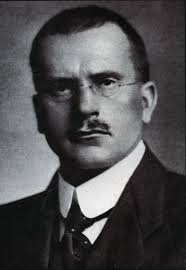
jungGood Morning! I have a busy day ahead, so I thought that instead of writing something completely fresh, I would share with you the short paper I wrote on Carl Jung last quarter. Our assignment each week was to write a couple of paragraphs on the personality theorist of the week. We were to choose our favorite concept that theorist espoused and explicate it a bit and then we were to find an outside source that explains that concept and write a bit more about it.

My favorite Jung concept is transference. I’ve always wondered about how this concept works–and given the intimate nature of counseling or therapy, I’ve always suspected that transference is completely normal. How can a person not develop strong feelings towards someone with whom they share such intimate life details?

I found two articles in Psychology Today that I thought did a fantastic job of slicing through this tricky concept. I hope you’ll enjoy them as much as I did. Here’s my paper (Feist is the author of the text we read):

Favorite Jung Concept: Transference

Once concept that Feist touches on but doesn’t delve too far into with either Jung or Freud is the idea of transference. We first encounter the concept of transference with Freud, who believed that the “transference situation is vital to psychoanalysis” (Feist, p. 51). According to Freud, “transference refers to the strong sexual or aggressive feelings, positive or negative, that patients develop toward their analyst during the course of treatment.” Freud maintains that the therapist does nothing to earn the patient’s feelings; the patient was simply putting on the therapist the feelings the patient had toward his or her parents.  Like Freud, Jung believed that transference is a “powerful ally to the therapeutic process” (Feist, p. 51), but unlike Freud, he attributed transference, both positive and negative, as a natural outcome of the patients’ intimate revelations. It followed, Jung believed, that a patient would have strong feelings toward his or her therapist after revealing such personal information (Feist, 132). Jung encouraged his patients to see him as a savior or a god, according to Feist, as he guided them on their paths to wholeness and self-acceptance. Given that Jung had affairs with two of his patients, Sabina Spielrein and Toni Wolff, we can conclude that Jung might have seen himself as a bit more than merely a facilitator or guide on his patients’ journeys and did not do his own work to understand or overcome the pull of countertransference.

Outside Sources on Transference

While Feist doesn’t have much to say about transference with either Freud or Jung, quick research reveals a wealth of information. An article by Stephen A. Diamond in Psychology Today, http://bit.ly/1f0sfVh, takes a closer look at both Jung and Freud on this issue as well as at the concept of transference from a patient’s perspective. In a letter to Jung, Freud called psychoanalysis a love cure, and Diamond does a nice job of untangling how this “love cure” can work in therapy without crossing any moral or ethical boundaries. Therapy clients, Diamond asserts, come to therapy seeking to heal an unresolved “love wound,” looking for “acceptance or physical affection they never received from their [parents].” Therapists can heal this wound, not by entering in to an erotic relationship with clients, but by making “deliberate and proscribed use of love’s potent power to help patients heal . . . from being inappropriately loved.” Diamond acknowledges the difficulty inherent in providing the therapy patient with “a loving, supportive, caring, empathic, and non-judgmental” relationship that can truly help a client heal. Diamond also points out the importance of not denying the client’s strong feels when they do come up in a session, but to “honor and reflect” on the feelings without acting on them. For a client who has experienced trauma, large or small, around love, the therapist’s offering of a platonic love, according to Diamond, gives the patient an opportunity to respond “in kind . . . [t]o open up to love” with all of its risks and potential pitfalls. Handled properly, transference is, says Diamond, “the royal road into the very core of the love wound complex.”

I is for Imagination

spongebob_imagination

I often say that I write non-fiction essays and memoir because I lack imagination. I’ve never been good at making stuff up, and whenever I sit down thinking I’m going to write a short story or embark on writing a novel, I get a few pages in and stop, overwhelmed by the apparently limitless options.

Taylor, my youngest daughter (she’s nearly 20 now), loved to watch SpongeBob SquarePants when she was little. She loved SpongeBob so much that we had a SpongeBob bathroom (The Little Woman painted it SpongeBob blue and yellow with hand drawn and painted replicas of Patrick and SpongeBob on the walls) complete with a SpongeBob shower curtain and SpongeBob toilet seat cover. Taylor’s bedroom was also SpongeBob yellow, and she had SpongeBob posters, blankets, pillows, sheets, Legos . . .

Of all the characters populating childhood during those years, I found SpongeBob endearing and definitely the least objectionable. He was happy, undaunted by failure, cheerful, a good friend, a hard worker, compassionate. But most of all I loved SpongeBob because he had Imagination.

That Taylor loved SpongeBob made sense, because she too had a great Imagination. I could give that kid two sticks and a small rock and she could entertain herself for hours, making up stories, creating characters, playing alone in her own world.

When Taylor was eight, the two of us went on a three-week camping adventure across Washington and Oregon. We set off without much of an agenda, except that we were going to see Grandpa in Bend, OR. Other than that, we were footloose. We started our trip by meeting some friends and floating the Yakima River. I worried a bit that T would be bored, hanging out with three adults and our friends’ high school-aged son, but she proved to be an excellent traveling companion.

TaylorORvacay2 copy

As I set up camp, pitching the tent and getting the camp stove ready for dinner, she played in the hammock, creating entire worlds from just leaves and twigs. What amazed me the most, I think, is that on her own T wasn’t much of a reader. She loved for me to read to her, but she wasn’t one to sit in camp (as I would have done as a child) with her nose in a book. Instead she was engaged, making up her own stories. I so admired that quality.

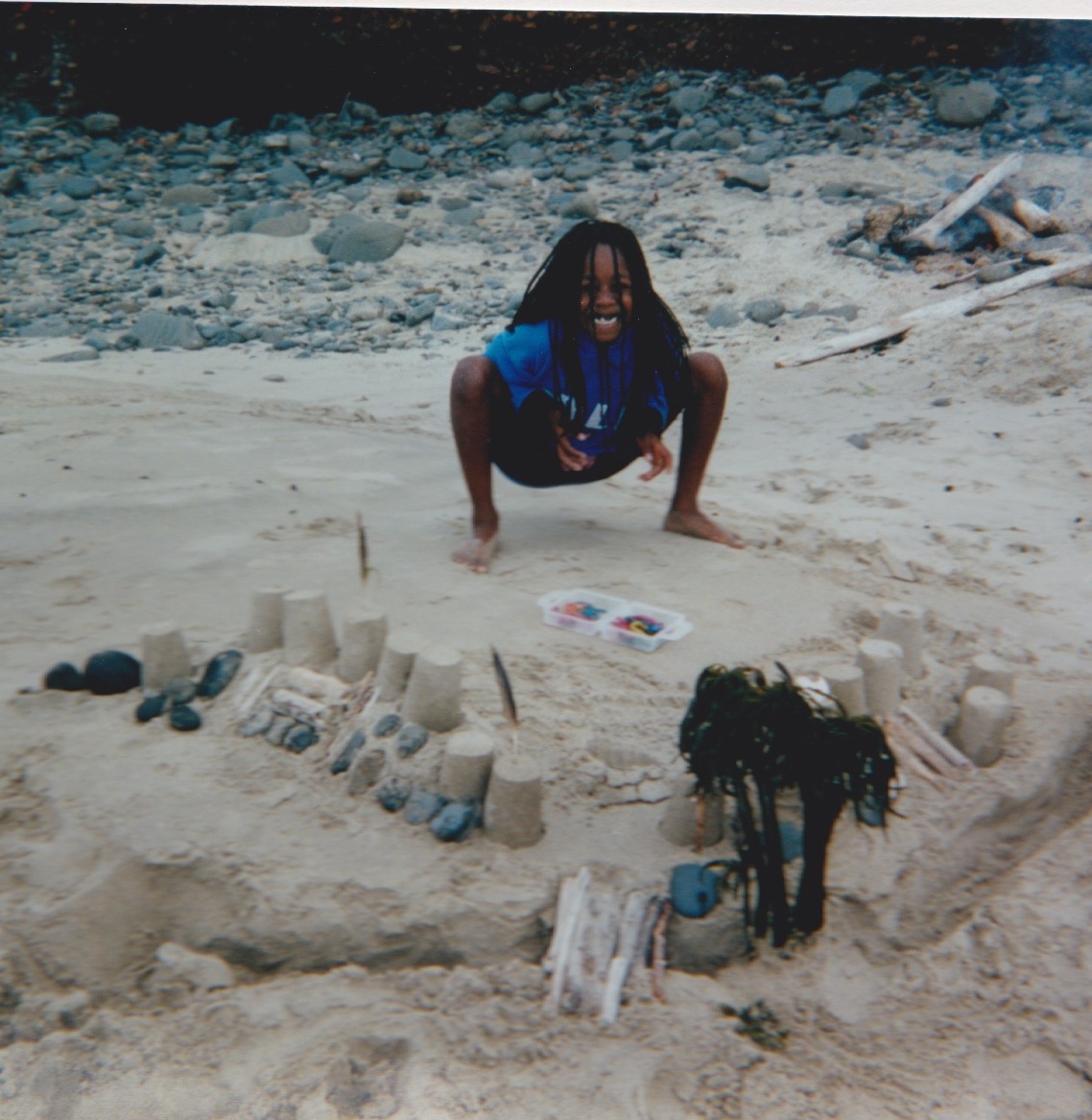
We spent a lot of time at the beach on that trip, and while I went to the beach to read, T went to the beach to play, to create. Every foray was an adventure for her, a chance to create new worlds, to see everything in a new light, with new possibilities. I stopped taking my books with me because I ended up pulled into her world each time, building sand castles, searching for agates, creating new worlds.TaylorORvacay1

When we had fires on the beach at night, they weren’t just for roasting marshmallows or for keeping warm.TaylorORvacay2 2  Each fire presented an opportunity to create, even fleetingly, something new—Taylor delighted in burning sticks and then running to the water to put them out, creating steam. Or, drawing in the sky with the red ember end, writing words for me to guess.

TaylorORvacay2 1

One of our stops, a little town in Northeast Oregon called Shaniko, had been a ghost town and was now just a town stuck in time for tourists to wander through. I didn’t find it particularly interesting, but I made a point of walking around with her, reading some of the historic descriptions. I think we got ice cream cones that melted rapidly in the eastern Oregon summer sunshine. I didn’t think it would hold much interest for T, but she still talks about “that town that was just full of old people.” Something there captured her imagination.

Our last stop on our adventure was Manzanita. We pitched the tent at the campground on the beach and walked the shoreline into town to have some dinner. We’d heard about the great pizza place, and found it jammed. We finally got a table, one that could easily seat more, and so when I saw two women come in who wanted to sit down, I invited them to join us.

Taylor started telling these women about our trip. She didn’t leave out a single detail. And when I thought she might run out of material, she started embellishing, sprinkling in details about my personal life, adding a few false statements, entertaining the women who joined us. No one else could get a word in. On our walk back to the campground, I thought I’d take the opportunity to discuss the difference between talking about our adventures and sharing personal and/or made up details.

She looked at me and said, “It’s just imagination, Mom.”

That’s it–just imagination. No need to be overwhelmed or caught up in the details. Find some kelp to turn into palm trees. Make the sticks talk to the leaves. Just put my stick in the fire and write in the sky.


H is for Honesty (in Writing and in Life)

Write as if your parents are dead. –Anne Lamott

When I attended AWP last month, in nearly every session someone asked some version of this question: “How can I write my story without hurting the other people in my life?” Other versions of this question include something like the following:

“How do you deal with your parents getting mad?”

“What if your friends stop talking to you?”

“What’s fair game in story telling? When does my story stop being mine?”

“What can I write about my kids? My spouse?”

That’s usually when I got up to leave. I didn’t think I needed to hear this question rehashed and re-answered. I thought I knew the answers. I thought I had figured out this puzzle, solved this riddle. I  had spent many years asking some version of this same question. And though I feel like I’ve wrestled it to the ground over the past several years, somehow it keeps popping up.

All of the writing books and books on creativity that I’ve read in the past few months have addressed The Question: Still Writing by Dani Shapiro, Writing is My Drink, by Theo Nestor, Art and Fear by David Bayles and Ted Orland. Clearly this is a universal problem for writers, and obviously given the plethora of revealing, heartfelt, truth-telling memoirs, many authors have pushed beyond their fears. As Nestor points out in her lovely book, “the writers we really admire and adore are the ones who are willing to take a risk and say what most wouldn’t dare.”

But how do they do manage?

Here’s the basic, most essential bottom line for me: if I don’t write it, I will never have to worry about who reads it. In other words, there is a huge long process to be navigated before anyone will ever read my writing. If I just stay in the place of worry and keep all of my words inside for fear of being judged or misunderstood, I will never be a writer.

The fear of never being a writer trumped my fear of what people might think about me and what I wrote. I managed to set aside my worries about offending people and settled in to write. After all, I started in a memoir writing class where no one knew me—fuck it if they didn’t like what I wrote. I had nothing to lose but my nagging fears of never being a writer.

But they did like what I wrote, and their liking my words, their positive feedback, and their support bolstered my courage. A few of us in the writing group still worried about our parents in particular, but we banded together, encouraged one another, and urged each other to write our truths and worry later when we actually had a publisher about who was going to be offended.

****

I have so many fears about speaking and writing my truths—paramount among them was the notion that somehow I would tell my story wrong, that I would put my story down and someone would say to me “nuh uh, that did not happen.” I hardly felt strong enough to write my story, let alone defend it. I had no idea when I started writing my memoir that I would find myself in that position so soon. When I wrote the essay “Body Language” that eventually appeared in Beyond Belief: The Secret Lives of Women in Extreme Religions, I thought I was just writing another chapter in the long slog that was my unpublished memoir. So, I was able to tell my truths without worrying too much about who might read them. But then, the piece was accepted into the anthology and publication became a reality.

Two of my fears came to pass, sort of. The piece was picked up by The Friendly Atheist, a blog on patheos.com and reprinted in full. I had steeled myself for my family’s reaction to what I wrote, but I wasn’t expecting to have to deal with the online comments. My mom could accept my truths about my experiences growing up, but she recoiled from the commenters who labeled her as cruel, who said she should be punished.  The saddest result for me was that she felt like she couldn’t come to any of the readings for fear she’d be judged.

The other thing that happened was that my brother, having read my essay, looked at me and said “did we grow up in the same family? I do not remember any of this.” For a moment I assumed he was challenging my version of events, but what I realized after I pondered it (and talked to my therapist about it, of course) was that yes, in fact, we had grown up in different versions of the same family. As the eldest sibling, by four years, as a girl child, I did have a different upbringing than he did. He was 14 when my story took place—there was no reason in the world he would have known about the events. It was, truly, my story to tell.

****

The other part of this truth-telling, honesty, being vulnerable on the page thing is something I am still coming to grips with, and that is the creation of a persona. I am not the narrator of my story. The narrator is the narrator. In Still Writing, Dani Shapiro addresses the notion of exposure toward the end, in a section entitled, fittingly, Exposure. She tells the story about a woman who approaches the author Frank McCourt and says to him “I feel like I know everything about you!” to which he responds “Oh darlin’, it’s just a book.”

Shapiro goes on to explain that yes, while we may feel like we are flinging open the doors of our lives to the world, we are actually choosing what to reveal. We are not, she reminds us, writing a diary or stripping naked.  As much as I feel like I leave a good portion of myself on the page, there is so much more that I do not write about. I employ, in the words of my therapist, discernment. Occasionally to make a point I will use hyperbole. I become a character. The people in my life become characters: The Little Woman, The Children, My Therapist. Crazy Neighbor Lady.

Telling a greater truth by manipulating the day to day unfolding of our lives is a tricky concept, one that gets almost as much attention as how can we write our stories without offending anyone. But as Nestor points out (sort of via Vivian Gornick): “The story is the magic that the writer creates out of the events, the brew of insight, metaphor, and voice that renders the events meaningful.”

No writer I know wants to sit on Oprah’s couch and go through what James Frey went through. But there’s a difference between lying (passing off as truth what never actually happened) and rearranging the facts in order to better tell our stories, to better get at the larger truth, the Take Away.

Honesty in story telling is a dance. As writers, I think we seek connection with others through our words, and we can only authentically connect when we make ourselves vulnerable but we can’t just vomit our emotions on to the page. We have to shape, add, subtract, mold. We have to use our imaginations, as Nestor points out, to forge a coherent, universal story out of our personal experiences.