TechTherapy for Writers and Other Anxious Folk

I’ve come up with a name and a tag line for my new business supporting writers and technology:  Tech Therapy for Writers and Other Anxious Folk. I’m building a website, too, which is more challenging than I thought it would be. The good news is that by the time the website is up and running, I’ll be excellent at building websites.

That’s the beauty about learning something and practicing it—the more we do it, the better we get, and the better we get, the more whatever it is becomes second nature. And I don’t mean that only the end result becomes easier to achieve. I have discovered that the process becomes more meaningful and profound as well—so much so that the process or practice becomes the focal point of the activity, sometimes eclipsing the product.

I’ve found this to be true with writing—by making a commitment to a haiku a day, I’ve gotten really good at writing them and not just at creating a 5-7-5 syllable poem, but at the craft: choosing the words, noticing the cadence, enjoying the sort of transcendent experience that the process evokes—that little daydream along the way, and more importantly, the connection with another person.

The same thing has happened with the daily blogs. At first, I thought coming up with something to write about everyday would be the biggest challenge, but really, the hardest part is trusting myself once I sit down to write—trusting that what I have to say will somehow connect with at least one other person. Learning to still the voices that tell me no one could possibly care what I think and trusting that place in my gut that reminds me we are all connected and that if I care about something, there are others who do as well.

So more than having a series of blogs at the end of this month, I’ll have an experience of having connected and the practice of connection—of the exchange with readers, the building of a community. And having that community makes the writing easier the next time. Synergy.

So, too, hopefully, it will be with websites and building a business that supports synergy and connection. I have to think that by focusing not just on the end result but on the process, the learning, and the craft we will all come away energized and engaged. And that’s what TechTherapy should be about.

p.s. if you’re interested in techtherapy, drop me a line at pamela.s.helberg@gmail.com

Writing, Always with the Writing

A week ago Sunday I returned from a lovely few days of basking in writerly goodness—a writing retreat to Lummi Island, two events featuring Cheryl Strayed in the ‘ham, and then four days at AWP in Seattle. Coming down over the past week has been a gentle process. I’ve been motivated to work. This blog a day thing is keeping me writing. The daily haikus, too. I’m also reading a lot about writing. I finished Theo Pauline Nestor’s Writing is My Drink—wonderful book, motivating, inspiring. I just bought Dani Shapiro’s Still Writing. I had the privilege of hearing her read a bit from it at AWP. Can’t wait to read it.

Currently I’m reading  Art and Fear: Observations on the Perils (and Rewards) of Artmaking by David Bayles and Ted Orland. The first edition of this book came out in 2001 and it’s currently in it’s 13th printing, so it’s done quite well for a slim volume on art.

I noticed on the end cap on the Memoir section at Village Books the other day—I’m always hovering around the Memoir section, hoping something will happen (irrational, I’m aware)—and there it was, speaking to me as so many of the books do. I passed it by twice before I finally gave in and bought it.

I’m not quite half way through as I type this—turns out it is one of those books best savored over a couple of weeks rather than inhaled overnight. Every night I pick it up and read a few pages. I toss it in my book bag as well and take it with me in case I have time to read something other than my iPhone during the day.

Here’s the first line from the first chapter:  “Making art is difficult.” I’m hooked. Go on. The book seeks to answer, I think, these questions:  If art is so damn hard, how does it even get done at all? What are the obstacles that artists must overcome to create?

I only have to get to page four to find this nugget:  “Making art provides uncomfortably accurate feedback about the gap that inevitably exists between what you intended to do and what you did.” Isn’t that the truth? How different is that paragraph I just wrote from the one that I thought I was going to write five minutes ago? The paragraph in my head practically danced off the page it was so lively, but now there’s this big brown poop pile of words that I actually typed and it bears absolutely no resemblance to what I intended to type. Why is that?

Bayles and Orland would argue that we need to type out many, many ugly piles of mediocre art in order to get to the one golden paragraph, the golden paragraph that shines the proverbial light in the inevitable darkness. Our job, the authors so helpfully point out, is to learn from our work. They say that “the function of the overwhelming majority of [our] artwork is to simply teach [us] how to make the small fraction of [our] artwork that soars.” We learn to work by doing our work.

Everyone has said this in every writing book I’ve read: Anne Lamott, Stephen King, Theo Nestor, Natalie Goldberg, Dani Shapiro are who pop into my  head at the moment. . . we have to put our butts in the chairs, we have to churn out shitty first drafts, we have to live in The Cave. We have to do the work. Cheryl Strayed said it last week when she was in town for Whatcom Reads. Multiple panelists at AWP said it last week. The book is not going to write itself, the painting won’t paint itself.

They also stress the importance of audience. Most people quit producing art when they lose their audience. For many folks, this time comes immediately after finishing school because our audience is suddenly gone. No more teachers, classmates, peers, student showings. It all vanishes and no one has taught us how to find our audience.

The authors make two recommendations. First, make friends with others who make art and share your work. Second, start to think less about showing your work in, say, MoMa, and more about showing it to those friends who make are.

I’m not sure what my point is here except to say that for me, there are two realities about writing—at least for me. The first is that no matter how much I think about writing something, nothing happens until I start actually writing. The second thing is that community is good. A writing community—being among so many writers, so many people with the same purpose, last week awakened the sleeping lazy writer in me. If all these people can write books, so can I. Because they are here to talk about it—they are here to help, to light the way, to pat me on the back, and to just sit across the table from me behind another laptop, working with me.

Monkey Mind, Monkey Run

I’ve been thinking all week about external validation, beyond the likes and blog comments and more into  (what I used to believe was) my non-digital life. Most days I struggle to walk away from my keyboard. After all, that’s where my livelihood (such as it currently is) resides—writing, school, job applications. To counteract all of this screen time, I’ve been trying to push away and spend at least an hour each day running. I was on the massage table the other day, telling my massage therapist about my last blog, recounting for her how I thought that running so much these past two months had significantly calmed my annoying physical symptoms of the past year. I told her how good it was for me to spend that hour each day away from the computer screen and out of my head. Then I mentioned in that offhanded manner that so often carries the weight of truth that I run with my iPhone because my phone is where my Nike app lives along with my running music and my Fitbit app.
“So, you’re not really getting away from the external validation,” she noted.

“I don’t answer the phone and I don’t check my blog stats when I run,” I said, a little miffed, before adding, “Usually.” Slowly I began to see her point.

As I run through the miles, my iPhone via the Nike app, tells me how far I’ve run and at what pace.  My Fitbit vibrates when I hit 10,000 steps for the day (generally by the time I’m done with my daily run). I listen to a playlist of music and when Florence and the Machine comes on with Dog Days, I know that I’m nearing the two mile mark and that about 20 minutes—give or take half a minute—have gone by. I know then I have about 30 minutes left. I know the first of the Lady Gaga songs come on around mile four, and I know that if I’m still running when The Band starts playing that I’m closing in on mile five. I know if I’m running better than I did the day before. Hell, I even know if I’m running better (or worse) than the average of my last seven runs. On good days when I’ve finished running and before I stretch, I’ll even post my run results to Facebook with a comment along the lines of “nailed it bitches!”

“What would happen if you ran without your phone?” the massage therapist asked me and then answered her own question. “You’d be able to hear the birds.”

“I’d just hear myself huffing and wheezing,” I countered. “And I’d lose miles. My averages would plummet.” As soon as I uttered those words I knew I had a problem, or, in the parlance of the mindful and aware, I knew I had something I might want to pay attention to, something to look at.

She laughed when I said I’d lose miles. Absurd, right? Of course I wouldn’t be losing the miles—my body, my health would still benefit, clearly. But would I be able to tolerate not documenting my progress? Would I be able to derive the same pleasure from running if I couldn’t compare today’s run with yesterday’s?  And how would it be to run without music? Would I be faster or slower? Could I stand to listen to just my own heavy breathing? I’m not sure I can. I’m not even sure if I want to, but I’m interested in taking a closer look at the whys of the situation. I’m interested in noticing.

I’m interested in noticing because when I pay attention, I can begin to make more conscious choices about this one life I’ve been allotted. On the surface these choices seem trivial: whether I run with or without music, with or without digital feedback on my performance, with or without compiling and parsing each mile. But are they really insignificant or are they indicative of a larger problem? Even as I type this piece I can’t refrain from flipping back to the Internet, to Facebook, to my email. I cannot focus just on this bit of writing for any sustained period. I don’t know if my monkey mind is getting worse or I’m just noticing it more, but I’m beginning to worry that I’m not paying close enough attention in other areas of my life, that being easily distracted could be taking a toll on my relationship and my career (or lack thereof), on my desire to be a writer. Is this inability to focus on just one thing at a time without soliciting feedback and validation getting in my way?

For one of the psychology classes I’m taking this quarter, I had to read about and then write a page and a half paper on BF Skinner—I had to pick out my favorite theory of his, write a paragraph on said theory and then find a related online source to write about that had to do with my favorite Skinner theory. I started this exercise thinking I wasn’t a big fan of Skinner—I think (or used to think) that behaviorism was reductionist and limiting. After all, behavior modification techniques did not work at all when I tried to use them on my kids. My kids could give a flying fuck if they got a gold star on a refrigerator chart. I came out of my active parenting years with the firm belief that nature will always triumph over nurture. But, a funny thing happened on the way to writing my Skinner paper—I started connecting the dots. Duh. I remembered a book I had purchased but only partially read a few years ago, Nicholas Carr’s The Shallows: What the Internet is Doing to Our Brains. I looked Mr. Carr up on youtube and listened to him read from and discuss his book at the Harvard University bookstore.

If Carr is correct (and I do believe he is), the Internet really is changing the way our brains work. My brain has been changed to actually need to push the levers at Twitter and Facebook, to peck away at my email icon. All of this screen time is rewiring my grey matter, new neural pathways are being formed based on Skinner’s Operant Conditioning theory. I have been trained to push the levers just like the lab rats. Nike and Fitbit, Apple, Facebook, Twitter, WordPress, Google are delivering enough random little doses of oxytocin to keep me coming back for more.

Now that I have this awareness, what am I to do? Initially, I’ve decided to just be aware, to simply notice (is it obvious yet that I’m taking a mindfulness class?). When do I press the levers? What distracts me? Do I feel better or worse if I stop writing and check an empty inbox? What do those Facebook likes and new Twitter followers mean to me? Does my self worth rise and fall with my stats? Why? And maybe most importantly, am I engaged in meaningful and purposeful relationships outside of these places? Am I moving forward, toward my goals for the next year, the next five years?

This afternoon I thought briefly about leaving my phone and earbuds behind when I headed out for my run. After all, I knew the run from my front door to Boulevard Park and back again is just over five miles. I don’t need iTunes to mark my distance. But, I do know that I seem to be in a running groove right now that works for me. I am aware enough to know I don’t want to fix something that’s not broken. I’m getting fit. My pants are getting looser. My body feels great. I LIKE having Macklemore, JayZ, and Rhianna in my head. Screw the birds–S & M motivates me. Today I chose to run with the technology in place. Tomorrow I may decide differently. Tonight I will decide if I want to read a book or spend my time before sleep anxiously checking online stats. I’m leaning toward the book. I’ll let you know what actually happens.

My Drug and My Vice

Feedback hits my veins
Smack for my ego, mainlined
I close my eyes, sigh

I wrote this haiku over the weekend, fueled as I was then by a steady stream of positive feedback for my writing and after a really great response to the Whatcom Writes reading on Sunday. But like any good addict knows, that euphoric feeling fades fast without a continual infusion.

I managed to ride the wave for most of the week, getting by on a steady stream of Facebook likes and occasional comments, but on Friday I hit bottom.  Two months ago I sent out some queries to a handful of agents and within days one agent requested I send sample chapters of my memoir. This is it, I thought. I’m golden. I worked feverishly for a week to put some high polish on a few of the better chapters and sent them off into the ether. I tried hard to stay in the moment but really, who among us writers doesn’t live at least part of the time on that fantasy book tour? On the bestseller list in our own heads? I’m a legend, if only in my own little monkey mind.

Things came crashing back to earth for me on Friday when the agent got back to me with a kind and generous email indicating that perhaps my pages aren’t quite ready for primetime. Honestly, I can’t say that I wasn’t expecting this—I know the odds. We all do, when we sit down and dare to think we have a hope of seeing our words in print. The statistics are depressing, but still, we dream.

This crash, this bursting of my ego and the view from down here at the bottom set me to thinking about how fortunate we are now, though, as writers. We have an audience if we want one. We don’t have to toil in obscurity—relative obscurity, maybe, but not completely. We have communities that welcome our imperfect work, places where we can get our hits and fixes, venues even if they are of our own making.

I started wondering, though. What was it like as a writer to wait months and months for feedback on a piece of writing? Or to not get any at all? Imagine—writing something, spending a few hours, or weeks, months, years, on a piece and then just . . . doing what with it, exactly? Sending it to an agent or publisher and then waiting for a single letter to come by post. No instant gratification. No thumbs up or down within minutes. I suppose after a week or so trips to the mailbox might become something like obsessively checking Facebook within a few minutes of posting a particularly witty comment or status update. The worn path to the mailbox might have been a little like the iPhone-shaped silhouette on my back pocket—there because I want easy access to my inbox, the ability to quickly check my blog stats. My self-esteem rises and falls with the number of hits I get.

All of which leads me to ponder just how healthy it is, this continual trickle of sporadic feedback and my incessant need to check in on it. On the one hand, when the stream dries up a bit, we can just post something new. On the other hand, why? What’s my motivation? To continue the high or to hone my craft? I’ve been reading about B.F. Skinner and the behaviorists, operant conditioning—the key to operant conditioning is the immediate reinforcement of a response. Suffice it to say, I’ve been thoroughly conditioned by variable reinforcement. I feel a bit like a used lab rat, and the unpredictable rewards are messing with my monkey mind.  One day there might be these beautiful little gifts waiting when I press that lever, other days there’s nothing. Does the nothing keep me from pressing the lever? No it does not. The nothing makes me press the lever even more—there must be some mistake! Where’s my feedback? My next hit? I need my fix!

So. I enroll in a mindfulness class. I employ hypnotherapy and guided imagery. I run. I run and run and run. They say the endorphins produce a natural high. It doesn’t really compare, but there are 30, 40, 50 minutes a day where I’m away from the lever at least. And I’m getting healthier as a side benefit. I’m not sure I want to give up the drug, the high, the next hit long term, but I’m trying to get better at living in the moment and focusing on writing just because.

Oh hell. No I’m not. If I were, I’d not be posting this damn blog.  Hit me baby. Just one more time.

When Words Fail Me: My Writing, My Wedding

Sometimes the pressure to write builds up inside of me and it is so huge that I feel like I am going to explode. Someday The Little Woman may come home to find bits of me all over the house, word bits, words that built up and couldn’t find their way out of me. There will be a preponderance of prepositions and a truckload of nouns, verb carnage all over the kitchen, and gerunds on the ground (hey, that rhymed!). Adverbs and those nasty words that end in –ly will litter the walls, pronouns and random punctuation marks will be sprayed around.
Too often, these words don’t find an outlet. Instead I spin and dither. I find other ways to expend the energy inside, activities that seem less arduous than sitting down and grinding out sentences. This week, for example, I’ve set up the art table and started making things: prayer flags with my own twist and boxes to put the prayer flags in. I love making these boxes—I’ve been making books (books is a broad term, in book making, just about any form of art with words) for a number of years, and now for every book I make, I create a box in which to stow it. The timing is good, for making things. I can justify my projects as Christmas presents. These projects are my safety valve, the overflow, where the dangerous steam can spill without harming anything. Still, it is not writing.
And it’s not like I don’t have things to write about. I got married this weekend. I feel like I should be writing something about that.  We had a small and lovely ceremony with our daughters and good friends in attendance. My longtime friend Laura officiated, my friend and writing buddy Jolene took pictures (she’s good, check out her page). Our vows reflected the tenure of our relationship, sturdy vows, hard won truths reflecting our accrued wisdom. Mature vows from which the dewy innocence has been shaken, vows with wonder and tenderness and love.
TLW (aka SugarMama) and I have  been together for more than thirteen years. We had a silly ceremony ten years ago, and became registered domestic partners about five years ago. None of that was enough in the end however, for me to retain my health insurance benefits with her company. I proposed to her last Christmas not long after Washington State enacted its same sex marriage law. And yes, we gays fought to get married so we could have benefits, but I felt a little irritated rushing our ceremony in to beat a deadline. We were caught between her company’s end of the year deadline and the one that comes in June of next year that says the state will roll our domestic partnership into a marriage if we don’t act first.
(Yes, we had a year to make plans and do the deed. We need not have rushed, but all excuses and reasons aside, that is what happened, so don’t judge me, Dear Reader, just read on, quietly and without comment).
Family: Anna, Nancy, Pam, Taylor
I’ve run out of words. So here are some photos instead and a copy of the poem I wrote for my wife (wow, my WIFE! There’s something I didn’t think I’d ever be saying in this lifetime, forever ending the dilemma of what to call her: significant other, TLW (always), partner, girl friend, spouse, better half, my uhm friend special friend, the boss, etc).
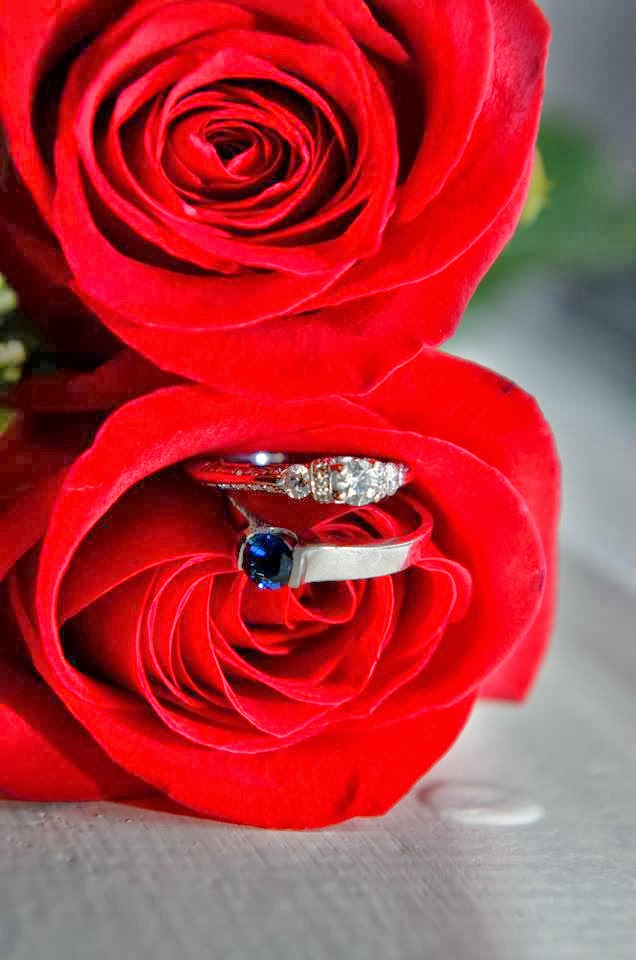
Our rings–mine is the sapphire.
Shout out to Jolene Hanson, photographer
Nancy, You are my anchor

The harbor in the sea

The home from which I can journey
The door that will always be open
I rise and when I fall
You lift me up
Our bodies entwine
Rising up from our bellies
I’ve held my breath all these years
And now with you
I can exhale
I offer you myself
A safe harbor in the sea
A home with heart and fire
A door that is always open
When you rise I will cheer
Hitched! At last.
And if you fall, I lift you up
Our bodies entwine and
Rise up from our bellies
We breathe in as one
And now that we are home together
I can exhale
The circle of this ring continues forever,

As does my love for you.    


My Distractions:


Well, That’s A Lot of Words!

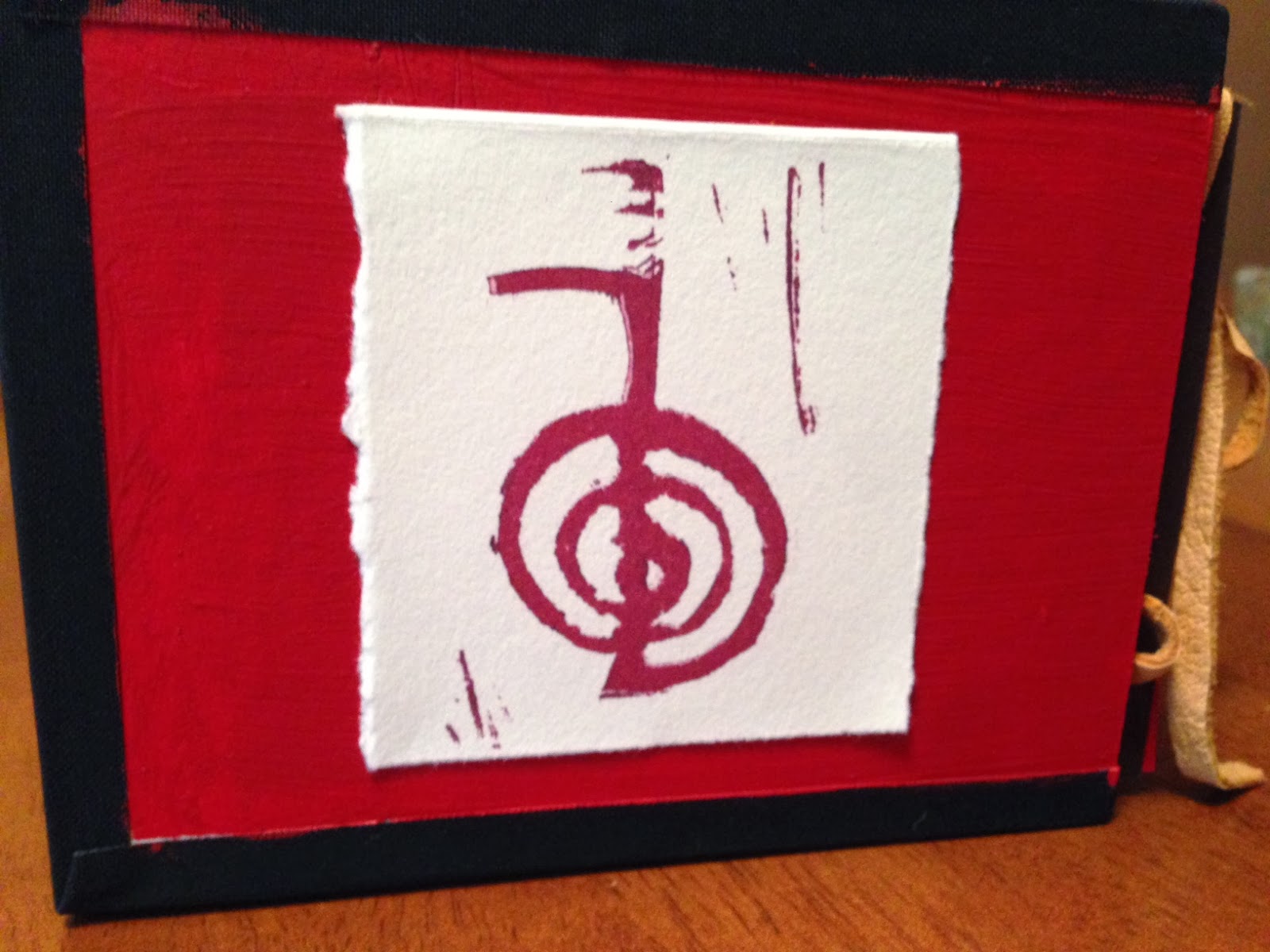
This is my first actual week of being a stay at home writer (SAHW, as opposed to a SAHM—an acronym I learned just this morning). I’ve been thinking about writing a lot these past four weeks, but this is my first week at home since I quit my job at the end of July. I’ve been busy flitting about the countryside. And doing other creative things in an attempt to jump start my writing. I made this linocut thingy last night, dabbling in some of my favorite subjects: religion and psychopharmaceuticals.

INRIRX (copyright Pamela Helberg)
In anticipation and in spite of staying up really late working on whatever this is (I’ve titled in INRI RX), I woke up at five this morning, ready to go. But my eyes were gritty and I couldn’t concentrate, so I tweaked my platform a bit (i.e. I monitored Twitter), played some Gin Rummy on my phone, and gave it another shot closer to 8 a.m.  I got a good four hours of work in, a couple thousand words. But, man, it was a slog.
There’s this thing that happens when I write—I tend to get all Hemingway-esque (or so I’m told) and scrimp on the details. When I am sitting there, trying to tap into my feelings, trying to fill in descriptions (of people, the landscape, the room, my state of mind) I think to myself “well, that’s a lot of words. Who would want to read that much about me or what I think?” It’s so hard, this telling of my story, trying to figure out what people need to know, what they don’t. What makes for an interesting tale as opposed to what has actually happened to me. So, I’ve been practicing just writing it all down, every little detail, as much as I can remember, regardless of how personal, how minute. I figure what the hell, at least I’ll have some material to work with.
I pulled out my notes from a few months ago, from when my writing group critiqued this chapter, the one I’m currently working on. Nearly to a person, my writing buddies all said basically the same thing: that it is really three chapters, not one. This is not 15 pages, more like 50 pages.
So I started grinding out the details the best I could this morning, trying to get my first 100 pages reworked in order to send it out to a prospective agent, and a funny thing happened. This huge thematic thread just opened up, burst forth so unexpectedly I nearly wept.
I was just writing along, trying to make my undergraduate years sound somewhat intriguing, getting the words out there knowing that I could go back and add some shape later. That nagging voice (on one shoulder) was nattering away at me the whole time: “who cares that you were an English major? Who cares that you loved your 19th Century Poetry instructor? Why are you writing that? That’s so stoopit!”
On my other shoulder was this guy: “You were so ignorant then. You really wasted your life. What a shame. Too bad you didn’t get it together sooner. Think of what you could have accomplished.” I shoved them both to the background and continued on, writing (inexplicably really, since I haven’t ever written about this) about my English classes, and I came to Victorian Lit and Jude the Obscureand Dr. Meredith Cary, professor extraordinaire.
Jude Fawley. Sue Bridehead. Scholarship. Religion. Sex. Illicit relationships. Depression. I mean, OH MY GOD! Could my muse have whacked me upside the head any harder?
So this is why we sit our butts in the chair and try to quiet those damn voices, for moments like these, when we have all these impossibly unrelated events and plot points and suddenly it all starts to make sense, to coalesce.
(I can’t believe it took me this long to figure it out. Think how much further along I’d be if I’d done it sooner.)

AROHO: My Long Road Home

Well Dear Readers–I left Ghost Ranch and the 2013 AROHO Writers’ Retreat yesterday morning, pointed the Jeep north and just drove, grateful that I had nothing to do but steer and follow Siri’s directions to Provo (a strange place to end up after a week with women writers, but conveniently located).  I pulled into the Hampton Inn around 7:30, excited to sleep in a real bed, alone in my room with my own bathroom, so thankful I wouldn’t have to make the trek across the desert from my casita to the communal bathroom to pee in the middle of the night.

I’m still unpacking all that the week taught me, but I re-learned a few truths (and sometimes re-learning is the most painful and revelatory sort of learning):

  • Never judge a book or a person by its/their cover–what lies within is all that matters. As I sat and listened to all of the women who were brave and read their work, I was blown away every three minutes (the length of each reading). 
  • Ask for what we need. As I listened to AROHO founders Mary Johnson and Darlene Chandler Bassett throughout the week, their power and determination continued to impress me and to impress upon me the (for lack of a better word) miracles that can occur when powerful women decide to go after what they want. If we don’t ask, no one will know what we need.
  • Acceptance and self-acceptance come when we just do our thing, walk our own walk, talk our own talk and rest confidently in our (overused word alert) authentic self. 
  • Everyone has a story. The key to the story lies in the telling. 

I went to a writing retreat, but the work I did there had less to do with writing and more to do with simply being, in the quiet, in the desert (an apt metaphor if ever there was one), with myself.

    A Whole New Me–Coming Out Again

    I have a confession to make. I am not what I seem. You have known me, Dear Reader, only on the surface for the past 25 years. I’ve been keeping this burning secret at the very bottom of my soul, trying to keep people out, away from the real me.
    I know, I know.  How many coming outs can a gal have in a lifetime? I’ve had two official ones so far: once at 16 when my parents stumbled quite accidently upon my very first lesbian affair and took me to be exorcised (in their defense, lesbians were a lot more frightening in the very early 80s—mullets, flannel, white sneakers), and once in my early 20s when I renounced god and embraced Sappho once and for all.
    But really, as I type, it occurs to me that pretty much every day is a coming out if I want to live as authentically as possible. Every day I come out when I don’t censor myself: at the bank, the grocery store, the staff luncheon. I come out when I refuse to change the pronoun when I’m talking about my wife. I come out when anyone sees and asks me about my wedding ring. I come out when I talk about my memoir. It’s getting easier. But I’m not completely comfortable doing it. You’d think, after 34 years I’d be better at it. So, yeah, I may have had two official coming stories, but it’s a lifelong adventure.
    I still think twice about it too—I don’t make any overtly lesbian gestures or comments without first thinking about it. Checking the crowd. Weighing the dangers. The Dangers: alienating co-workers—which could make the largest part of my day hellish. Being judged by wait staff, which might result in something bad happening to my food. Being denied service. Being kicked out of a cab. What might the danger be? If I can ascertain a good amount of safety, I will, say, grab my wife’s hand as we walk in our neighborhood. Even grocery shopping together feels like exposure and vulnerability.
    I know I’m not supposed to, but I really do care what people think. I’m trying to get over it, though. And tonight, as a step in that direction, I am coming out again, as something else.
    Tomorrow is the beginning of something amazing. Tomorrow is the end of my life as I’ve known it for the past 25 years. Tomorrow, I become a stay-at-home writer, full time. Fully supported by My SugarMama (formerly known as The Little Woman).
    It’s a whole new kind of coming out—and I have been emphatically undecided about telling people about this new me. I’ve been afraid of what people will think: Career suicide. Poverty. She’ll ask for money. She can’t hack it. She’s nuts.  
    Shocking isn’t it? I’ve quit my job. I have said no to the man. Life is too fucking short to spend most of my time on earth miserable. I tried, but I could not just decide to be happy. No more than I could decide to be straight. I am not cut out for this shit. And neither are most people if this article is even remotely accurate (and I’d say this guy is absolutely right on).  And like being a lesbian, choosing happiness over misery is absolutely no reflection on anyone I work with (well, except on maybe one person). It’s all about me (My SugarMama will concur). What makes me whole.

    Clearly, I would not be doing this without my best supporter and best friend, best lover and wonderful wife Nancy. I’m a lucky woman. And for that I thank her.

    Writing is Daring Greatly (thanks Brene Brown)

    Dear Reader—Tomorrow night is my debut as a published writer—my first reading of a piece of writing that is actually in a book.  Not on a blog, not off my printer, but there on the printed page amongst other pieces in a collection of published writing.
    Pretty sweet. I have to say that it is about damn time considering I’m closing in rapidly on the big  Five Oh (mere months away) and considering I’ve wanted to be a writer for, oh, all of my life. So what conspired to keep me silent and unpublished all these years?
    Fear. Fear of being known, of being vulnerable, of being reviled. Shame. The certainty that what I had to say didn’t mean anything to anyone else. The terror that what I thought made no sense to anyone else. Scared that if I committed the thoughts in my head to paper that I would be forever judged by what I wrote down, by the ink stains.
    So, what changed? What enabled me to throw caution to the wind, to finally put pen to paper and let the world in on my innermost thoughts? Fear. Ha! How’s that for irony? But seriously, the fear that I might never realize my dream of being a writer impelled me to write.
    What if suddenly I were unable to write tomorrow? What if I’d played it safe all these years, thinking I had unlimited time ahead in which to overcome my fears slowly, always confident there would be time later to pen my memoirs, and suddenly I found myself incapacitated? I’d be pissed—angry that my fear of vulnerability, the shame of being thought less of had kept me from sharing my most authentic self.
    I didn’t write for so many years because I thought that a) I would be laughed at or, more likely, told my ideas were heretical and would ultimately land me in hell (seriously) or b) I didn’t think I had anything worthwhile to say, that my ideas weren’t universal enough to catch on with anyone outside of my own head.
    I realized, in small, baby steps, however, that people did listen when I read, my words did resonate, and slowly, I found a writing community, a group of other writers to cheer me on and for whom I could root. As Cheryl Strayed told us at the Wild Mt. Memoir retreat a couple of weeks ago, we should write from a place of abundance, that is sharing our joy and passion with other writers and cheering them on because there is plenty to go around.
    I’ve been reading a lot of Brene Brown lately, and if you haven’t had a chance to catch one of her TED lectures, caught her with Oprah on Super Soul Sunday or read one of her books, make the effort. She’s got some amazing research to share, some great life lessons about living with vulnerability, abundance, and passion.
    So, tomorrow. That’s it. Tomorrow I lay myself bare in front of complete and total strangers. Wow. That’s daring. Greatly.

    Imagine

    John Lennon said it best:  Imagine no religion. It’s easy if you try . . . no hell below us, above us only sky. Imagine.  I try to imagine what life might be like for me had I not been subjected to fundamentalist christianity between the ages of 5 and 21.  Those 17 years more than any in my life shaped me irrevocably. What happened during those years color what I do still, more than 25 years after I decided I could no longer subscribe to the tenets of christianity.
    Last night, I sat with a group of women, all writers, all of us contributors to Beyond Belief: Women in Extreme Religion, an anthology of stories about women’s experiences getting into, staying in, and getting out of fundamentalist religions of many stripes: Mormonism, Judaism, The Moonies, Catholicism, among others.
    Each of us read an excerpt from our story, and as we went around the room, a deep sadness overcame me (that and a not irrational fear that an angry god might smite us for talking smack about him). Sad about the potential wasted, the time wasted, the energy wasted—all the ways in which we’d been shamed, subjugated, stigmatized, separated in the name of god. Imagine growing up female and never feeling shame about being a girl, a woman. Never having to hide: our bodies behind burkas, our brains and intelligence behind our bodies. Imagine life as a woman without the imposition of religious constraints.
    What could we have achieved, each of us, I wondered, had we been free to follow our natural impulses?  If we had been encouraged to embrace our places in the world rather than forced to shut ourselves off from the world, shut ourselves down, hide our true selves because our religions taught us what we felt was wrong—our loves, our bodies, our desires, our thirst for knowledge. We all have managed to overcome the limits our religions  imposed upon us, but at what cost, I wondered?
    What might I have accomplished if my energies all those years had been channeled toward, say, academics instead of directed constantly at worrying about going to hell? What if instead of having to be vigilant against every carnal thought, I could have spent those years, oh, I don’t know, learning to play the drums or enjoying each moment, guilt-free instead of feeling pressured to proselytize so my god would smile upon me, so my god would not cast me into the fiery pits of hell. Imagine.
     The red thread of sex ran through most of our stories, which was a little surprising, given our diversity as a group—each of us spent so much time and effort struggling to come to terms with our bodies, our sex, our sensuality. Our natural way of being in the world.  Why, I wondered is religion so preoccupied with sex? Why is so much devotion to not-sex?  We can see how well suppressing those natural urges and biological imperatives has worked out for the Catholics, after all. 
    But, back to religion and wasted time. Oh, sure, I am what I am because of my experiences, and I’ve got lots of rich material thanks to years of being repressed and, frankly, terrified at times that my basic humanity was enough to condemn me to an eternity of damnation. But what else might I have been? What else might that energy have cultivated had it not had to be engaged in a religious jihad against my very own nature? 
    Imagine.