2012: One Mile at a Time

 I ran 366 miles in 2012. That’s a mile a day for every day of last year (2012 was a leap year, and thus had one extra day). Not bad considering I took most of May, June, and July off for a calf injury.  This milestone was not the culmination of any New Year’s resolution or the completion of a goal I had set for myself. 
In fact, I didn’t even think about it until near the end of October when my iPhone running app announced I’d hit 265 miles.  Hmmm, I thought, another hundred and I’ll have a mile a day (not yet realizing 2012 was a leap year). I started doing the math in my head—that’s a little under 10 miles a week for the next 11 weeks. I can do that, I said to myself, no problem.
Such optimism for a woman who had spent the past 20 years or so convinced her running days were over, and not because I was injured, but because I’m generally lazy. On Saturday mornings as recent as 18 months ago, as The Little Woman and I drove to breakfast, we actually pointed and laughed at all the runners who were out early, rain or shine, running in their spandex, their tight shirts, and toe shoes.  Seriously, toe shoes? Hahahaha.
Now, I counted the days left in the year, approximately 70, and once I managed to do some math in my head (harder than it seems), I thought that maybe I could do 100 miles in the next 75 days, if I could manage three and a half miles an outing and three outings a week for the remaining 11 weeks.  Then I kind of forgot about it, until the end of November at the Turkey Trot when I realized I only needed 50-ish more miles.  I had yet to put up 50 miles in a single month,  but I thought I could do it, and how cool would it be to have done a mile a day for a year?
December brought the Jingle Bell Run, which TLW and I committed to early, but that was only three miles, and the month pretty much flew by. Things at work got crazy, and I wasn’t getting out much as I’d come home from work and collapse, exhausted.  I pushed myself, but still only managed 14 miles in the first two weeks.  No way would I make 50, I thought. Then, I discovered that after a really rough day at work, I could fly through 3 miles, so I went a little longer and soon I was running four miles or more an outing.  And my times came down to right around 9:10/mile.  I got inspired and recommitted myself to making 365 miles by the end of December.  After all, I’d have plenty of time during the holidays, and with time off, I could even run in the daytime.
On Christmas Eve, I ran 3.67 miles. I took Christmas Day off to, uhm, carbo-load and cranked out five miles on Boxing Day. On Friday, December 28, I had about 18 miles left to go.  I could do it, I knew now.  Just four days to run a little over 4 miles a day. I hadn’t run four days in a row all year. I certainly hadn’t run over four miles a day four days in a row, but it was less than 20 miles. 
So on Friday I did 3.64 miles.  Only about 12 miles to go.  Three days. Piece o’ cake. Saturday was tough and I could only manage 3.77 miles. That’s okay.  Two days. Twelve miles. I Can Do It.  Then I realized that 2012 was a Leap Year.  I had to add an extra mile to my total.  On Sunday I did five miles even, and my math skills started to fail me right along with my legs and lungs.  One day. Nearly seven miles.  Ugh.  I’d not run seven miles in one outing all year.  But failure was not an option at this point.  I’d come too far to quit now.  I couldn’t face the new year having missed by a couple of miles what was now a major goal.
I spent the morning sleeping in—I needed my rest.  I ate a hearty breakfast—I needed my energy.  By the time I suited up and laced my sneakers, it was after noon.  I did not feel like running.  It was cold out. Snow flurries. Brrr. “Okay,” I said.  “You can do this.”  I told TLW my probable route, just in case I didn’t come back by dark. “Come find my cold dead body,” I instructed. I headed out. My calves complained, but I ran on.  At approximately 1.74 miles I had to stop for a bathroom break—thank god my route included a bathroom (what IS it about running?) I managed another couple of miles and a hill before I had to stop again for a few steps.  Another mile.  Four miles.  I was beat.  I stopped my running app and walked to the track.  I’d have to finish on the track.  I had two and a half miles to go.  Ten laps.  I could do this.  I resumed my running app and took off.  I clocked the fastest times of the day going around and around that track. Ten laps took me less than 25 minutes.
I did it.  I finished.  I ran exactly 366 miles in 2012.  Exactly.
I can’t wait to see what 2013 brings!
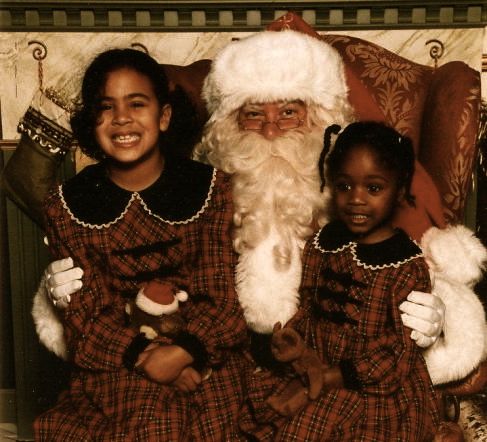
Christmas 1994 or Why Gay Marriage Means So Much

Christmas 1997
Christmas 1997

Christmas Eve always provokes anxiety in me.  For all of the 1960s and well into the 70s, I was the sole granddaughter amongst many grandsons and as such the only target for girly gifts from my well-meaning Mema: dolls, dresses, and purses.  While my cousins and younger brother gleefully tore through the wrapping paper to discover footballs, cowboy hats, cap pistols, and baseball gloves, I opened my gifts cautiously, always hopeful that my true wishes would be granted, that my grandmother would see me for the tomboy I was, not as the girly girl she wanted me to be.  As the Barbies, ballet slippers, tea sets, and girly frou-frou piled up over the years, I knew better than to be expressively disappointed. Growing up in a conservative Christian household, I learned early that it is better to give than to receive, to be thankful for what I had, and to put others ahead of myself, so I pasted on a smile and gave my thanks with as much authenticity as I could muster.

As the years wore on and the family expanded, my girl cousins finally came along, gleeful recipients of all things sugar and spice and everything nice, and I could ignore my gifts and slip away to play with my boy cousins and their superior toys.  They would share their bounty with me, and for many happy hours I wore the cowboy hat and shot the cap guns, threw the footballs around the basement.   Still, an uneasiness always settled over me as the holidays drew near, and as much as I looked forward to Christmas Eve at Mema’s, a genuinely fun and spirited occasion where the alcohol flowed freely and everyone sang and acted out a verse in The Twelve Days of Christmas, where we all wore colored paper hats from the Christmas crackers, I dreaded going because I didn’t feel like I belonged.

A sense of Other became my Christmas cloak:  fundamentalist Christian amongst fun loving Catholics; country bumpkin cousin among my sophisticated Seattle cousins; and something deeper that I sensed about myself, something I knew set me apart in ways I wouldn’t understand for many years.

So, no surprise then that those familiar pangs rushed back as I navigated our red late-model Volvo into Mema’s driveway for Christmas Eve in 1994.  Even though I was 31 and had a family, the anxiety dogged me.  I let out the breath I’d been holding during our hour and a half drive south from where I lived with my partner and our two daughters.  I pulled on my wide-brimmed purple felt hat that matched my paisley purple dress and smiled through the rear view mirror at the girls, Anna four and a half, and Taylor six months old.  They were ready to be sprung from their car seats, their holiday dresses hidden beneath their matching Christmas coats from Nordstrom.  I squeezed Sweetie’s hand, both for comfort and for strength, and admired her stylish red wool coat and her fine black leather gloves.  I allowed a small satisfaction and confidence to creep upon me.  We looked so normal that no one could possibly know from first glance that we were lesbians with two children.  I drew comfort from our appearance as we wrested the girls out of the car and arranged ourselves into presentability—straightening rumpled tights, buckling Mary Janes, wiping the spit up from Taylor’s chin and removing her bib, making sure Anna had a firm grasp on Blankie.  We each carried a child and marched to the front door to ring the bell.

We knew better than to wait for someone to answer before letting ourselves in.  The bell served only to announce our presence before we walked into the sounds and smells of Christmas tradition:  cracked crab, singed spaghetti sauce, bourbon, scotch, laughter and conversation, the burble of children’s voices and laughter.  Aunts and uncles yelled out greetings or raised their glasses to us as we entered.  My mother came to coo over her granddaughters.  We collected hugs and kisses as we waded deeper into the gathering, and because we were women, we all finally came to a stop in the kitchen.

“Merry Christmas!” My aunt Betsy said, “You guys look great.  I love your dress Pam.”

“Where did you get that hat?” Mema sipped her vodka, the ice tinkling.  “I love it!”

“Sweetie!” Uncle David stepped towards us, a glass of red wine in his hand.  “Merry Christmas!”  He gave her a sideways hug and a peck on the cheek.  “How are the girls?”

“Hey David,” Sweetie matched his enthusiasm. “They are great.  Thanks for asking! Your girls must be getting big, too!”

I began unbundling the girls, removing their coats, checking Taylor’s diapers for any obvious odors.  They both looked amazing, their brown skin glowing against the red velvet dresses, their white tights gleaming, their Mary Janes shiny.  Anna’s eyes took on the pensiveness of being in a strange situation, and Taylor’s eyes grew wide, her Surprise Baby look we called it.  Since we’d only just adopted her in May, many of my relatives had yet to meet her.

“She’s so tiny! How old is she, again?”

“She’s so dark!”

“Well, yes, she’s African American,” I explained.  “She’s just a bit over seven months old.”

“Anna, you’ve gotten so big!”

“Anna!  How do you like being a big sister?”

Anna buries her face in the pleats of Sweetie’s red skirt.

“She’s still adjusting,” I say.

“Hey, Pamalamala!” My uncle Mike approaches, the funny guy in the family. “What can I get you to drink? You’re still drinking, right?” He nods at Taylor in my arms. “You’re not nursing are you?”

“Scotch on the rocks sounds fabulous,” I say, happy at that moment to be an adoptive parent, no breastfeeding required.

Anna peaks inquisitively from Sweetie’s skirt.  “Pamalamala?” She laughs.  “That’s funny Mommy!”

“That’s what I called myself when I was your age,” I explain.  “I couldn’t say Pamela, so I said Pamalamala whenever someone wanted to know my name.”

Anna’s brown eyes light up, and some of the anxiety disappears.  I want nothing more than for her to be free of the anxiety.  Mike hands me my scotch and I relax, happy to be among family on this holiday, grateful for the acceptance from nearly everyone, and even thankful for the forbearance of those who might still disapprove.  I am aware they might be masking their disdain with holiday cheer and copious amounts of alcohol.  I don’t mind.

Before long, the girls and their cousins hear the prancing of reindeer feet on the roof and the ringing of sleigh bells.  The little ones who are old enough to walk, rush to the window hoping to catch a glimpse of Santa.  I hold Taylor as she wiggles and babbles excitedly and points to her big sister, eyes wide with anticipation.

“HO! HO! HO!”  Santa opens the front door, a pillowcase bursting with presents slung over his shoulder.  “I hear there are children here who have been very good this year!

“Sit over here, Santa,” one of my younger cousins points to a wing-backed chair between the fireplace and the lavishly decorated tree.  Over the course of the next hour, each child under 18 sits on Santa’s lap and assures him they’ve been nice and not at all naughty during the year.  Santa digs in his bag and presents each child with a present, and as they unwrap their gifts, they hold them up as cameras snap and flash.  The adults grin conspiratorially at one another, remembering Christmases not that long ago when they did the same.  I’ve chosen Anna and Taylor’s gifts carefully, the sting of disappointment still fresh on me.

Once the spaghetti and crab have been devoured, once the platters of cookies have been depleted, once the children have succumbed to the rush of sugar and the excitement of Santa and fallen asleep about the living room, once the adults have exchanged gifts, and had a final glass of holiday cheer, we begin to gather our newly acquired belongings, our coats, the diaper bag, Anna’s Blankie.  We whisper our good-byes and carry our sleeping babies to the car and tuck them in to their car seats.  After several more forays between house and car, more hugs and kisses, I put the Volvo in reverse and head north, letting out the breath I’d been holding the past several hours.

We had navigated through a family Christmas Eve, our little family of four breaking new ground, the four of us presenting as just another family in spite of our differences.  No one else in my extended family had ventured quite this far outside of the norm:  being a “married” lesbian mother of adopted multi-ethnic children broke some new family ground and gained not just tolerance, but acceptance.  Still, my anxiety and self doubt colored my experience and I believed that the love and welcomes came because we worked so hard to be a normal family, we wore dresses and feminine shoes; we bought thoughtful and not inexpensive gifts; we were fortunate to have beautiful children and dressed them in dresses and lace.  We drove a Volvo.  I believed that acceptance required stringent adherence to heterosexual norms.  I thought that if we were going to be a successful lesbian family, we were going to have to be as non-threatening and as normal as possible.

I was so busy hiding who I was, I didn’t even try to be myself.  It didn’t occur to me that my family would love me anyway, and I spent another 10 years figuring it out.

Christmas Letter

Twelve Months of Durbergs
Two thousand twelve has been a brilliant year for lesbians in general, and an exceptionally fine year for The Durbergs in particular.  We close these 12 months in better shape, emotionally and physically, than we’ve been in many years (if ever).  Both Pam and Nancy continued on their fitness quests and kicked off the New Year with a half-half marathon, pretty much the longest six miles ever.   Both of us are incredibly grateful for our good health, happy relationship, and loving family and friends. Life is indeed good.
            Taylor turned 18 in May—and if that weren’t enough to celebrate, in June she graduated from high school.  She spent part of the summer in Philly with her birth family and returned in the fall to start classes at Whatcom Community College.  Taylor plans to pursue a career in law.  We wholeheartedly encourage this endeavor and couldn’t be more proud. We so enjoyed taking her to the school where Pam used to work and showing her around.  She is a strong and smart and beautiful young woman. I pity her opponents in the courtroom.
            And if that’s not enough to make us feel old, Anna graduated from Washington State University with a BS in psychology in May and a double minor in French and sociology.  She promptly left the country to celebrate her academic successes, touring Europe with her good pals Karen and Emily.  Upon her return, she buckled right down and started applying for jobs.  We are proud to say she landed a good one, in the field she wanted.  She works for Outsource as a recruiter and lives in Ballard with two friends.  Anna turned 22 in June. Unbelievable.
Pam continued on in her memoir writing class, finishing up in May with a reading at Village Books.  But the certificate was not enough—she and her writing buddies continue to meet twice a month to encourage one another and provide excellent and constructive feedback. Pam had an essay accepted for publication in an anthology coming out in April—Beyond Belief: The Secret Lives of Women in Extreme Religion, published by Seal Press. Currently Pam is working on building her platform—she can be found on Twitter @PamHelberg, on the Interwebs at www.PamelaHelberg.com, and on Facebook.  She really needs to boost her numbers, so send your friends and acquaintances to her sites.
The highlight of her summer had to be the three weeks she spent serving as a juror on a local Whatcom County murder trial.  Fascinating.  Everyone should spend some time as a juror.
Nancy continued with her running class through The Fit School, burning up the track as well as the calories.  She is becoming somewhat renowned in these parts, writing her story for The Fit School website and modeling for a Fit School promotional video.  The Little Woman started blogging this year, and you can find her erudite commentary at www.runrambleon.blogspot.com
In June, right before Nancy left for AK, she went in for a routine colonoscopy.  The procedure revealed a pre-cancerous polyp, which the doctor removed, and resulted in an appointment for another colonoscopy in December.  Something to look forward to!  We tried to put that out of our minds with an impromptu visit to Mexico to see Dad and Marilyn. We so enjoyed the family time, the beach, the sun, and the lovely rhythm of life in the slow lane.  
Perhaps the highlight of Nancy’s year was the six weeks she spent cooking at our neighbor’s fishing lodge in Chignik, AK.  Having been laid off from her job at Ryzex, again (stupid economy), she jumped at the chance to see the wild, wild North and use her culinary skills professionally.  She came back ready for a new career. One where she spends less time on her feet.  So in September she decided to enroll at Antioch University to get her Masters as a Licensed Mental Health Counselor.  She took a prerequisite this fall at WCC, which she aced, of course and starts classes at Antioch on January 7th
Our summer ended in somewhat of a blur.  We managed to cram a lot of activity into three months.  In July, right after Nancy got home, we attended the first of two fabulous family weddings.  Pam’s cousin Caiti married Lou in a ceremony on Whidbey Island, and in September, cousin Patrick married Jenni at the Shaughnessy Golf and Country Club in Vancouver, B.C.
We had the house painted and took the Jeep on its first camping trip.  We headed east to the Methow Valley, over the North Cascades Pass, up to Hart’s Pass for a few freezing hours, into Winthrop, on to Twisp, Okanogan, Omak, and finally Conconnully (a town heretofore completely unknown to us).  Strange little place, that.
August brought an overdue visit from good friends from Canada—one of Pam’s oldest and dearest friends, Pat, and her partner Meghan came for a weekend.  We had our heating vents cleaned, and celebrated the ninth anniversary of our Silly Ceremony.  Nancy’s sisters Dor and Lynn visited for 10 days in September and got to see the PNW at its best, weather-wise.  Nancy entertained them with trips to LaConner, the San Juan Islands, and greater downtown Bellingham.
            In early October, Pam got to travel to rainy and gray Whittier, AK to provide IT support for an oil spill drill, and she did such a fine job, she was appointed to the national spill response team.  She fervently hopes the next drill will be someplace warmer.
November seriously rocked:  Obama won reelection, to our great relief.  Gay marriage and marijuana are both now legal in Washington state, and we ran in our first ever Turkey Trot.  We attended an Antioch University sample class, Family of Origin Theory, met up with the fam at Mom’s new digs in Kingston, and celebrating Thanksgiving at our favorite B&B in Beaverton with Pam’s brother and his family. We left November with a little more spring in our step. 
In December, Nancy got officially accepted to Antioch, and she had a follow-up colonoscopy. That refreshing colon cleanser really makes her grumpy, but so did the actual procedure which revealed more pre-cancerous polyps.  She has to go back next year.  Keep her colon in your thoughts—send happy thoughts its way and let this be your PSA to have those colonoscopies early and often.  
Results be damned, both of us got up to run in the Bellingham Jingle Bell Run the next morning—definitely AMA. 
 As the year draws to a close, we will be celebrating our Christmas with Mother and her dog Chuck, Anna and Taylor and friends. May the holidays find you with loved ones and good friends.
Thank you, all, for being a part of our lives.  Merry Christmas and Happy New Year!

A Bit of Memoir

Dear Readers,

I’ve posted a bit of my memoir on my website, www.pamelahelberg.com. I welcome your feedback–I thought I’d give folks a preview of what I’ve been working on this past year.  So far I have nearly 75,000 words.

I’ll be working now on revising what I’ve written and developing a marketing plan.

Enjoy!
Pam

Maybe We’ll Fly

            The little woman just texted me from college.  She’s going back to school for a new career and is taking a prerequisite course at the local community college. I am very proud of her, and I know that attending college as a “non-traditional” student can be, uhm, unsettling, scary.  Case in point—the text said:  Some girl just told me that she likes my hair and wants to wear hers like this when she gets old (italics mine).
I pretty much spit my tea out all over my keyboard upon reading this.  I guffawed out loud—I’m sitting in a coffee shop with my earbuds in, pretending to write earnestly, so I felt a little awkward snorting and spewing.  Probably not as awkward at TLW felt though. 
One of the dangers of getting older is that we don’t always see ourselves as older.  In fact, most of the time, in my brain anyway, I’m somewhere between 25 and 30, sometimes even younger, and then I’m brought up short by some child disguised as a barista or a clerk calling me “Ma’am.” And I remember that I have two adult children. Plus I’m in a committed relationship, I have a responsible job, a mortgage, blah blah blah. I just don’t often feel like that is the real me. I feel like an imposter a lot of the time.
Sometimes, there’s no escaping the obvious though, whether it be the telltale wrinkles, the choice to no longer color our hair, or, as is the case for me at this moment, the impending publication of a very personal story. At this moment, TLW and I are beginning our own new journeys, delving inward to find and reveal some inner truths.
 The differences between my inner and outer selves has become something of a theme in my writing career.  I’m a mere eight months from 50 and just finally feeling secure enough in myself that I can commit words to paper for others to read.  For most of my life I have wanted to be a writer, in fact I’ve written so many books in my head over the years, I’ve lost track.  I couldn’t ever bring myself to put the words down on paper (not even on the computer) for fear that my inner self would be revealed. 
I do have a couple of concrete examples that contributed to this fear—and I know I am not alone in my fear.  Writers struggle with telling their truths and sometimes the consequences are, in fact, dire (Pakistani blogger girl for example). The primary message I have internalized over the years is that if anyone were to really know what I think, they would turn away in disgust and alarm. I’ve spent a lifetime living in a giant Venn Diagram, my personal and public lives just barely overlapping circles. 
Many years ago I attended a series of personal growth workshops and one of the many useful messages I took away was that having your “circles together” made for happier, more fulfilled life.  In other words, we should strive to be our authentic selves.  Hiding parts of us results in shame and a sense of alienation.  Well, this would be all fine and good if we lived in a utopian world where differences were embraced.  Alas, though we are making strides (i.e. the It Gets Better campaign), we are a long way from a world in which we live and let live.
Pulling my circles together has been something of an elusive quest for me.  Until now.  Now I have an intimate piece about 3100 words long being published in an anthology this spring.  April 2.   I’m terrified. I’m thrilled—this publication is a dream come true, but I am also quite literally terrified. What will people think? Will my parents be mortified? The rest of my family? What about complete strangers? My kids? Ack.
Maybe I’m just overthinking things.  Maybe instead of standing on the edge of a very high cliff waiting to hurl myself to the rocks below, I’m on the precipice of a grand new adventure. Maybe that’s what happens when our circles align and our true selves emerge.  We reach new heights, new successes.  We stop feeling like imposters in our lives and tell our truths.   Maybe we will fly, the little woman and I.  Maybe we’ll fly.

In Which I Get a Little Obsessed with Fairness

Fairness.  I am a big proponent of fairness.  I’m an “all men are created equal” kind of woman.  Life. Liberty.  The Pursuit of Happiness, and all that.  Yes, I know, Life Isn’t Fair.  So I’ve heard over these many years.  Intellectually knowing this little truism to be sadly true still cannot quite triumph over my deeply emotional devotion to fairness.  I know true fairness is nigh unto impossible, but I still yearn for it, hoping against all hope that someday my foolishness will be redeemed by the universe.
I think the Buddhists or one of the eastern religions call this Karma.  The law calls it Justice (though that definition too is getting a bit unworkable).  Some would call it Just Desserts. As you sow, so shall you reap, I think Jesus might have said.  Or it could have been Shakespeare. Also known as Getting What’s Coming to You. And, in perhaps its most extreme form, Vigilantism.  I’m not advocating anything violent or nasty here.  I’m just saying, I can totally understand how vigilantism might take root.  An Eye for An Eye.  I find that difficult.  We need to Rise Above.
Fairness relies heavily upon its cousin “integrity,” and unfortunately that is one unreliable relative.  Also known as “Doing the Right Thing.”  Walking the Talk, and Standing Up for What’s Right. Taking the Log Out of Your Own Eye, Judging Not, Lest You Be Judged. Do Unto Others. I believe that someone famous once said “The measure of a person’s integrity is in how he/she treats someone who can do nothing for him.” Mark Twain? Neitzche? Ghandi.  Wikipedia is so unreliable. And this writer thinks that Integrity  is in all around short supply.
You know, fairness has been in the news recently—in the guise of taxes.  As in “fair share.”  In sports—as in “an unfair advantage due to the use of performance enhancing drugs.”  Is it Fair to let an alleged cheater raise money for charity?  How about this:  Is it fair to let the guy with prosthetic legs into the race? Honestly, I’m not being sarcastic here—what really is the Right Thing in this particular situation? King Solomon might be hard pressed to untwist that mystery.
Fairness is Elusive.  Is it Fair when an uninsured drunk guy runs into your car and doesn’t get a ticket because it happened on Private Property (a store’s parking lot)? And YOUR insurance company pays him but YOU have a $500 deductible.  Totally Not Fair.  Is it Fair when the old guy at work who knows nothing about computers only wants MEN to work on his computer?  Nope.  Is it FAIR that the father generally gets screwed in child custody cases?  Absolutely Not Fair.  How about buying things across the border in order to dodge taxes? See, now that’s a tough one, isn’t it? Buying a computer in Oregon to evade Washington sales tax? Hiding a gazillion dollars overseas.  Stocking up on subsidized milk and gasoline at the Bellingham Coscto? Is there really a difference? Taxes pay for things we all use.
Back to my earlier premise:  Fairness requires Integrity.  Do the right thing, even if no one is watching.  Listening to our consciences.  I think we’ve all gotten too far away from that still small voice that natters away in the remote recesses of our minds, frantically waving its little arms, trying desperately to get our attention. Having Integrity requires us to take a look around, put others first every now and then.  Not always—I am not saying we need to make a radical lifestyle choice here—I’m just saying, it never hurts to think before we act.  Like is anyone in the neighborhood still sleeping at 7 a.m. on a Saturday morning?  Would this be a good time to use my power saw?
Note:
Things I’ve learned while writing this blog:  I still believe in Fairness.  I will always hope for it.  We all should think about it more often.  And I totally focused on myself while pondering this concept. 
Okay, here’s a less selfish look at things: I know I could be more Fair.  I could use some patience behind the steering wheel.  I could stop sighing loudly in lines (any line:  traffic, grocery store, restaurant, movie theatre, ferry)—if I really wanted to be first and if I really was in such a gosh darn hurry, I should have gotten there earlier.  It’s no one’s fault but mine. I learned this little nugget somewhere—an event is as important to you as you are willing to make the effort not to miss it.  In other words—is it fair that you totally missed a concert because traffic was so bad?  How important was that concert? Evidently not so important that you made SURE you left early enough.  Is it important enough to get there a day ahead? Two hours ahead? Fifteen minutes?  Does my lack of planning make my emergency more important that anyone elses? Nope. Get in Line.  Life’s not fair. Not usually.  But when it is? Life is Sweet.
Lest I confuse anyone into thinking I’m saying we all need to get used to life being Unfair—not so.  That is implied in the Do Unto Others.  Listen.  We all need to see the humanity in each other.  Listen. Treat Others as YOU would Like to be Treated.  And when life is fair, when the abusive spouse gets justice; when the drunk driver gets a ticket and jail, when the bullied child pops the bully in the nose (yeah, I said it), when the parents listen to the teachers, when the father wins custody because he IS the fittest parent, when the gays can marry, when women can make their own decisions, about everything, when the cheaters and schemers have lost.  Life will be fair.

Big Girl Panties — get it?

Okay, so part of this memoir writing thing that I’m doing has to do with Platform, i.e. putting myself and my expertise out there in Social Media:  Tweet, Update, Blog,  in short, create a brand.  How to market myself so that people will want to buy my (as yet uncompleted and obviously unpublished) book.  The whole Platform thing seems to me a little cart before the donkey-, egg before the chicken-ish, don’t you think?
 I haven’t written but a few pages. How can I get people interested in me, in what I think or have to say? Srsly. I’ve been trying to blog more regularly, and not always on silly stuff.  The more I blog, the more I realize that my interests are so diverse that I can’t imagine pulling them all together into some sort of cohesive whole.  I’ve been dreading revamping my Facebook page and shuddering at starting a Twitter account. Like children such creatures must be attended to, fed, watered, patted, changed. Where will I find the time?
I’m trying to pace myself.  All of this platform building takes time and energy, time that I generally either spend at work or asleep, energy that I expend all day at work. Writing, is my passion, and so I manage to find a few hours here and there in which to write.  Where could I possibly fit in marketing?  I don’t want to give up blogging or working on my memoir.  Can’t that be enough? When did being a writer become being a marketer? I should have started my book years ago. But then I wouldn’t have a story to tell, would I? Can you feel the stress mounting?
So here I am, blogging and writing, fretting about Platform. And then, one night a month or so ago, as I was scanning my blog stats obsessively (yeah, right, like you don’t),  and I realized I may have hit upon a marketing strategy without even realizing it. 
I checked out my Google Keywords, the words people had been searching on when they discovered my blog:  www.pmbgp.blogspot.com. Turns out my blog audience did not find my blog because of my clever tags– I keep forgetting to add tags to my blogs.  Turns out not many people were looking for me by name, because my name was not prominent among the Google search words.
Dear Reader, I named my blog Putting on My Big Girl Panties because I thought turning 50 in the next couple of years warranted that I step it up a notch, you know, be a big girl, become that elusive adult: Put on my big girl panties. Walk the talk.  Be a role model and share witty realizations as I react to my world as a mature woman (I can hear you snickering). 
Back to the Google keywords.  Here are My Blog’s top search strings for the past 24 hours (freshly cut and pasted from my blog):
Search Keywords
Entry
my big girlfriend
gay on girl panties
girl in batman panties
pam helberg blog
pmbgp.blogspot.com
I think I need to work on my platform. Just a bit.

Lesson 8: The Debriefing

The trial is over, Dear Reader.  If you haven’t been reading this series of Lessons, you might want to begin at the beginningsince what follows will be a bit of a SPOILER.
The judge invited the jury back into the courtroom for a debriefing once everyone else had left.  The lawyers and the detective who had assisted the prosecution remained so that we could ask questions and get clarification on issues raised in the trial, issues we couldn’t research or read about, such as DNA testing—and more specifically how much DNA is enoughDNA.
The defendant, July 2011

One of the first things we discussed was the absence of DNA on the red jacket, and we told the judge and the prosecutor we determined the defendant must have worn a hoodie under the jacket as we could see something pointy on his head and assumed it was a hood or ski mask.  The lawyers and judge chuckled and shook their heads—and the judge handed the bailiff his laptop for us to look at.  There was a picture of the defendant at his first court appearance sporting a very different hairdo than the one he wore for the trial: Well, the photo certainly explained the pointy head in the video, and I felt much better about the conviction.  Still, I wondered why we couldn’t have seen this picture during the trial as it sure would have made our decision easier.  But I think we all breathed a huge sigh of relief when we finally did get to see this photo.  We’d convicted the right person.
We asked about the DNA and if one nanogram was enough DNA for a conviction.  Turns out that touch DNA (i.e. DNA gathered from touch rather than from blood, semen, or other bodily fluids) is quite a new technology and one nanogram is quite a lot.  What about the possibility that the DNA jumped from the paper envelope containing the defendant’s sample DNA to the paper envelope in which the pieces of latex gloves resided?  Why didn’t law enforcement agencies utilize plastic tamper-proof envelopes?  The  prosecutor explained that they had, once, used plastic, but the evidence contained within had putrified in transit, ruining their entire case.  No agencies anywhere used plastic envelopes for just this reason.  Makes so much more sense now, I thought.  If only I’d thought of that.
We then discussed the glasses, which had played a pivotal role in our decision-making.  The defense lawyer had another engagement and wasn’t there to answer our questions, but the prosecutor told us that he hadn’t even considered the glasses until the defense attorney brought them up in his closing arguments when he pointed out that it was impossible to see glasses in the video, that the gray face we could see clearly did not have glasses on it.  But our review of the video indeed confirmed the presence of glasses on the suspect’s face.  The defense’s mention of the glasses allowed the prosecutor to address the issue further in his final comments to the jury.  Immediately I had to wonder if the defense attorney had handed us the case in that moment.  Did he know his client was guilty?  Did he want us to know as well?
  
One of the jury’s primary concerns during the trial had been for the little boy, the defendant’s and murder victim’s seven year-old son.  The prosecution assured us he was being well-taken care of by his mother’s family in Missouri; he was receiving counseling and lots of love.  Still, his new status as an orphan would be with him forever, and when he learned the details of the crime later in life, how would he deal with the knowledge that his father killed his mother in cold blood?  Life for the boy was not going to be easy, but we all felt better knowing he was with his mother’s family.
Why had no one from the defendant’s family shown up at the trial?  As we considered the sides of the courtroom each day, it became clear that the defendant was pretty much on his own; no support system, no friends or co-workers testified in his defense.  Turns out he had about eight other girlfriends, besides the ones who had testified against him, and he was a product of the foster-care system.  No time for friends, obviously, and no family. 
The prosecutor felt certain the defendant was a psychopath, he told us.  He was also sure that the crazy girlfriend, aka CFCP, was next on the defendant’s list of women to kill, given that in his pickup truck the cops found a shovel, a huge roll of plastic wrap (like that used to wrap things onto pallets), lighter fluid, and buckets. I pondered this information—it could explain why, upon conviction, the defendant didn’t even flinch.  He didn’t cry out or tear up.  He stood without emotion as the court clerk read the verdict. 
One juror asked what the prosecutor thought about CFCP, how he could trust what she said, and he shared with us that he did think she was nuts, but that her craziness stemmed from being abused as a child.  He told us that the first time he met with her, he walked out in frustration as her comments and answers to questions were all met with airy-fairy psychobabble rather than facts.  When she attempted suicide he told us, she was serious, cutting deeply and vertically up both wrists.  Her need to be loved and needed surpassed her common sense, and “Monster” was indeed a protector and not capable of murder.
What sort of sentence would the defendant face, now that we had convicted him of first degree murder with the special circumstance of being committed with a firearm?  The death penalty?  Life in prison without parole? I am not a fan of the death penalty—too many innocent people have been murdered by the state at great expense to the taxpayers.  I have long had a fear of being unwrongly convicted of a crime and being sentenced to death (I know, weird, right?), and can not imagine being led to the execution chamber.  Two wrongs don’t make a right.  Killing someone will not bring the murder victim back.  Don’t get me wrong.  I don’t think televisions and air conditioning have a place in prisons either.  Punishment should be punishing.  But who are we to decide if someone lives or dies? 
Turns out the maximum penalty the defendant could get would be around 30 years in prison, an extra five for the commission of the crime with a firearm.  With parole and time off for good behavior he could be out in twenty or fewer.  Somehow that sentence did not seem severe enough.  What was the criteria for a harsher sentence?  The prosecutor told us that in his 40 years practicing law, he’d had only two death penalty cases:  Kenneth Bianchi (who ultimately ended up in the California penal system) and some guy who had driven a spike through his daughter’s head. 
As we left the courthouse, a few of my co-jurors stopped me and thanked me for my “bravery.”  One asked me if I was going to be “okay” and said she was worried for me.  I have to say, this sort of attention surprised me, and I didn’t quite know what to make of it all.  My intention going in had been to make sure this guy, presumed innocent at the outset, got a fair hearing.  I wanted to make sure we did not convict him based on feelings or prejudice, that we not jump to conclusions.  The thought of sending an innocent person to prison, or worse, weighed heavily on me.  So did the possibility of letting a killer go unpunished.   
The defendant would be sentenced the following week, and the bailiff promised to let us know in case we wanted to be in court for it.  I doubted my work would pay for me to attend the sentencing, so I let it go. 
He ended up getting 32 years.  I still don’t know what one has to do to merit a life without parole sentence.  And as white-collar criminals get lifetime sentences for fraud and the like, I do have to wonder about our priorities as a nation. 
Lesson 8:  The system works when we all participate.

Lesson 7

Welcome back to the courthouse, Dear Reader.  SPOILER ALERT! If you’ve not been reading the Lessons, you might want to read Lessons 1-6.5 before launching into this one.
On our second day of deliberations, I found myself on the receiving end of many anxious sideways glances.  Even the reasonable people seemed to have taken my incessant questions as a sign that I would be a lone holdout, either keeping us in deliberations for days or causing a mistrial.  I had left the building after our first day of deliberations in a bit of a quandary, so I spent the evening thinking about the evidence. 
We took another vote, this time just by raising our hands, and I was the only one who voted not guilty.  One woman demonstrated her equivocation by tilting one hand back and forth, like a see saw, but only I raised my hand to definitively vote “not guilty.”  I still wanted to talk about reasonable doubt and the evidence.  I reminded  them that the girlfriend clearly had mental and emotional issues and that she actually had confessed and had lied about other things.  So, we pondered the evidence we had without Cuckoo For Cocoa Puff’s testimony.  We still had the following:
  1. ·      CFCP’s car was at the scene of the murder at the approximate time of the murder
  2. ·      A dark-skinned man exited that car and walked down the street toward the murdered woman’s apartment.  Carrying an object that appeared to be a largish gun.
  3. ·       The defendant and the murdered woman were getting a divorce and the defendant might lose custody of his son.
  4. ·      The other girlfriend had heard the defendant say he would have to murder his wife in order to keep custody of his son.
  5. ·       The defendant’s DNA was on the glove found at the murder scene.

Headlines tell us everyday what a huge risk it is to be a woman getting a divorce and how that risk increases exponentially if a custody battle exists as well.  Besides, what were the odds that CFCP knew another dark-skinned man and asked him to kill her boyfriend’s wife?  And why, if she did ask someone to kill the woman, would she then throw the defendant under the bus instead of the actual killer?  Clearly she loved the defendant. 
We discussed more about the DNA “expert” and the chances of the DNA actually jumping from the swab to the finger of the glove found at the scene.  We did not actually know if the two packages were close together during transport to the Washington State Patrol crime lab.  Why didn’t the DNA jump also onto the red jacket? And if using plastic bags was really the better standard, why didn’t more agencies employ the practice?  Only one state in 50 actually required evidence to be sealed into plastic/impervious envelopes.
The longer we discussed, the fewer doubts I had about the defendant’s guilt. I knew I had to vote to convict the defendant.  However, everyone else on the jury seemed to expect me to vote not guilty. I could tell.  They told me they admired my strength.  They cocked their heads and addressed me as they might a stubborn child.   By this time, it was nearly 11:30, so we decided to take another vote before the lunch break.  We raised our hands again, and this time I voted guilty. 
We convicted him dear reader.  And I was not without my qualms, but my reasoning won out.  I maybe had a bit of doubt, but I was convinced beyond a reasonable doubt.  My doubts began to seem quite unreasonable to me in the face of the evidence.  I think my doubts ran the gamut of the normal doubts one might have knowing that they held the balance of someone’s life in their hands.  As a Gemini, I can always see both sides of an issue or a story.  I tend to sympathize with the underdog, and I abhor unfairness.
We let the bailiff know we had reached a verdict, and everyone assembled in short order.  As we filed back into the courtroom and took our seats in the jury box, I felt confident.  And powerful.  Only the twelve of us knew the verdict.  The rest of the people in the courtroom could only speculate.  The foreman handed the verdict to the court clerk.  The court clerk opened the folder and read the verdict aloud:  “On the charge of murder in the first degree, we find the defendant guilty.”  We also agreed that the murder had been committed with a gun (seemed pretty obvious), and that it had occurred in Washington State (also obvious) which meant the sentence would be more severe.
One by one the court clerk asked if indeed we had reached this verdict and if it was our actual verdict.  We each said “it is.”  And with that, they handcuffed the defendant and led him away to await sentencing, which, mercifully, was not our issue.  The judge thanked us and told us we were free to go, that we could receive counseling should we be in any way traumatized by this trial, and that we were welcome to stick around for a debriefing with the lawyers and the judge.
I decided to stay.  I needed some closure.  I needed to be sure.
Lesson Seven: Occam’s Razor, lex parsimoniae:  the simplest answer is often the correct answer.