I is for Inspiration

IApril is an inspirational month for runners. Just check out these two anniversaries I happened upon recently.

Terry Fox. I ran across this article today on Facebook. Terry Fox began his epic run across Canada 35 years ago. That number feels impossible. Can it be that long ago that this 22-year-old kid took off on one good leg and one prosthetic leg on his Marathon of Hope? He covered about 16 miles a day, day after day for 143 days, over 3339 miles in all. Amazing. Inspirational. Seemingly impossible, even for someone with two good legs.

Check out his foundation’s website here.

Katherine Switzer. In 1967 Katherine became the first woman to run the Boston Marathon. You can read her story here, on her website. Forty-eight years later, it’s difficult to believe that women were ever not allowed to run marathons. Inconceivable, in fact. In spite of being physically attacked on the course, (by the race co-director!) Switzer completed the marathon in four hours and 20 minutes. In 1975 she finished in two hours and 50 minutes. She’s run the marathon 8 times.

That’s a lot of inspiration for one day, folks. May we all find the motivation to get up off the couch and move. Perhaps we will even inspire someone.


H is for Hills (and F should have been for Falling)

HEveryone hates running hills, and I am no exception. Hills hurt. Even going downhill, which seems like it might be far easier and more rewarding than running uphill, carries its own perils and pains. My daily running route of late has not been very hilly (because I’ve come down with a bad case of lazy)—but over the past year, my usual loop included a lot of ups and downs, none very long or terribly extreme, but with enough variety to keep me in pretty good hill shape. Or so I thought.

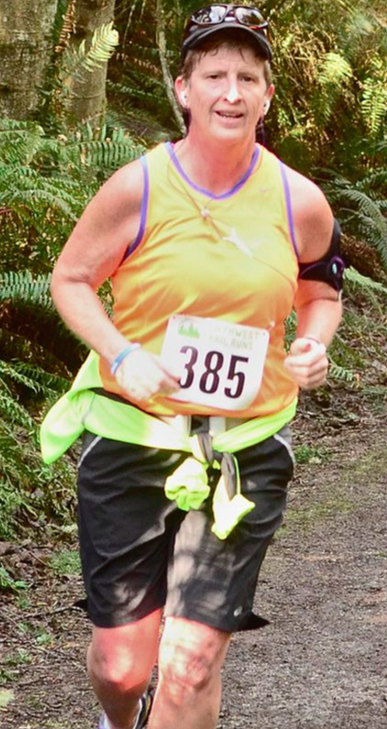
In February, I ran my first (and possibly only) trail half marathon with my pal Cami who has done a lot of marathons. I wanted to sign up for the 10k, but she talked me into doing the half . . . “It’ll be fun,” she said. I was pretty sure it wouldn’t be that much fun, but I acquiesced, not wanting to appear wimpish. How bad could it be?ft ebey 1

Bad. I’d never run a trail race before—not a single-track race where five hundred people share a mere two-foot wide path, a hilly, winding, steep up, steep down, muddy trail. In all the time I’d been running up to that date, I had not ever fallen down while running. Not once. Yet I fell twice during that trail half marathon—once while running up one of the bazillion hills, and once while running on the flat.

The first fall surprised me early in the race when I still had a fair amount of energy. I took a muddy uphill switchback too fast and my foot slipped. My face landed in the muddy trail in front of me, but I jumped up quickly, brushed myself off, and moved on. The second fall came sometime after mile eight, by which point I felt exhausted. I could barely pick up my feet and that’s what caused the fall. I hit a root and went down hard. I did not bounce back up quickly.

I slogged on through the final five miles, up and down, down and up. Relentless. With less than a mile and a half to go, the course opened up along a bluff overlooking Puget Sound, and just when the going looked easier (and breathtakingly beautiful), we came to one final uphill: a foot wide, completely vertical sandy path that wound endlessly skyward.

I could see the finish line over my left shoulder—I could stop here, skip this final hill, and call it quits. Or, I could complete the climb and follow the rest of the runners back into the woods and finish the race.

Quit or forge ahead? I’d come this far, I told myself, so I dug in. I could climb this final (I hoped) hill. I channeled The Little Engine That Could. I visualized all the hills I normally ran every day and strung them together in my mind, and I got to the top of that damn cliff.

ft ebey 3Climbing the hills makes us stronger and gives us stamina for the long flat stretches. We can always catch our breath on the backside, on the way back down.

What awaits us at
The top is unimportant.
‘Tis the climb that counts.

G is for Gratitude (a day late)

GIn spite of the fact that I’ve pretty much spent the past year and a half getting out of bed and running 5 miles or so every morning by 9, the getting up and at ‘em doesn’t ever seem to get any easier. Neither do the miles, either, though some days are better than others.

In the past few months or so, whenever I find myself grumpy or getting cranky about, oh, any number of things—weather, aches and pains, time, lack of sleep, pick one—I try to remember to be grateful for the fact that I CAN run, that a number of forces in my life have conspired to bring me to this place where my mornings are mostly free, where I have my health, a place to live, friends with whom to run, no snakes, crocs, gators, or other poisonous or scary creatures with which to deal.

In short, life is pretty damn sweet and instead of grumbling about the minor details or petty annoyances, I need to just put one foot in front of the other and get on with my run. When it rains, I try to be grateful that we didn’t have 18 feet of snow this winter; when it’s hot, I’m grateful that it rarely gets above 75. When it snows, I’m grateful that we have so much water here in the PNW that I can have a long hot shower after my runs (present winter excluded—water rationing may be coming our way this summer).

If, on some morning I don’t feel like getting up and out there, I remind myself that for today, for this moment, I have legs and lungs and feet that all work. I have the ability to run a few miles and how much would it suck to miss my last opportunity to go for a great run? None of us know what tomorrow might bring or the next hour.

All I have to do is surf the interwebs for a few minutes to realize that life is precious and short and very difficult for so many people around the world. In some countries women can’t even run, let alone put on shorts and a tank top and drive themselves to a favorite trail. I am grateful I live in a place where I can occasionally take my freedoms for granted.

I have so much for which to be grateful—reciting my list to myself usually takes a mile or so and by then I’ve forgotten that I didn’t want to get up and out there. I’ve found my rhythm and my pace, and I’m glad to be there.


F is for Fast Feet

FI hadn’t been running very long the first time someone told me I took lots of fast, tiny steps. It’s funny that there are always two ways to be seen in the world—the way we see ourselves, and the way others see us. Rarely do these two disparate views align. I guess I’d always envisioned my running strides as just that, strides. Long, lengthy leg reaches. You know, all gazelle-like and shit. But I don’t have long legs, so that image was less reality based, more delusional.

Still, hearing that I took tiny steps was a bit of a blow to my self-image. I tried to brush of the initial comment as uninformed, but when I became less of a lone wolf runner and started running with other people, they too commented on my style and asked me where I’d learned to run like I did.

I honestly don’t know. I had never (at that point) had a running coach. I simply went out and ran, letting my body do whatever felt right, remembering only a few pointers I’d gleaned somewhere along the way—keep the elbows in, head up (like Usain Bolt), run a little pigeon-toed, use the arms to pump and gain momentum, but for god’s sake don’t flail about.

Third in my age group at the Tulip Run on Saturday. Fast fleet feet.

Then Nancy signed up for Fit School where Coach Carol Frazey’s (so many F words!) mantra seemed to be “quick steps, quick steps!” Huh, I thought. Maybe I’m on to something here. Eventually, I started winning ribbons and medals in races, placing in my age group, Feeling Fast.

I may never be a Flo-Jo with legs up to my armpits or fifteen foot strides, but my fast little feet serve me well, thank you very much.

How will I finish
this race? On my own two feet,
and speedy, my pace.

E is for Eating (not, as I had hoped, Expectations and Eeyore)

EThis is my fourth attempt at today’s blog. I have three drafts that remain unpublishable, not one of which has anything to do with food, but all of which try to parse the meaning of Expectation. No matter what I write, none of them meet my expectations, so I’m going with this blog instead:

I admit it—I run so that I don’t have to watch what I eat. After many years of struggling with my weight, I have finally found a solution that works for me. Instead of dieting, I run five miles five or six times a week.

I have a strong aversion to most healthy foods—not a fan of much of anything green and leafy, and I truly love my carbs and fats. I’ll eat the occasional salad—I don’t mind a green salad with tomatoes, avocado, carrots, green onions and the like, but don’t make me eat beans, broccoli, cauliflower or, god forbid, brussel sprouts.

I think I spent too many long and lonely nights at the family dining table with a plate of cold vegetables in front of me. Before we could be excused from the table, we had to clean our plates. These nights of eating cold congealed vegetables scarred me, as so many childhood experiences do. Tall cold glasses of milk only do so much to disguise the nasty taste of cold canned spinach or to cover the texture of frigid canned peas.

So, you can keep your kale, your asparagus, your squash, yams, cabbage, and lima beans. I’ll take a long run and a big bowl of pasta any day. I’ve tried to go dairy and gluten free, but I would rather run another lap than put soymilk in my morning cup of coffee instead of half and half, and I really don’t want to have to drink that beer that’s brewed without wheat.

On the other hand, I don’t eat much of anything that’s processed and I never eat fast food, or drink soda, diet or otherwise. So while I may not be the poster child for perfect food pyramid eating habits, my body is not a dumping ground for the food equivalent of toxic waste either.

I eat to live and
run to eat. I Expect that
this will have to do.

D is for Data

DI wrote this haiku last year after my massage therapist suggested I might enjoy hearing the birds during my runs:

If I run without
My Nike app or Fitbit
Will the miles still count?

Well, of course they will still count, but towards what, exactly? Yeah, yeah, my overall health and well-being, toward my general fitness level, and in the grand cosmic scheme of things. But what would I know about my run? Did I do better than the day before? Did I run more miles or fewer? Most importantly, perhaps, how many miles did I put on which pair of shoes?

My running buddy April (she of A is for Accountability), calls me Rain Man—a nod to my semi-obsession with my statistics. If pressed, I can’t really come up with a stellar explanation about why I’m so enamored of stats. I guess it just comes down to the fact that I enjoy looking back over time and tracking my progress. I love that I can scroll back through the months and see how far I ran and how fast on any given day, in any given race.

Karen, Moi, April at today's Tulip Run. Photo by April Eaton
Karen, Moi, April at today’s Tulip Run. Photo by April Eaton

The very first year I started running—2012—I averaged a mile per day (not per run, but per day)—365 miles run over the course of the year. When I realized in late December that I could reach that milestone with a little bit of effort, I got excited and added more miles to my daily runs.

When December 31 dawned, I still had seven miles to go to reach my goal. I had never gone that far in one day, but, determined to make 365, I laced up my sneakers and set out. I finished that run on the middle school track near my house and called Nancy to pick me up because I couldn’t take another step. I finished. And it was exactly seven miles from my front door to the door of the Jeep in the parking lot. I have the data to prove it.

Sometime during that year I realized that I always hit mile two around the beginning of the same song, Florence and the Machine’s Dog Days of Summer. I began measuring my runs in songs instead of minutes and knew exactly where I should be, mileage-wise, depending on who I heard in my earbuds.

Last year in about October I noticed that if I pushed myself I could make 1500 miles for the year. I didn’t quite make the miles I needed—I wasn’t willing to kill myself to reach that goal—sometimes life intervenes and other things take precedence over running. But I came close, within 50 miles or less, and I am happy with that achievement.

I have a new playlist now, the third or fourth one in as many years. If I hear Cher before mile three, I know I’m doing very well. If I hear Rhianna, I know I’m smoking it. I don’t need to see the stats, but I’m happy to know that I can if I want to.

C is for Compassion

COn my run this morning, I spent most of the time pondering what to write today, what C word I wanted to focus on. Running brings to mind many things that start with C: competition, clothes, chafing, character, courses, Carol Frazey (Fit School Guru, coach), Cami Ostman (inspiration, writer, runner of marathons, friend). Circles (as in my favorite running route, which is essentially a circle).

Between thoughts of what to write about, I discovered I was chastising myself rather relentlessly. And that’s when my topic for today came to me: Compassion. For myself and for others.

I saw a headline on Facebook the other day that said something like “imagine if we talked to other people the way we talk to ourselves.” I thought about that for a moment (I didn’t click through to the article, but I could imagine well enough how it went). I don’t think I’d have many friends if I talked to others the way I talk to myself.

Imagine if I said these things to my running buddies: “Come on you lazy ass—get out of bed already. You can sleep when you die.” “Ugh, you really need some new running clothes. These are so unflattering.” “Jesus, pick up the pace already.” “Don’t breathe so loud! You’re scaring the other runners.” “How can you still be so slow after a whole year of this?” “I HATE running. Why do I torture myself?” “You should be better at this by now.”

Then, I considered not just what I say silently to myself, but what I think about other people as I run. I make up all kinds of crazy stories and confer relentless judgments on people I see on my routes, especially if they impede me in some way. Like groups that take up the entire width of the trail, or folks that smoke as they walk, or parents with children (in strollers, on bicycles, or running free range), or those that don’t keep their dogs on leashes. Never mind the people that don’t pick up after their dogs.

I have HUGE judgments and my internal monologues about them can be just as brutal as the ones I have about myself. This is not an easy admission—in fact I feel a great deal of shame as I even write it. And once I had this epiphany this morning, I immediately started practicing compassion. I don’t know what is going on in anyone’s life but my own, so it’s time I started cutting everyone some slack. What would it hurt me to give folks the benefit of the doubt? To show a little love to my fellow travelers and cut down on the snark and self-absorption?

I know for a fact that I’ll feel better. I’ve written a lot about running happy and how running does in fact make me happy. But maybe it’s time I start spreading some joy while I’m out there. Smiling instead of grimacing.

I have made a few friends on the trail in the past year—there’s the lady with Buddy the Dog who walks nearly every morning. And Diane, who stopped me one day last summer to tell me how great I looked. We talk now and then. And John, who is out there religiously. There are the women with the stroller, one of whom wears bright orange shoes and a skort. We wave and smile and warn one another if we see something suspicious.

I feel a little bit like the soft drink commercial—the one where the bottle of soda gets passed around to whomever is in the most distress. As sappy as that ad is, it still makes me misty. Something magical happens when ease up and spread a little love.

Compassion falters,
and then I remember: We’re
in this together.

B is for Brooks, or How is it I Have SO Many Pairs of Running Shoes?

BA few months ago on one of my frequent forays through our local running store, I was lamenting having to buy yet another pair of shoes. I’d only been running seriously for a few months then, so I was likely only one or two pair into what has become a recurring event. The sales guy (I believe it was Steve G.) laughed. He of course has been running for a very long time. “You should see the mound of shoes I have!” He made a sweeping gesture. “My wife won’t let me keep them in the house anymore. They’re all in the garage.”

I guess the upside of needing a new pair of running shoes means I’ve been putting on the miles. I generally start to feel that familiar twinge in the bottom of my foot that signals it’s time to break out the wallet at around mile 300. Last year, I ran very nearly 1500 miles, which meant I ran through five pairs of shoes. One of the reasons I started running, instead of going to the gym, was that in theory running should be less expensive. Very little equipment needed, no membership fees. Yeah right.

Glycerin_2
Brooks Glycerin running the Turkey Trot

Running is not inexpensive. Not if you don’t want your body to break down. Not if you care about your feet, calves, shins, knees, and back. Not if you run on a variety of surfaces or in all kinds of weather. I currently rotate through three different pairs of shoes, all Brooks. Fun fact about Brooks running shoes: they are made just down the freeway from Bellingham in Bothell.The Brooks Glycerins, the cushiest of the trio, are great for flat surfaces, pavement, and going fast. Runners World Magazine listed them in its Fall Shoe Preview as perfect for the heavier runner—a description I took some exception to, but they are super comfy. So, whatever. The first time I wore a pair in a race, I came in as the first woman overall. Go figure.

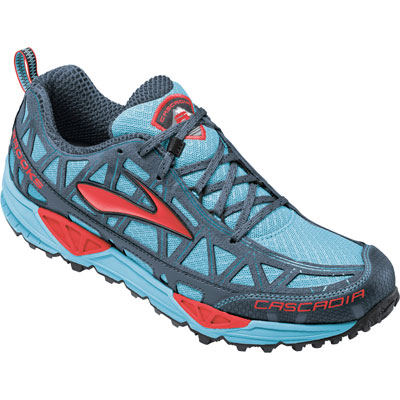
My Cascadias are Brooks’ trail shoes—awesome for running over roots and rocks and uneven surfaces. I wasn’t sure I would like the Cascadias, so I bought an older model online for about half the original resale price. Now I love them and am looking forward to racking up the miles on them so I can get a new pair of the latest model.

cascadias
Brooks Cascadia 8. No pics of these in action.

Rounding out my current collection are the Ghost GTX, the Gortex-lined wonders that keep my piggies dry in this rainiest of climes. I am on my second pair of Ghost GTX—I wore my most recent pair the first time when I ran the Mt. Vernon High School Band Aid 10K. The skies opened up, and I ended up running through a thunderstorm, complete with lightning, massive amounts of rain, and rivers and rivers of cow, uhm, waste, one of the bonuses of running rurally.

The downside of a Gortex-lined shoe? They keep the water out, yes, but if it somehow comes over the top of the shoe, it also stays in. By the time I finished the Band Aid run, each shoe must have weighed five pounds and my feet were soaked and shriveled. Usually though, I avoid deep rivers of cow waste, and the GTX keep my feet nice and dry.

Ghost GTX
Brooks Ghost GTX, post Band Aid 10K. These are some wet dogs.

These days, I’m working on my own mound o’shoes which currently resides by the front door. I am not ready to relocate the mound to the garage because whenever I look at it, I’m reminded of just how far I’ve come.

No barefoot running
for me. These feet are well-clad.
My spoiled, pampered dogs

A is for Accountability (And Also April and Anxiety)

A[1]


When I started running seriously about a year and a half ago, anxiety propelled me out of bed and into my running shoes every morning—that relentless pounding thrum that only abated after my endorphins released around mile three or so. I wasn’t sure what would happen if I didn’t lace up my sneakers every morning, but I certainly didn’t want to find out. Once I hit mile three, the agitated voices in my head calmed down, and I could go on with my day. Until the next morning when we (the voices and I) started again.river to rails run

I’d met April sometime around Christmas 2013 and joined her and other members of Carol Frazey’s Fit School on occasional weekend runs. In mid-March April announced she was training to run the Vancouver BMO half marathon and needed someone to run with on her long run—11 miles. Up to that point, my longest run ever had been seven miles (and not easy ones, either), but I agreed to join her on her long run anyway. What’s the worst thing that could happen? I’d have to walk part of the way? I’d get in really good shape?

We made the 11 miles and struck up an alliance along the way. I don’t remember exactly what transpired next, but eventually April and I were meeting up three or four mornings a week to run and train together. We didn’t actually run together after that first 11 miles—we have wildly different paces and distance goals, but we held one another accountable.

And accountability is key. Knowing someone is waiting at the trailhead or in the parking lot at 7:30 or 8 a.m. is a good motivator. Even if I don’t feel like getting out of bed, let alone going for a run, I can’t leave April hanging, and I am confident that she won’t leave me out there to face the early morning hours alone either.

I’ve lost count of how many races we’ve done in the past year or how many laps we’ve traveled around Lake Padden or how many miles we’ve logged on South Bay trail (actually, not true–I could tell you exactly, but I won’t). But I haven’t lost sight of how important it is to have her there so I’ll get out of the car and run in the rain, the wind, even through the thunder and lightning (though I don’t recommend the latter).

In running as in
life, accountability
kicks us into gearband aid run